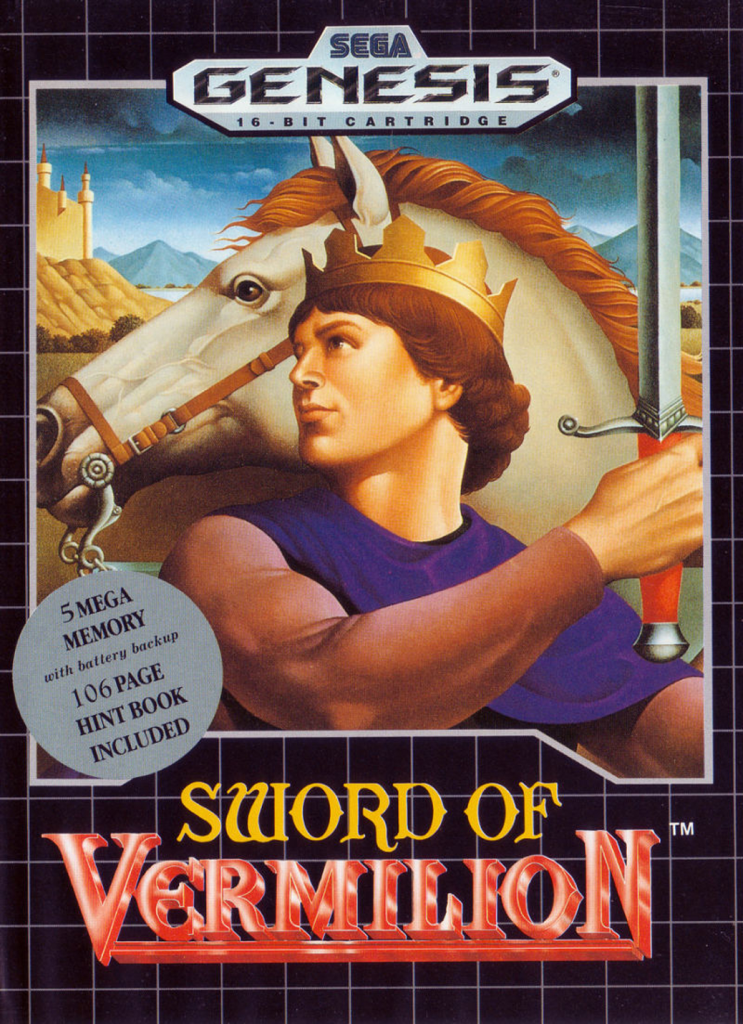
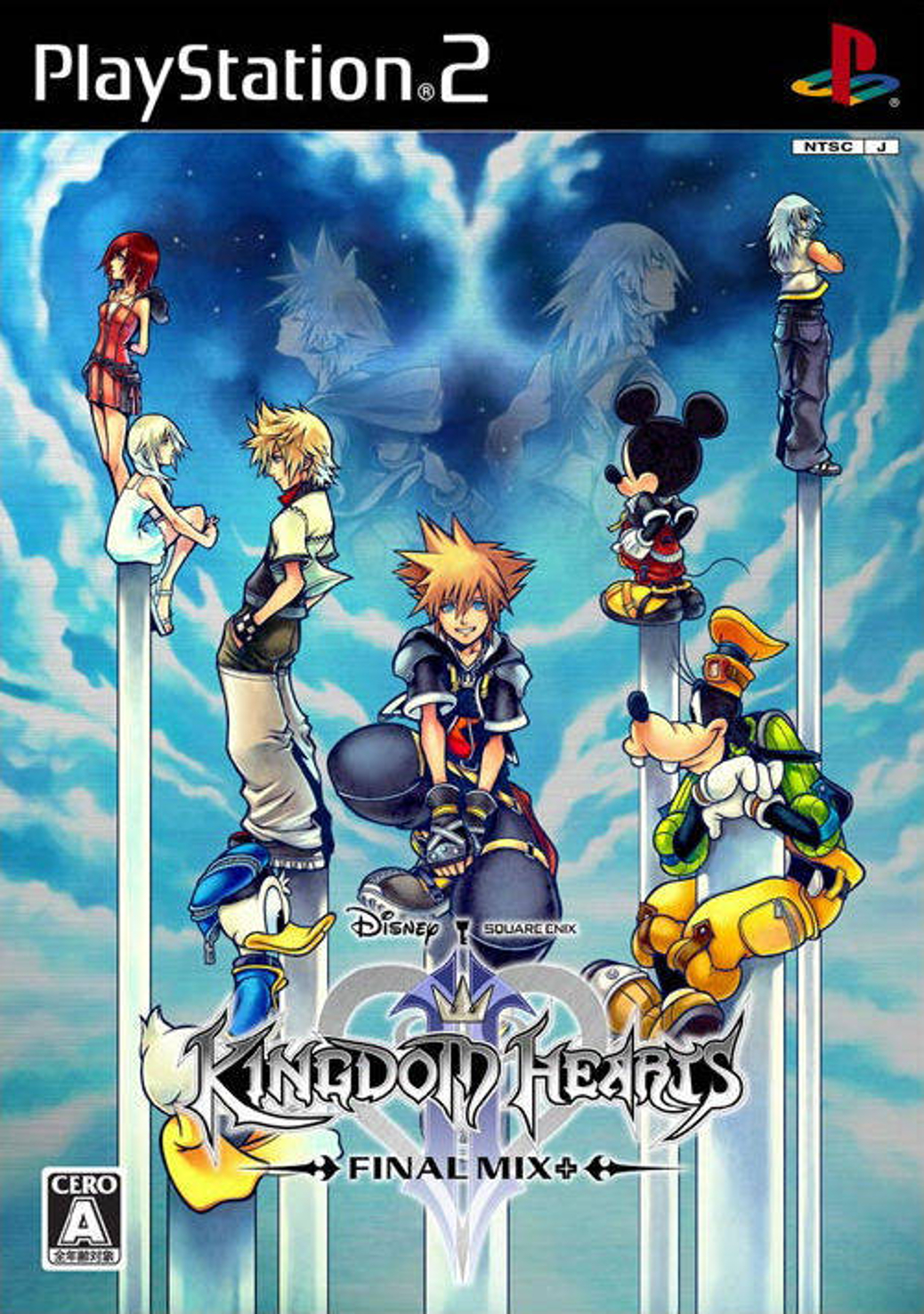
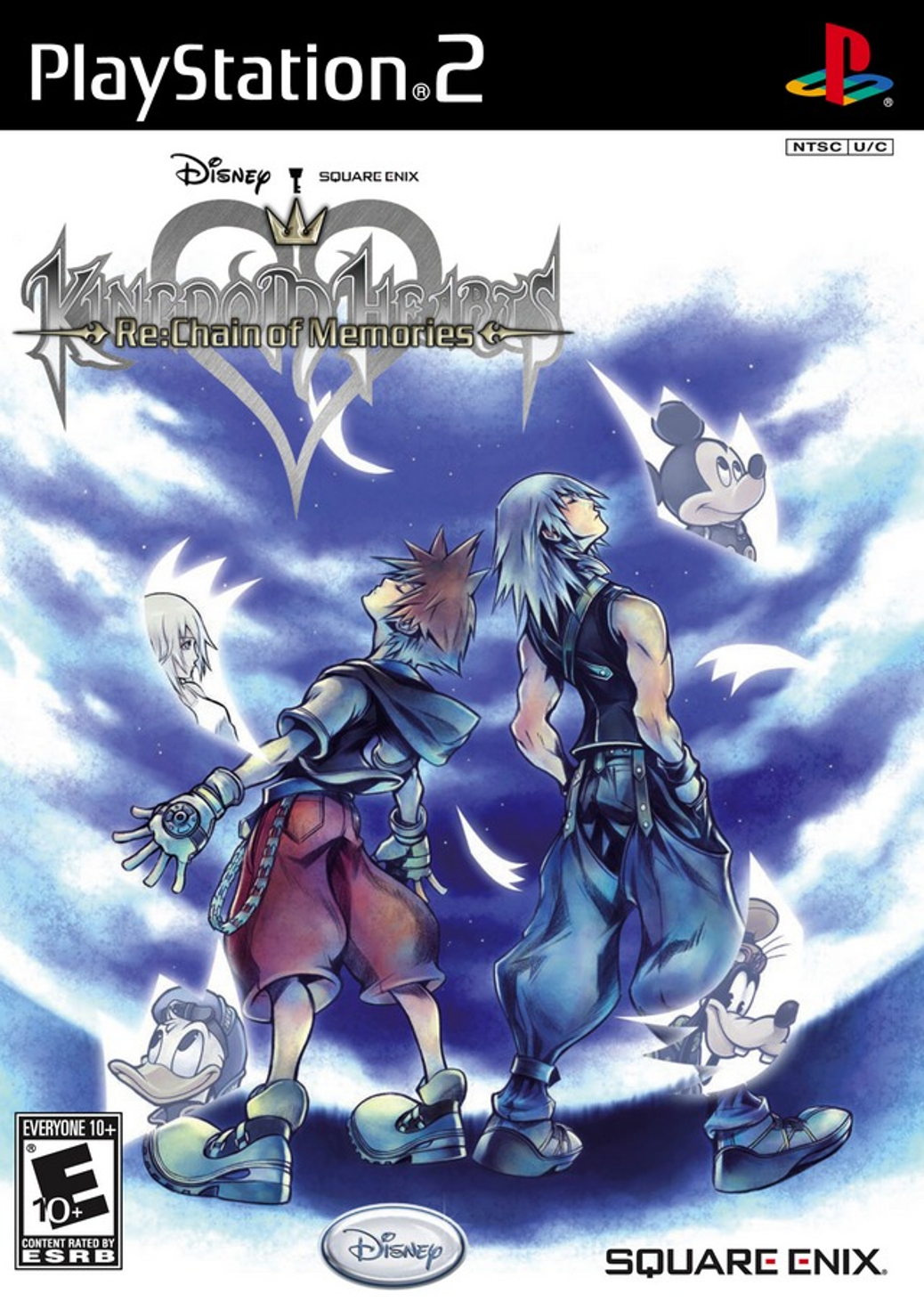
I just ate some lychees and those suckers are good! Cool box art by the way!

Coming hot off the heels of our completion of The Legend of Zelda: Four Swords Adventure, my girlfriend and I have begun another GameCube game that features Game Boy Advance connectivity: Final Fantasy Crystal Chronicles. Along with Four Swords Adventure, it’s the only other game that I can think of that featured connectivity prominently and was halfway well regarded.

Final Fantasy Crystal Chronicles was developed by The Game Designers Studio (a Square Enix subsidiary) and published by Nintendo in the USA on February 9, 2004. Apparently The Game Designers Studio was set up to work around the exclusivity deal Square Enix had with Sony at the time. Square Enix’s history is very interesting, but not worth going into for this article. What is relevant is the knowledge that the release of this game and a few others around the same time represented a reunion between Square Enix and Nintendo.

So anyways… my girlfriend and I created our characters from a modest selection of classes and options and we were off. The world of Final Fantasy Crystal Chronicles is covered in a poisonous miasma but crystals provide shelter from this miasma therefore they’re essential to surviving. Large crystals protect small villages but they lose their power over time, forcing the residents to set out in caravans each year to search for myrrh. Myrrh replenishes the protective powers of the crystals and it can be found from myrrh trees which unfortunately are located in the deepest parts of monster-filled dungeons.

When we’d enter a dungeon, we’d immediately have to set up our command list. Attack and defend were always included, but we could select from our list of items and spells what else to include, and because we were playing on Game Boy Advances, we did this on them. All we had to do to execute a command was press the A button on the GBA. We could switch our commands by pressing the L and R buttons, which were highlighted on the TV screen near our character’s information.

An early boss and a common enemy in Final Fantasy, the Malboro.

We’d hack and slash our way through dungeons defeating the enemies we’d encounter. Every enemy dropped an item and we found out these were essential. Food restored our health while stones allowed us to perform magic and occasionally we’d come across a stat boosting item. We found healing stones very helpful, such as stone of cure and stone of life.

The dungeons took about twenty minutes to clear, including the bosses. The bosses were many times our character’s sizes and they were very detailed, they were also tough! They had a large amount of health and dealt a lot of damage in single blows which were sometimes hard to avoid; those healing stones came into play during boss battles. During these battles we’d delegate tasks such as healing and attacking but our communication could’ve been better. Regardless, we came out on top every time.

The one aspect of the game I remember receiving the most flak for was the chalice. Because the world is covered in a poisonous miasma, we had to carry around something to protect us at all times and the chalice that collected the myrrh we sought served this purpose. The only downside of this protection was that one of us had to carry it. So every time we ran into an enemy, the person carrying the chalice would drop it, help out fighting, and then pick it back up and we’d be on our way. I could think of other ways to remain protected instead of limiting one player, but that’s what The Game Designers Studio chose to do. This isn’t the case in single player games however as there’s a Moogle companion who carries it for you. My main grievance is it wasn’t fun being the person carrying the chalice, it’s not fun being limited.

Besides the chalice limiting one player, my only other gripe with the game at the moment is the inability of the game to pause when one of us would switch to our GBA screen. Since our GBA contained our menus, changing our command list had to be done through it. This wasn’t a problem with the exception of boss battles, but I guess the workaround is to be totally prepared beforehand.

It's hard to see in this screenshot but you can barely make out the protective aura of the chalice around this character.

My girlfriend and I played for two hours and by the end of our session we had finished the first year. The hack and slash combat was easy to grasp although getting a three-hit combo (the max) was kind of tough to manage. Besides serving as a controller, the GBA basically hosts each player’s menus and at times, shows the brilliance of allowing each player to manage their stuff without hindering everyone else. Final Fantasy Crystal Chronicles still looks really good all these years later and I like the art style; I suppose it’s a reimagining of classic 2D RPGs with modern technology. One of my favorite things about the game so far has been the soundtrack. The composer utilized medieval and Renaissance instruments and it sounds unlike anything I can think of. Truth be told, it made me think of Ireland and The Hobbit. It’s a simple hack and slash game but thanks to the cooperative play and link connectivity, it’s piqued my interest and we’re going to continue playing it.

Links:

Final Fantasy Crystal Chronicles
Nintendo

Soul Blazer – Review

September 28, 2011

What a wicked sword dude.

It’s not every day I have a half-off coupon to my favorite video game store. So when I received one I used it wisely and picked up a relatively expensive Super Nintendo RPG. I decided on Soul Blazer, a game I had no previous knowledge of. More specifically, it was an action-RPG developed by Quintet and published by Enix for the SNES in 1992. I thought it had a simple plot and simple gameplay, but it was exciting to return life back to the world of the Freil Empire.

Primarily a tale of greed, Soul Blazer at first has a shallow plot, but it gets interesting. The king of the Freil Empire has captured a famous inventor and forced him to create a machine that allows the king to communicate with a seriously bad dude, Deathtoll. Deathtoll wants souls and the king wants money so they strike a deal, souls for money. Here’s where the player character comes in.

The player character, the soul blazer is sent down from the heavens by The Master to remedy the situation in the Freil Empire. As the soul blazer I was capable of defeating the numerous monsters throughout the dungeons of the empire as well as communicating with the souls I released.

The stages ran the gamut from sea floor to snowy mountains to space.

There were seven stages in all and I thought the way they were structured was interesting. Each stage was basically a village with access to a dungeon or two. The first stage was a mining town with a mine serving as the dungeon. The second stage was a settlement in the woods of woodland creatures, and so on; the stages were diverse and they contained all sorts of different creatures.

Like the villages, the dungeons were set in interesting locales; one on a model town and another in a fantastically rendered version of space were my favorites. The dungeons were very straightforward and not very difficult. I followed the path and killed monsters as they spawned from portals. Once the portals were depleted, they changed into a switch that would release a creature back in the village.

There wasn’t any puzzle solving in the dungeons, I just followed the path and killed any monster I came upon. The villages on the other hand did require a bit of thinking. After freeing creatures and restoring the stages to their original glory, I could chat with the creatures and sometimes get some info on a stronger sword, better armor, the location of magic, or a necessary item.

The bosses were challenging and required strafing, lots of strafing.

For the most part, Soul Blazer wasn’t very challenging. The monsters were really dumb, basically walking into my sword and the dungeons were quickly completed, about an hour for each. The bosses on the other hand were challenging, but not excessively difficult.  The only puzzle solving that was tricky came at the very end when I had to retread a few of the earlier dungeons defeating previously indestructible enemies. But my favorite part of the game would have to be the soundtrack. I thought it was phenomenal and hummed along with practically every track. Soul Blazer was a good game and in the end, well worth using a half-off coupon.

3/5

I'm pretty sure DeathSpank as a character name is pretty terrible.

The third game to be released in the DeathSpank series is The Baconing, and it’s my first experience with the comedic action-role-playing series. It was released last week for Xbox Live Arcade, PlayStation Network, and on the PC via Steam; I played the PSN version. The Baconing was developed and published by Hothead Games with the exception of the XBLA version, published by Valcon Games.

Having become bored without foes to fight, DeathSpank tries on his Throngs of Virtue and inadvertently creates an evil version of himself that begins wreaking havoc and already the game is making callbacks to a previous game in the series.

The demo had me fighting through groups of enemies and meeting unusual non-player characters who issued quests to me. Although the demo was linear, the rest of the game should be fairly expansive and open to replaying stages.

When enemies, objects, or NPCs where on the screen, I could target them and a circle would surround them. If I was targeting an enemy or an object I could attack with one of the four weapons I had assigned to the face buttons. If it was an NPC, I could begin a conversation. I was given options as to how I wanted to respond in conversation and I was surprised to see that all of the dialogue was voice-acted.

I really liked the design in the game, it felt like a cartoon.

I played the demo on normal and it seemed pretty tough, although it just threw me into battle without really explaining much. The menus seemed expansive and I was overwhelmed with information, at least considering I was playing a brief demo. The humor in The Baconing seems similar to that of a cartoon; DeathSpank was loud and boisterous and the dialogue was pretty funny. The world was very colorful and there was a lot of detail to the stages.

The Baconing appears to be a fun action-RPG similar to Diablo, but if it’s your first experience with the series like it was mine, the first game, DeathSpank, might be a better option.

The US box art for Record of Lodoss War.

Well I think I’m done with Record of Lodoss War. I’ve been playing it off and on for about two weeks now and I’ve had it. It’s a frustrating game where death is frequent; I must’ve saved every three minutes in the seven hours I’ve logged, and you know what I’ve just realized? There isn’t a good enough sense of payoff for me to continue playing, so I’ll stop.

Record of Lodoss War is an action RPG, developed by Neverland and released on the Dreamcast in early 2001 here in the US. The game is based off of a Japanese anime/manga and having no previous experience I’m unaware how, if at all, this relates to the source material. Judging from the setup though, it seems that the game is meant as a side or alternate story. You control The Hero, who has been brought back from the dead. A bad dude has been doing some bad stuff, like deciding to revive an ancient beast that will do his bidding and destroy, destroy, destroy. This is why The Hero has been resurrected, you see, in his past life he was a great warrior and a wise wizard believes he’ll be able to stop this evil. This wizard, Wart, initially sets you up to take over a goblin settlement which then becomes home base, a safe spot to return and do some blacksmithing. The Hero’s quest is ultimately to stop all the bad guys and as far as I proceeded on his quest, I met a few allies and visited a couple of towns and plenty of dungeons. The story seemed dense with detail and it would appear that knowing more about the source material would lighten the load but regardless, the story didn’t capture my interest.

Talking about the gameplay, Record of Lodoss War shares a lot with Diablo. You control The Hero in real time, explore dungeons, do some blacksmithing, etc. Battling enemies usually ended up a frustrating experience. I’d line up next to an enemy and start wailing away on the attack button, watching my health bar and if it got too low, I’d drink a potion. In the event that I ran out of potions, which happened all the time, I’d use the Recall spell to warp back to home base, refill, and warp back to then rinse and repeat. In the event that I was overwhelmed with enemies, which also happened all the time, the game slows down to a crawl and at this point it becomes easy to get trapped in a corner and die. This process led to many deaths and loss of progress, as I thought I’d be okay and go awhile without saving only to run into a strong enemy or get overwhelmed; this process was frustrating, but necessary to advancing.

The Hero battling some skeleton archers.

Equipment and loot is a big part of dungeon crawlers and Record of Lodoss War disappoints. In my time with the game, I rarely happened upon loot dropped by enemies and the loot that I found in dungeons, I generally passed on. At the home base is a blacksmith to whom you can take your equipment and add ancient inscriptions which add stat boosts and special attacks. Adding these effects seemed helpful, if only incrementally and overall the blacksmith wasn’t much assistance, nor was there much depth to blacksmithing. Without this sense of continually upgrading my character, I’ve lost the will to continue playing the game and whenever I’d battle enemies and have it take forever to defeat them, I felt weak, as if I’d been cheated on the equipment available to me. Exploration wasn’t fulfilling either, the few dungeons I’d been in seem very gray, in fact the game as a whole feels very gray. The game has gotten to be more frustrating than fun and even if I had some connection with the source material, I can’t imagine I’d want to continue playing based solely on the story Record of Lodoss War presents.

At this point the price for Record of Lodoss War is relatively expensive; a quick search of Amazon and eBay says you’ll have to pay around twenty-five dollars for a used copy. The manual contains great information, but there isn’t anything outstanding about the overall package. Others might have more patience with Record of Lodoss War, but if you’re searching for an RPG for the Dreamcast, or just an older RPG to check out, there are many better options.

Avalon Code wallpaper from the official site.

Avalon Code’s premise is initially, very awe-inspiring. The world is going to end soon, but there is a book, The Book of Prophecy, that can capture anything and will remake whatever it contains. Once captured, you can adjust the properties of that thing, be it a person, a key or an enemy and alter it to solve puzzles or assist in battles. Most everything related to The Book of Prophecy is fun and unique; however the actual gameplay was tedious and turned me off after a few hours.

With The Book of Prophecy you are tasked to scan anything that you possibly can. The theory is that the book will aid in the creation of the new world and remake whatever’s inside. But this also adds a clever puzzle element to the game. Whenever you scan something in, it gets its own page. Each thing has a nine by nine grid which contains traits that make that thing up. So a flower for instance might have something forest or nature related and a fire creature might have an evil trait as well as something fire related. This led to some clever, albeit simple, puzzles early on like having to attach a forest element to a key to open a lock. These traits come in different shapes and piecing them in is reminiscent of Tetris. Every time something is added or subtracted, the page is reassessed and it leads to a short load time, which can add up when just experimenting and ultimately turned me away from changing the properties of anything I came across, unless it was necessary

Fighting a Dire Bat in Avalon Code, notice The Book of Prophecy on the lower screen and the info it holds about the enemy.

Outside of The Book of Prophecy you control a male or female character and travel between towns and dungeons, interacting with NPCs and fighting monsters. Rather than a turn-based battle system, Matrix Software opted for real-time action, which makes sense with The Book of Prophecy. Whenever I saw an enemy I generally scanned it in and then began to adjust the enemy’s traits, looking for something that would drop it’s hit points and then I’d attack; the game will pause when you’re using The Book of Prophecy, which takes up the bottom screen. Combat is simple, attacking with either your left or right hand, and enemies respawned as soon they died which discouraged me to even bother fighting them after a few times.

As far as I got, each dungeon progressed the same. They were divided into individual rooms which had tasks and time limits. You were given a task, such as light all candles, and once completed, the door to the next room would open; there were interesting tasks that required The Book of Prophecy but the majority of them were simple. Ultimately this made dungeons feel like a collection of minigames and this turned me off more than anything else I saw in the game.

I only clocked in three hours so I wasn’t able to see what Avalon Code has to offer, but it didn’t hold my interest in that short amount of time. The game is backed by an interesting gameplay mechanic that sets it apart from other games, but Avalon Code’s gameplay became tedious quickly. If it counts for anything though, I am still looking forward to playing more of Avalon Code at some point.

Follow

Get every new post delivered to your Inbox.

Join 172 other followers