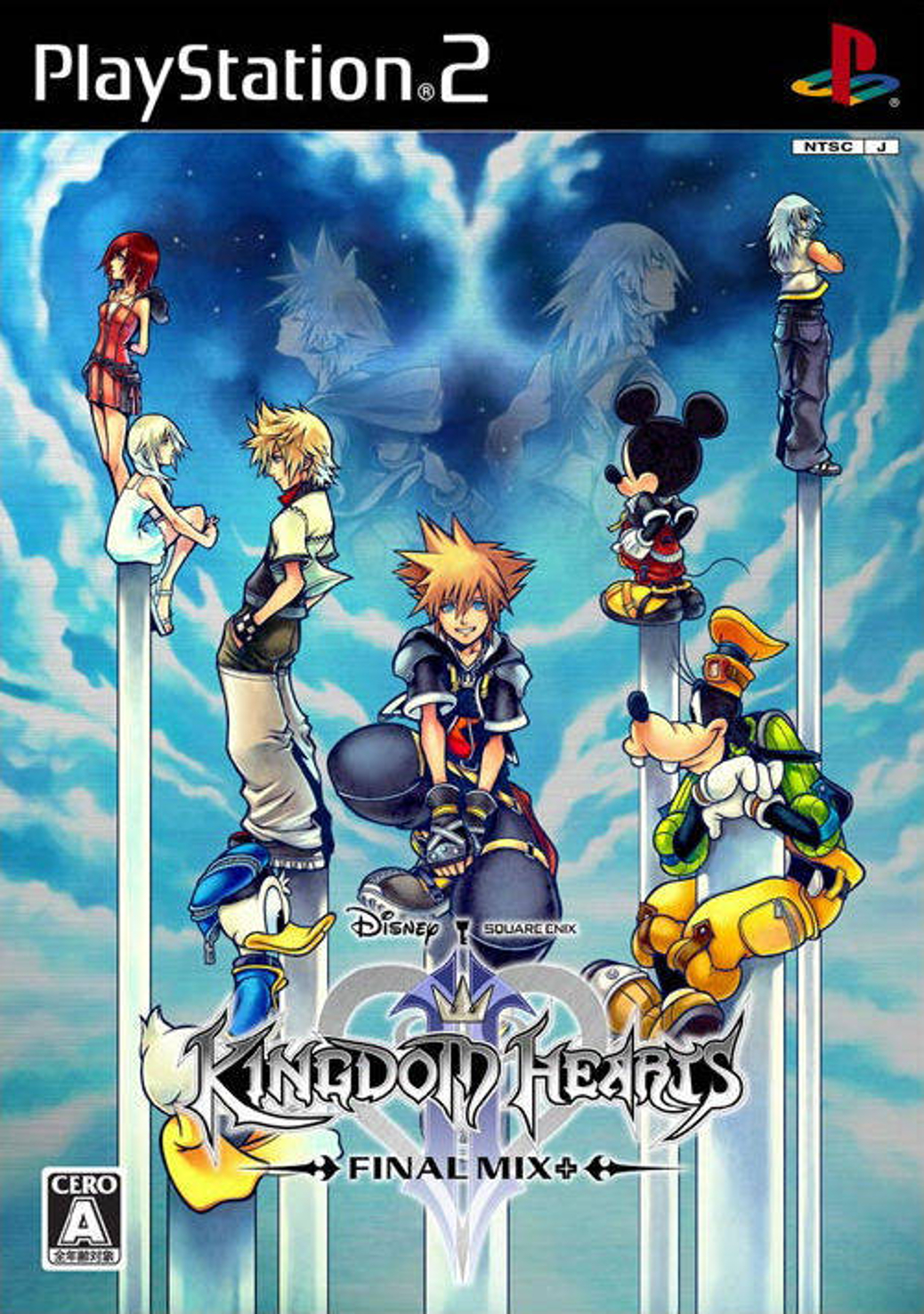
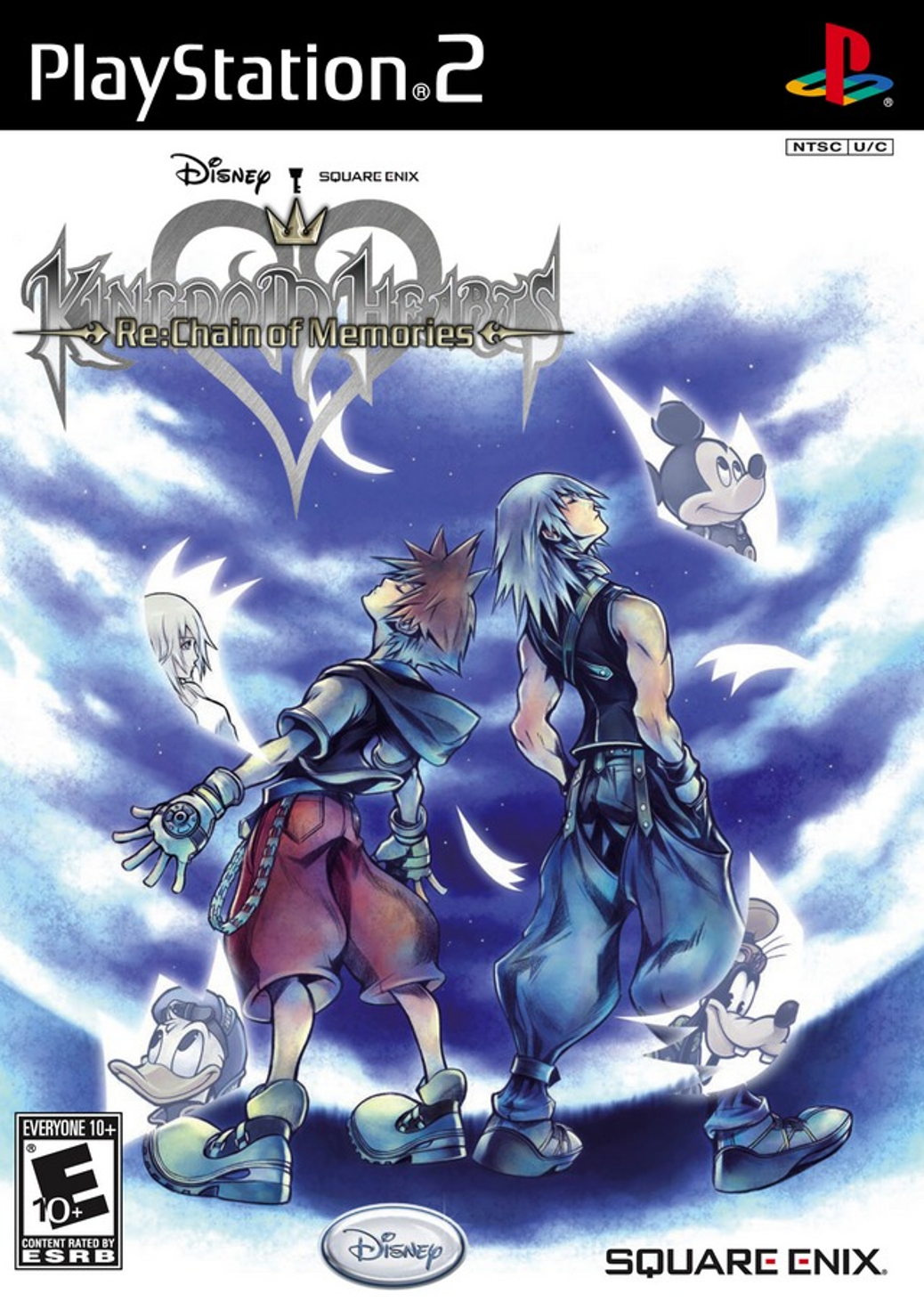
This is a game you can judge by its cover.

This is a game you can judge by its cover.

Resistance: Fall of Man is a game of banal hues. Whether I’m referring to the grayish picture it paints of Great Britain circa 1951 amidst the invasion of alien forces, the grim outlook for humanity, or the game’s stiff difficulty, it’s not in high spirits. It was a game that I had a hard time getting drawn into. Sgt. Nathan Hale, the game’s protagonist was unrelatable as he was mostly silent, uttering a handful of words throughout the four days covered. The third-person “past-tense” storytelling also didn’t help draw me in, although it was unique and fitting. Lastly, I just didn’t think the campaign was balanced well.

What’s initially distinguishing about the game is its alternate historical setting. Presumably, World War II never happened as the alien Chimera were ravaging the Soviet Union for decades. The rest of Europe was most likely wary of what was happening behind the Iron Curtain and preparing for the worst, as Great Britain had done. After overtaking Europe, the Chimera crossed the English Channel and all preparations went out the window as the country was lost in a matter of months. Afterwards, the United States sent in a large task force to seek out a secret weapon the Brits claim will save humanity; enter Nathan Hale.

The game gets props for its new game plus features such as additional weapons, like this one.

The game gets props for its new game plus features such as additional weapons, like this one.

For most of the introductory sequences I was under the impression that Nathan was a silent protagonist. He might well have been as he spoke, like, three times throughout the ten hour campaign. Instead, most of the story was told by Captain Rachel Parker, a British soldier who determined there was something amiss with Nathan immediately – he had been infected by the Chimera. It was of little consequence in the game ultimately, although it was always a pressing concern for her. With Nathan hardly speaking, he really wasn’t characterized, he was little more than the player’s avatar. But through Rachel’s recounting, he was given a story, at the very least.

The narrative cutscenes had Rachel talking about the game’s events in the past-tense, as though they had happened only a few days ago. As she was the one narrating the story, all references to Nathan were in the third-person. I thought these two storytelling mechanics distanced me from Nathan even more than him being a (near) silent protagonist. Nathan’s survival took him all over Britain, but I found the campaign to be relatively event-free and ultimately forgettable.

There were a lot of enemy types to contend with.

There were a lot of enemy types to contend with.

Gameplay was standard fare for a first-person shooter and it encompassed sequences common across the genre. There was a driving sequence or two including an expletive-inducing tank sequence that had me banging my head against a proverbial wall for countless attempts. What set it apart the most from other similar games was its armory, which makes sense as Insomniac earns high praise for their innovative weaponry. Many staples were present although I felt the game was at its best when I was utilizing a secondary feature or dispatching enemies with a weapon unlike anything I had used before.

Bringing down the enjoyment I had with the game was its difficulty. I’ll start with the health system. Nathan had four chunks of rechargeable health. When one was depleted, I was no longer able to regenerate it. This is highly prevalent nowadays (and it was seven years ago too (I can’t believe this generation is that old!)) but I’ve never played a game where recharging health took so long! On the other hand, the enemies are bullet sponges. I love that the M5A2 Folsom Carbine, the standard human assault rifle, has a 50 round magazine, but dumping into enemies yields a few kills before needing reloaded. Finally, the biggest offender was the checkpoints. I found them so infrequent; I’d have to do battle with dozens of enemies multiple times thanks to a single mistake. Between the three difficulty levels available to me, I chose normal but in many parts, it felt more like hard. This probably earns kudos from some hardcore shooter fans out there, but for someone just wanting to enjoy the game and have a decent amount of challenge, it was off-putting.

It can't be sci-fi horror without face hugger clones.

It can’t be sci-fi horror without face hugger clones.

The game’s difficulty had me frustrated on many occasions, but I persisted and still think Resistance: Fall of Man was a solid FPS. The story and characterization did very little for me, although the alternate historical setting was plenty enough to start me off. I remember very little astonishing moments or set pieces, but the core gameplay, excluding the difficulty, was really good. I even jumped into the multiplayer for a few matches and had fun, despite a losing streak. I wasn’t exactly raring to jump into Resistance 2 after completing it, but I’d take the plunge anyways.

The pet project of Glen Schofield - an industry veteran who came up through hard work on licensed titles.

The pet project of Glen Schofield – an industry veteran who came up through hard work on licensed titles.

Set about 500 years in the future, Dead Space centers on Isaac Clarke and the horrific events surrounding the USG Ishimura. This “planetcracker” is a mining spacecraft that recently sent out a distress signal which Isaac and a small squad is answering. What he and his cohorts find is multitudes worse than what most of them could’ve imagined. Any hopes of the mission being routine are thrown out the window when almost immediately the squad is attacked by garish creatures – “the ship’s crew slaughtered and infected by an alien scourge” to quote the back of the box.

The underpinnings of cultish intrigue are soon the full-scale narrative driver of the game. As Isaac survives his way through the Ishimura, he learns of the crew’s discovery of the Marker and the impact it had on them. Supposedly a holy artifact for the Church of Unitology, the discovery is of great importance to many of the ship’s members who then change course at the direction of Captain Benjamin Mathius. This wasn’t the only discovery they made however. Coming along with the Marker is an unknown alien life form that begins ravaging the crew and turning them into Necromorphs.

Necromorphs came in many shapes and sizes. Dealing each variety required a slight twist on dismemberment.

Necromorphs came in many shapes and sizes. Dealing each variety required a slight twist on dismemberment.

These creatures are grotesque abominations of former crew members who are anything but gentle. With repair objectives taking him all over the Ishimura, Isaac runs into hundreds of Necromorphs. Equipped with a plasma cutter and an arsenal of other weapons, it’s soon made clear to both Isaac and the player that the most effective way of combating this enemy presence is through dismemberment.

I found the gameplay loop that dismembering small groups of Necromorphs turned into, to be highly enjoyable. The precision and power that the plasma cutter ripped through these fiends was such a satisfying and visceral experience, encountering groups of Necromorphs almost wasn’t scary. After a playthrough and a half, I’d recommend not using any other weapon; the plasma cutter is that incredible.

It’s that gameplay loop that kept me jiving on the game for so long. The narrative unfolded at a brisk pace and I learned much about the goings on before Isaac arrived via plentiful text, audio, and video logs, but the chapter objectives were so drab. I felt like Fix-It Felix as Zach Hammond and Kendra Daniels (fellow crew members responding to the distress signal) issued Isaac around the Ishimura having him repair broken equipment. Aside from some awesome boss encounters and a handful of entertaining tasks, the chapters mostly felt like a means to an end.

Much praise has been heaped on Dead Space for it's innovative HUD and UI.

Much praise has been heaped on Dead Space for it’s innovative HUD and UI.

Somewhat memorable was Dr. Challus Mercer. After the captain was accidentally killed by Dr. Terrence Kyne, Dr. Mercer assumed control of the Ishimura. He is more of a cultish zealot than Captain Mathius was and this is seen firsthand by Isaac. With an ever watchful eye on Isaac, Dr. Mercer always seems one step ahead of Isaac, Zach, and Kendra. Their run-ins usually entail a challenging combat sequence. Paired with that sequence is a dose of Dr. Mercer’s maniacal devotion to the church and his belief that transformation into Necromorphs is humanity’s higher calling.

Dr. Kyne plays a role soon enough and eventually they are led back to the planet where it all came from. He is a character with good intentions consumed by the hallucinations of his deceased wife. He and Isaac aren’t dissimilar; Isaac is also haunted by increasingly lifelike hallucinations of his deceased girlfriend Nicole Brennan. Nicole and Dr. Kyne are key figures in returning the Marker to its former resting place, hoping to calm the chaos and prevent the Necromorphs from reaching Earth.

The boss encounters were remarkable.

The boss encounters were remarkable.

Dead Space was a game with loads of prerelease marketing courtesy of Electronic Arts and among the content were a handful of developer diaries. In one of these, it was mentioned that the intention was for Isaac to be an “everyman” but I don’t think this was achieved. I feel this way solely because he was a silent protagonist interacting with very realistic characters. Much of the dialogue consisted of other people speaking directly to Isaac, and his lack of speech created a weird dissonance.

That’s about the only gripe I have as far as the audio/visual qualities are concerned. The game looks remarkable, but there isn’t a lot of variety outside of the sterile, futuristic corridors splashed with copious amounts of gore. The soundtrack was used more to cultivate a continuous sense of fright regarding what’s around the next corner instead of building up to an ultimate crescendo over and over again. Jason Graves’ score, composed of mechanical sound effects and haunting instrumental bits, helped in creating a dreadful ambiance reeking of Doom 3’s impact.

Fairly often, Isaac would traverse sections with no gravity, having to jump from wall to wall to get around.

Fairly often, Isaac would traverse sections with no gravity, having to jump from wall to wall to get around.

It was with Dead Space that EA Redwood Shores, now Visceral Games, was given the chance to moonlight with a new intellectual property and I think they knocked it out of the park. The cultish narrative was intriguing enough, although it was the dismemberment gameplay loop that carried the entertainment weight for me. The plasma cutter offered such precision and power that dealing with groups of Necromorphs was something I looked forward to. After, I got over the fright of them appearing of course.

thatgamecompany co-founder Jenova Chen wants his medium to mature and he believes that can be achieved by producing video games that satisfy a wide range of emotions.

Lauded by many as a purveyor of the intellectual evolution of video games, thatgamecompany has received high praises in recent years for developing minimalistic video games that leave an emotional impact. Released just a few weeks ago for the PlayStation 3 via the PlayStation Network, Journey continues this trend.

Journey, is about just that, a journey. The journeyer in question travels through harsh environments on an unspecified quest. Lacking dialogue and an overt narrative, Journey is open to interpretation, which is what the bulk of this review will encompass – my interpretation of Journey. Before that, I’d like to briefly discuss the game.

Controlling the journeyer I navigated deserts, ruins, and mountains, all the while figuring out how to get around the occasional impediment, usually by jumping. When connected to the internet, people would randomly join my game and we’d attempt working together. Groups never exceeded two players, although I met three or four throughout the length of the game. These few players were never a hindrance but cooperation was tough due to the inability to directly communicate with each other, more on that in my interpretation. Speaking of which, let’s dive into it.

One ruin in particular was fascinating. It appeared to be underwater.

Set in the far-flung future, the journeyer I controlled was on a mission of enlightenment. The world he lives in might at one point have been described as the pinnacle of civilization. But the people eventually turned against each other and nearly destroyed the world in a process of unending war. Now, remaining humanity is in search of a reason; a reason for the past, a reason for the future, a reason to continue living in a harsh, unforgiving world.

Believing the enlightened one residing high atop a mountain at the peak of the world would have an answer to his questions, the journeyer set out. He didn’t get to skip down a yellow brick road either; his quest led him through an unforgiving desert that never seemed to end. Blanketed throughout this near-infinite desert were the ruins of the long destroyed ancient civilization. Their murals contained descriptions of similar journeys from ages ago. The wall paintings mirrored the journeyer’s travels with uncanny precision, and helped lead him to his destination while reminding him that he was no different from those who lived generations before him.

Along the way, the journeyer occasionally met contemporaries who also sought enlightenment. Lacking a common language but sharing a common destination, the journeyer aided the fellow travelers he met and developed an emotional bond with them. Even though communication was difficult because of the absence of a shared language, the journeyers were able to cooperate by studying body movement and using simplistic noises. The journey was tough and those he met did not always make it. The journeyer missed their presence, but knew he had to continue.

Obstacles in the journeyer’s way became ever more prevalent as he continued. Getting past them required thinking through straightforward puzzles, executing tricky jumps, and navigating around enormous enemies.

These giant pillars at one point formed a bridge, one that needs to be reconstructed.

It wasn’t long until the journeyer reached the foot of the mountain. It was there that the red-orange of the desert ended and the white of the mountain began. Snow pelted the journeyer as he made his ascent. Fortunately he was not alone in this stretch of his journey. A fellow journeyer also reached the foot of the mountain and they inched forward, body against body, fighting with all their might to push forward against the howling snow. At points the winds were so strong that all they could do was brace onto windbreakers sticking out of the ground to not get blown off the mountain, no doubt placed there by journeyers before them. This part of the journey was tougher than anything previously encountered, but the journeyer prevailed, albeit alone.

When he crossed into the summit, the journeyer met with the figure that he’d seen scrawled onto the ruins, the figure that he’d been seeking, the enlightened one. Though he made noises that the journeyer was unfamiliar with, he could somehow understand the enlightened one. He said little, but what he said left a major impact on the journeyer.

“The civilizations before your time destroyed each other because they focused on their differences rather than their similarities. You may think you and the journeyers you met on your way here are far different, but you share more than you think. Without cooperation, you never would have reached me.”

“I can’t tell you what the future holds, you decide that. You pushed forward, now reflect on all that you’ve done. You sought enlightenment and you achieved it. It wasn’t the destination that you needed, it was the journey. Now shut up about Mass Effect 3’s ending.”

So that’s one way I interpret Journey. Pretty bleak huh? Civilization, reaches a pinnacle and then freefalls into a rapid decline through never-ending war culminating in the near destruction of EVERYTHING. So, does this interpretation reflect my inner lack of faith in humanity? Personally, I’d say yes and no. I’m an optimistic person, but I can foresee a future where humanity eventually destroys everything (although I imagine everyone can picture that). I’d also say my interpretation of Journey is derived from similar stories in entertainment. The story I envisioned is in no way a new idea and I know I’ve encountered it in multiple formats, such as books, movies, and other video games.

Although my interpretation also has positive messages too, namely that we can overcome any differences we perceive in each other. Cooperation eased the journeyer’s travels, even though he worked with journeyers far different than he, they couldn’t even speak the same language! Yet, the journeyers found a way to understand each other and overcame many obstacles.

With their destination seeming nearer, these two journeyers must've breathed a sigh of relief at this point, but their journey wasn't over.

The minimalistic nature of Journey has left me ruminating on it more so than any other game I’ve played. It was a brief, however enjoyable experience that is very open to interpretation. I’d recommend Journey, especially if you’re able to experience it with someone else.

If anyone else has played Journey, what’s your interpretation?

I will drop Skyrim to play this game. Then I'll probably jump back into Skyrim haha.

Of the games announced for release this year, Mass Effect 3 is easily the game I’m most looking forward to. It’s a series I only fairly recently began playing – I completed the first two games in early 2011, but it’s a series I’ve quickly become infatuated with.

After a minute or two of customizing Commander Shepherd, the game proper began. Shepherd watches as a young boy plays with a toy before he is quickly ushered to speak with important political figures. Having not played the final piece of DLC for Mass Effect 2 (Arrival) I was a little confused on why Shepherd wasn’t in the position of power he formerly was. Whatever happened in Arrival, Shepherd stood trial for it and Lieutenant Anderson had a role in defending him. During this meeting, the Reapers land on Earth and begin causing havoc. Shepherd was brought in for a conversation on what to do and there were a few more times during the demo that I had conversations, although my options in these were very limited.

This demo see the return of a few familiar faces as well as someone new.

This stage sees Anderson and Shepherd fighting their way through groups of the zombie-like husks in order to reach the Normandy and escape. Anderson’s plan is for Shepherd to return to the Citadel and convince the other alien races that the Reapers are here and the only way anyone is going to survive is to work together. During this scene, Anderson and Shepherd battled husks and scaled destroyed buildings as the enormous Reapers launched attacks. It took about twenty minutes all in all and at the end, Anderson decided to stay on Earth and lend a hand to the fight on Earth. This stage had a strong subtext that the heroes were not going to be able to save everyone and I imagine there’ll be dramatic outcomes to the choices Shepherd makes throughout the game. As Shepherd flies away, he watches the young boy from earlier board a doomed escape vehicle.

The demo had another stage, this one farther into the game. It allowed me to upgrade Shepherd and his party of Garrus and Liara from the ground up, choosing which stats and abilities to upgrade. The gang arrived on the Salarian home planet in order to rescue a female krogan – an important concept for anyone familiar with the series. This stage had many familiar faces including Wrex, back in cahoots with Shepherd, and Mordin, the brilliant Salarian doctor. This stage was totally action-orientated and reintroduced me to Cerberus. Cerberus, for whatever reason, is trying to get to the female krogan, and it seems like they’re going to be a constant pain in Shepherd’s butt. This stage had many more weapons than the previous one and allowed me to use my party’s abilities. It didn’t take long for me to develop powerful combinations and become the Spectre I once was.


Cerberus will have to throw more than foot soldiers to stop Shepherd and his squad.


Mass Effect 3’s combat was really responsive and fast-paced, and blending my party’s weapons and abilities is still super fun. Even though it’s not an improvement, the information I got from targeting enemies was still super helpful; knowing their health and shield levels was vital to developing combinations of weapons and abilities. It seems like there’s a multitude of ways to spec Shepherd and his group still and I can’t wait to dive into the full game and end the trilogy when it releases March 6, 2012.

One aspect I really enjoyed about the game was the soundtrack - classical music.

I believe it was E3 2011 when I began paying attention to Asura’s Wrath. I could swear I read previews or listened to podcasts where people discussed the demo at the show. Their descriptions of the game were madness; a boss growing to be larger than Earth itself, another boss wielding a sword whose blade was hundreds of miles long. Well a demo was recently released onto the Xbox 360 and PS3 (the version I played) and I gave it a whirl to see Asura’s Wrath for myself.

Wyzen was already much larger than Asura but that growth just isn't fair.

The first stage of the demo had me battle a giant Buddha-bellied guy named Wyzen. I played as Asura who stands as tall as a normal human. Meanwhile this Buddha-bellied guy is hundreds of times Asura’s size. I ran towards him firing projectiles which filled a bar at the top of the screen. Once it was full I hit the R2 button and entered Burst Mode. In this mode Asura went all out and I was able to beat the crap out of Wyzen. I think it was at this point that Asura grew four more arms, which helped in accomplishing my goal of beating the crap out of Wyzen. After some more fighting, Wyzen, who was already big, grew to be larger than Earth. He was in space alongside Earth when he began motioning his finger towards Earth, the way you or I would press a button. He began smashing Asura at which point I had to mash on the circle button until I triggered Burst Mode and wailed on Wyzen until he was destroyed.

The second stage of the demo took place on the moon. Asura was battling a guy who looked very similar to him. This battle continued on for a while and it played like a simple beat ‘em up. I had to get close to this guy and then punch him a lot. I continued enabling Burst Mode and taking chunks of this bad dude’s health bar out until he unsheathed his sword. This changed the fight a little as he’d send beams of energy my way. I had to avoid these while trying to get in close to wail on him. After a while he pointed his sword at Asura and it began extending towards him. Asura caught it with his hands but it kept growing, thrusting Asura off the moon and towards Earth. Eventually this bad guy pinned Asura on the Earth, although his sword kept extending eventually breaking through the other side of the planet. Right before Asura’s comeback the demo ended.

I wonder if the game will consist solely of boss battles?

If these two stages are any indication, Asura’s Wrath will be jam-packed with outlandish stages and entertaining cutscenes. What it won’t be jam-packed with is actual gameplay. Performing the majority of these actions was done through simple quick-time events, and the little bit of beat ‘em up gameplay I experienced seemed very basic. In this brief introduction to the game, it seemed like my goal was “beat up dude until burst gauge is filled, trigger burst mode, win.” But if Asura’s Wrath is as outlandish as the demo makes it out to be, it should be an entertaining experience regardless of the depth of the combat.

The four detectives players get to play as.

Blue Toad Murder Files in its entirety consists of six episodic downloads wherein one to four players assumes the role of a detective and solves crimes. The first episode, Little Riddle’s Deadly Dilemma is available for free on the PlayStation Network and my friend and I recently played through it.

Developed and published by UK based Relentless Software, Blue Toad Murder Files is a departure from what they’re known for: the Buzz! series. At the same time, they’ve used their experience and crafted a game that is fun with friends, cooperatively or competitively.

Set in a picturesque British village with banal villagers who talk in a nearly foreign tongue, to me (an American) Blue Toad Murder Files seems as British as it gets. But that’s part of the game’s charm. When it comes to detectives, Sherlock Holmes and the work of Agatha Christie are forefront in my mind, never mind that Hercule Poirot is Belgian…

Anyways, my friend and I soon witnessed the mayor of Little Riddle get shot and we began questioning the villagers attempting to find the culprit. Nearly every time we talked with someone they had a puzzle for us. We were supposed to solve these ourselves but we worked cooperatively. The puzzles reminded me of the ones I saw in Professor Layton and the Curious Village. Puzzles didn’t fall into one category and for all twelve of them we were asked to do something different. The difficulty was well paced and we had fun attempting to get the gold medal on each one.

The old lady provides a memorable recurring event.

Blue Toad Murder Files: Little Riddle’s Deadly Dilemma couldn’t be tackled in a free fashion; it was a guided adventure that gave us all the information it had and then tasked us with putting it all together and coming to a conclusion. I loved the setting and the character’s and dug the variety of the puzzles. It took us about an hour to play through and I suspect we might play through the rest. If that’s the case, expect another write-up over the game in full.

4/5

I need to play Marc Ecko's Getting Up: Contents Under Pressure.

So I wrote about Eufloria yesterday and the thing I’ll likely remember most about it is its minimalist art style. Directly after playing the demo for Eurfloria I tried the demo for Sideway: New York and its art style will probably be the thing I remember most about it, although it’s a very different art style.

For some reason the character I played as was turned into graffiti art. In this state, he was confined to moving along the sides of buildings as he searched for a way back to his normal self. Confined as he was, movement was limited to a 2D plane, although I could walk on any surface I could get to.

As you can see here, dude is on a rooftop.

Progressing between different walls and buildings was very cool to watch. As long as there wasn’t something hindering my path, like a rain gutter, I could walk to different sides of a building, roof included. When I did this the camera would swing around and revert to a view from the side. Being able to walk like this also added a few puzzles based around gravity, thanks to multiple ways to get onto some surfaces.

I came across a few different types of collectibles but didn’t pay much attention to what they were for. There were also enemies and this brought to light a problem I had with Sideway: New York. I didn’t like the amount of health my dude had; he would die very quickly. Another thing, because of the art style, it was sometimes hard to decipher what I was approaching. There was graffiti all around me, and unfortunately, the enemies and obstacles resembled non-interactive art when they were stationary.

This dude's a different type of pusher.

Those are minor gripes though; I could’ve taken it slower and paid more attention to my surroundings. I think Sideway: New York is a styling platformer. It looks really good in motion and the hip-hop soundtrack matched the game well. Sideway: New York was developed by Canadian based Playbrains and published by Sony Online Entertainment. It was released on PSN on October 11, 2011.

Links:

Sideway: New York
Playbrains
Sony Online Entertainment

Peach Nehi is pretty good.

Originally released on the PC in 2009, Eufloria is a real-time strategy video game developed by Alex May and Rudolf Kremers, with Brian Grainger composing the soundtrack. I’m writing about it now because it was published on PSN earlier in the month by Omni Systems Limited. Eufloria’s visuals and soundtrack are minimalist and relaxing, contrasting the seemingly violent nature of the gameplay. I controlled seedlings and moved them from asteroid to asteroid conquering them and any enemies in my way. After a little research however (see: Wikipedia) I found out the game is based on a scientific theory of planting trees in space.

A broad look at a stage.

I played the demo for Eufloria and was immediately struck by the art design. All that was noticeable was a few round asteroids populated by small red flying seedlings and a tree or two. This was all set on fluorescent light bulb-like background, not space. The soundtrack gelled with the art design; it was sparse and calming with an occasional pickup in tempo and volume.

There were a handful of stages in the demo and I always began with at least one asteroid under my control already. My objective was to branch out and spread my seedlings far and wide. To get more seedlings I planted trees on the asteroids, which required ten seedlings, but these trees produced seedlings. These stages contained at most about ten asteroids so it wasn’t tough work, I’d just amass a large cadre of seedlings and move them around.

I did encounter enemies in the form of diseases. They looked just like my seedlings, only gray. They operated the same way so they had asteroids under their control to. To overcome my enemies I’d gather a large group of seedlings and overwhelm them by sheer number. This was a simple solution but it didn’t require much strategy. The final stage in the demo was tougher and led me to believe I wouldn’t always be able to win by numbers. Something I didn’t consider was the stats of each asteroid. They had unique strengths revolving around energy, strength, and speed.

This asteroid has a lot of activity.

It wasn’t hard to grasp what I needed to do in Eufloria so I was dismayed by how slowly the game moved, even with the speedup button enabled. Then again, I didn’t implement much strategy, opting to steamroll my enemies. That probably wouldn’t be a viable solution for the entirety of Eufloria, hopefully at least. I was impressed with the relaxed nature of the visuals and the soundtrack, and I enjoyed the simple strategy gameplay, but I’ve had my fill of Eufloria.

Links:

Eufloria
Rudolf Kremers
Omni Systems Limited

Need for Speed: The Subtitle

It’s been ages since I’ve played a Need for Speed game, Need for Speed: Carbon from 2006 was the last one I played through. Although I’ve been absent from the series for half a decade, I’ve kept informed and like some of the ideas Electronic Arts has implemented. Most notably, I think the autolog feature, which compares your friend’s scores immediately after a race, is quite cool. The series has diversified itself over the past few years, with EA creating a simulation style offshoot, Shift, while continuing to release a more traditional Need for Speed experience.

The upcoming Need for Speed: The Run, falls into the latter category. Portraying a cannonball run sort of race, the main character in the game wants to receive the huge payout for winning. He has to race from San Francisco to New York City and the thought of a video game around this concept is very appealing to me.

A small portion of the game will take place on-foot. Huh?

I played the demo which consisted of two races. The first was in the deserts of Nevada and tasked me with passing ten opponents before the end of the race. I failed the first time, but grew more accustomed to the game my second time. I had two choices for a car, a Lamborghini or a Porsche; preferring the stats of the Lamborghini I chose it.

The second race took place in the snowy mountains of Colorado. It was just me and another racer in this stage and it was easy to see why. The road was covered in snow and ice, resembling a racetrack for snowboarders rather than racecar drivers. The people shooting flares into the mountainside creating avalanches didn’t help the situation either. It was exhilarating to slide around at one hundred-plus miles per hour and dodge falling debris nonetheless.

Gotta make it to that tunnel before the avalanche blocks it.

Both races were fun but I really liked the over-the-top nature of the second race. The concept of a cannonball run race video game seems like a no-brainer and I wonder if this is the first example. I’m intrigued by the concept and want to see where the races take place. Need for Speed: The Run was developed by EA Black Box and will be published by EA on November 15, 2011 for the Xbox 360, Playstation 3, and PC. Different versions of the game were also developed for the Wii, 3DS, and iOS platforms.

Links:

Need for Speed: The Run
Electronic Arts

StarDrone is also available on the PC, and maybe the iPad and Mac.

A self-described action/puzzle video game, StarDrone was released last week on PlayStation Network. StarDrone was developed in Ukraine by Beatshapers and published by TastyPlay.com. I don’t think the game is worth the eight dollar asking price; then again, you can download it on the PC for three dollars.

StarDrone presented ten stages for me to play through in the demo. I controlled an orb that floated through space randomly but I could “attach” myself to other orbs’ gravity and propel myself in other directions by circling them and letting go.

Set on top of a backdrop of stars, each stage was a confined area that was full of orbs and collectibles. My objective varied between the stages, but they all revolved around collecting something. I navigated around each stage collecting what I needed to and it was pretty easy, although my feats were never good enough to be granted anything better than a silver medal. Towards the end I was introduced to enemies and walls with spikes. The enemies weren’t troublesome, but the spikes turned one stage in particular into a challenging test of timing.

So what's going on here?

I wasn’t too impressed with StarDrone. The stage design was interesting; I didn’t feel like I was traveling the same path twice, then again, collecting objects didn’t present much of a challenge and I found the game boring. StarDrone supports the PlayStation Move so that’s cool I guess, but I’m indifferent about the game.

Links:

StarDrone
Beatshapers
TastyPlay.com

Follow

Get every new post delivered to your Inbox.

Join 168 other followers