After beating Suikoden, the thought of jumping right into Suikoden II left me salivating. That game’s status as the best in the series, and one of the best JRPGs of all time is pretty much universally agreed upon . But, I slowed my roll. Typically, I sandwich a few shorter games in between playthroughs of role-playing games, considering they generally take thirty hours to complete, at a minimum. After all, I’m a grown-ass adult, with grown-ass adult responsibilities, so I don’t have the time to just sit around playing video games all day. Rest assured though, they do occupy way too much of my thoughts.
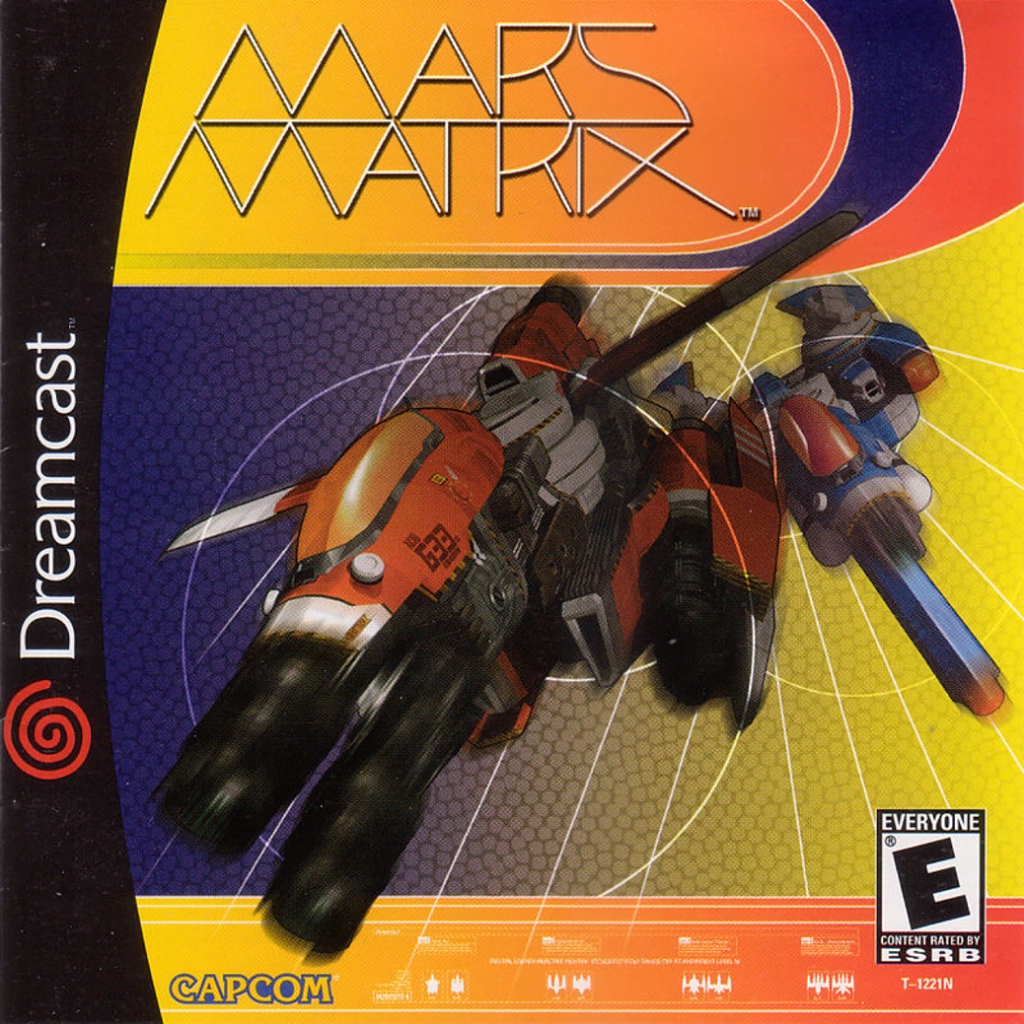
Anyways, collecting myself, I laid out the three games I’d be playing. The futuristic, yet mechanically ancient first-person shooter Codename: Tenka wasn’t a total bust, but after a couple of hours, I couldn’t justify playing it anymore. In contrast, the one-of-a-kind insect simulation Mister Mosquito only took a few hours, and was right up my alley. Finally, there was Mars Matrix. Spurred on by intriguing compliments delivered by Brandon Sheffield on Twitter (that I can’t seem to find now…), and the realization of how much the Dreamcast version sells for in the secondary market, I figured I ought to give it a shot, or a second one, since it turns out I played it back in 2011, an experience I’d all but forgotten about.
The middle class Japanese family just couldn’t catch a break in the late 1990s and early 2000s, could they? Besides having to deal with the economic ramifications of the Lost Decade, many were put in situations that caused them to risk life and limb. Take the Tanamatsuri family, as highlighted in Incredible Crisis. On a very special day – grandma’s 80th birthday – the family had to deal with all manner of ludicrous obstacles. Their day-to-day routines were interrupted by snowboarding bank robbers, kaiju teddy bears, and so many sinking boats. Other families had their interpersonal relationships put to the test, such as the Yamada family. In the particular summer highlighted in Mister Mosquito, they were plagued by the eponymous bloodsucking pest. For them, he brought about more than itchy bites; he nearly tore the family apart!
Up until playing it, I’ve only ever had two associations when thinking about Shadow Hearts. One related to the game’s Judgment Ring, an appealing mechanic that added an element of action to otherwise typical turn-based battles. The other, more prominent association was the proximity of its release to Final Fantasy X, one of the most anticipated games at the time. At first blush, this seems like unfortunate timing, but in actuality it was opportunistic: a hope that those awaiting Final Fantasy X would purchase Shadow Hearts to bide their time with a similar role-playing game, albeit one with a much smaller development budget. With this in mind, I long ago established modest expectations. Now that I’ve completed it, I’ve found that these expectations were spot-on, which isn’t to say I didn’t enjoy playing Shadow Hearts, but it was somewhat unimpressive. Continue reading Shadow Hearts [PlayStation 2] – Review→
Half-Life is a game I’ve probably started a half-dozen times, yet never completed. It was one of the first video games I owned for a computer and I can still recall, quite vividly, when my mom bought it for me at a garage sale. Around this time – middle school – I had a burgeoning interest in video games, just as my enthusiasm for soccer waned. I had never heard of the game before but upon seeing the acclaim advertised on the big box Game of the Year Edition, I decided I needed to know about it.
Following an awkward period acquainting myself with mouse and keyboard controls, I assumed the role of Dr. Gordon Freeman and did my best to escape Black Mesa. At some point, struggling to overcome the odds, I burned out. Every now and then, as the years passed, I’d revisit the game, start a new save file, and proceed down the same path. Despite my inability to get very far, it’s remained on my to-do list ever since, especially considering its heralded status as a first-person shooter. Well, like I’ve done with many other games this year, I can finally mark it complete. Continue reading Half-Life [PlayStation 2] – Review→
It’s been about a month since Jeff and I completed Metal Gear Solid 2: Sons of Liberty. Generally, I try and write about a game within a few days of completing it but this game wound up provoking so many mixed emotions for me. It’s left me awestricken in many ways, some good and some bad. This is a game that’s often touted as the first postmodern video game, and while I’m too much of a dullard to fully comprehend this statement, the way my own opinion has been split in so many ways is indicative of its provocative nature. It’s a game I admire and disdain at the same time, and I’ll try my best to detail some of the major reasons why.
Stealthily eliminating foes was the way to go.
Like our recent playthrough of Metal Gear Solid, this wasn’t my first experience with this game. I originally played it a couple of years after its release and recall thinking the world of it then. As a sequel, the narrative subverts most preconceived notions of what to expect, and I think high school John really got a kick out of that. As an adult, I still find that fascinating, perhaps more so now, especially having directly completed its predecessor. One of the most notable ways Kojima did this was through a bait-and-switch of the protagonist.
While the first hour or so of the game stars Solid Snake, as one would expect, the true star of the game is Raiden. As a character, he’s anything like Solid Snake, the gruff, self-assured action-movie hero one expects in a game like this. Instead, Raiden is supposed to represent the player, a novice whose preparations for the big time constituted training in virtual reality. These preparations leave him undoubtedly skilled, but not with a mindset capable of being successful in the ways Solid Snake has been previously. His lack of confidence was grating to witness, although his character arc climaxed with my impression of him notching up a little bit.
The story of Metal Gear Solid may have grown convoluted but it doesn’t hold a candle to anything on display here. At its most basic, this game centers on Snake and Otacon’s quest for Metal Gear nonproliferation and Raiden’s journey to discover himself. Then about a dozen layers are added on top of those and any further comprehension requires extensive notetaking and periods of downtime to digest the events of the lengthy and frequent cutscenes. The breakdown between actually playing the game and watching it was somewhat jarring, although I did enjoy watching more than playing. Maybe I feel that way because the time I had to develop my stealth and combat skills was squashed between lengthy conversations that took me out of the experience? Either way, I felt my performance was less impressive compared to the previous game.
Due to narrative reasons that are mind-blowing, the events of the game are purposefully similar to the Shadow Moses Incident and wind up serving as little more than a test to creating a solider equal to Solid Snake. Pulling the strings is a shadow organization known as the Patriots. Already in control of the United States (every election has been a sham and most major government officials are representatives of the organization) they’re seeking control of the flow of digital information now. A new Metal Gear was designed and the AI contained within, GW, is the construct to achieve their goal. There are about another dozen crucial characters and their allegiances and double crosses become confusing narrative fodder. Thankfully I did take detailed notes but even so, I remain unclear on many things and feel another playthrough is necessary to really comprehend everything. Nonetheless, the narrative was the freshest aspect of this game and it was unpredictable at every point.
Raiden was a tough character to like.
Likewise, the depth found in the gameplay has also been drastically increased. The increased AI is no joke; no longer do guards make buffoonish decisions when catching a glimpse of Snake in a box. Rather, they call reinforcements more often than not and send in additional soldiers to “clear” an area, searching in most nooks and crannies. It felt like setting off an alert resulted in many more mission failed screens compared to the previous game. I want to say in addition to the more stringent AI, the alerts lasted longer too. Frequently, I would throw Raiden or Snake in the line of fire just to get a quick reset instead of hiding for the few minutes it would take for things to cool down. This resulted in a less enjoyable gameplay experience. It’s also one of the reasons I’d like to replay the game again, just to take my time and devote all my focus to remaining stealthy and see if my performance and enjoyment increase.
The gameplay improvements are not relegated solely to stealth actions. Gunplay received an overhaul in the form of first-person shooting. First-person shooting provided a greater level of accuracy when eliminating enemy threats, and provided some fun when taking them by surprise. Individual body parts could be targeted, including the ability to shoot the radios an enemy may call for reinforcements with. This viewpoint was only useful in specific cases though as the character would remain locked in position – the game couldn’t be entirely played like a first-person shooter. It was a smart addition nonetheless and added a further layer of complexity to approaching a situation.
With first-person shooting, the level of precision allowed increased immensely. Shooting soldiers, or glass bottles, in specific locations yielded different outcomes.
Like its predecessor, there were many great set piece scenes with most of them revolving around the varied boss fights. Again, there was a rogues’ gallery of bad guys to defeat and each encounter was a unique experience. I can’t think of any being down-to-earth showdowns; for instance, Raiden battling a roller-skating mad bomber of sorts or his showdown with a small force of towering Metal Gears. The set pieces extended beyond cinematic fights though, including one particularly frustrating platforming section. One section in particular ate our lunch, seeing us retry twenty or so times. Raiden was forced to navigate a narrow strip of piping across a body of water and the various obstacles highlighted why such a section didn’t jive with the super responsive character movements.
By the end of the game, Raiden had been redeemed in my eyes, proving he could hang tough.
What do I think of this game? The narrative is bold, but tough to follow. I want to replay and reread my notes to try and piece everything together. I didn’t much care for Raiden although I felt he was redeemed by the end; for a deeper analysis that I agree with (and reasoning why this game is postmodern), read this. The gameplay split my opinion the most. I like the improvements, even though the increased AI resulted in a tougher game with more frustrations. Again, it’s another reason I’d like to replay, in order to have a more enjoyable experience. As it stands, it was enjoyable seeing what happened in the game, less so to actually play. I still think the original is unsurpassed as a pure video game or piece of entertainment. I would agree that this game is incredibly bold and deserves most every ounce of praise; it just wasn’t as fun to play.
Now here’s a genre that has subsided as the cost of video game development has risen. Thinking back to the period that this game was released, both Microsoft and Nintendo had first party snowboarding games, while Sony had the original SSX exclusively, not to mention a few other third-party snowboarding games. This period also saw the bubble of extreme sports video games, which we don’t see as often anymore. I haven’t played Amped: Freestyle Snowboarding, but I recall it (and its predecessors) being well received. A quick scan of its Wikipedia page reveals that it made use of the Xbox’s built-in hard drive. It allowed for entire mountains to be played on (instead of single courses as in SSX or 1080°) and the ability to create custom soundtracks. I’ve always enjoyed this style of game and look forward to playing Microsoft’s answer to the genre.
Amped: Freestyle Snowboarding was developed by Indie Built. The studio had a long history dating back to the early days of commercial PC video games (then known as Access Software), and are perhaps most known for their Tex Murphy or Links series’ of games. This was a launch title for the Xbox, releasing November 19, 2001 in the U.S. Microsoft purchased the studio in 1999, and thus published this game under their Microsoft Game Studios label.
When you have a video game collection like mine, it can be hard to play all of the games. This is especially true when additions are made on an almost weekly basis. Still, I appreciate nearly every game I’ve accumulated for this reason or that. In the hopes of improving my writing through continuous effort and promoting ongoing learning of these games, I’m going to compose brief, descriptive articles.
As far as Final Fantasy branded items go, Final Fantasy Chronicles is somewhat unique. It was only released in North America, sort of. This is a compilation of two games previously released in North America: Final Fantasy IV and Chrono Trigger. Both games feature additional content compared to their original SNES releases. Most of the additions are minor, but each game now includes an opening cinematic and Final Fantasy IV’s script has been revised. I haven’t played these versions, but I have played these games and without question, they’re highlights of the role-playing genre; specifically harkening back to of the most popular eras of the Japanese RPG.
Each game was originally developed by Square and these versions were ported by TOSE. Final Fantasy Chronicles was released for the PlayStation on June 29, 2001 courtesy of Squaresoft.
You really ought to check out how well Dave Giarrusso duplicated Activision’s manuals for this game.
Here it is – my final article about Activision Anthology. After 41 straight days of articles and 44 games covered, I’m fixing to discuss the final two games on this magnificent compilation. These are unlike anything else on the collection as they were originally unreleased.
First up is Kabobber, a game discovered in 2000. I’m not sure of the story behind its discovery, but it was cleaned up before being released to the internet. In fact, much credit is presumably due to Dave Giarrusso, the man responsible for the manual. It can be found here, at AtariAge. The game was designed by Rex Bradford and is a weird action game.
Players control the little squad of blue creatures. Gameplay is similar to a mode in Tetris DS actually.
Players control a small squad of Buvskies and progress down a grid, growing their squad and avoiding or destroying enemies in the hopes of reaching the Princess Buvsky before she exits the stage. The controls were very precise which allowed for no uncertainty when playing, but the overall game lacked polish. This is understandable as it was unreleased, but even as is, I didn’t find a sweet enough set of mechanics or rewards to enjoy it for long periods of time.
Would you pass this over in a thrift store?
Next up is Thwocker. This game’s rediscovery is so cool. Imagine shopping at a local thrift store and stumbling upon an unassuming Atari 2600 with a stock red label on it. Being the video game enthusiast you are, you pick it up anyways because it’s a pittance and it might be a game you don’t have. For AtariAge’s d8thstar, it was more than just another game; it was an unreleased prototype that had been floating around for twenty odd years.
Like Kabobber, Thwocker is an interesting action game that, unsurprisingly, isn’t all there. Controlling a little composer, players bounce around stages trying to pick up musical notes in the correct order. This composer is made of flubber though and controlling him is easier said than done. I found it to be a little frustrating. The game looked advanced compared to many of its contemporaries, but overall, it was a little flat.
White men can’t jump, but they sure can bounce.
If 10,000 points are scored while playing Kabobber in Activision Anthology, a commercial will be unlocked. This commercial is a montage of some early Activision titles that features truly amazing transitions of pixilated characters into the real life counterparts that games are replicating.
If you’ve been reading along with every article or even just a few, I’m truly appreciative. Also, thanks to those who liked my articles. I’m grateful for that outreach and the community we can create on WordPress with our likeminded blogs. I’ve had fun keeping my schedule of an article a day and look forward to a similar challenge. Perhaps more importantly though, I’ve had fun discovering Activision’s early catalog of video games. The majority of these are undisputable classics. Thank you!
I recommend searching out an image of the Japanese box art, it’s quite good!
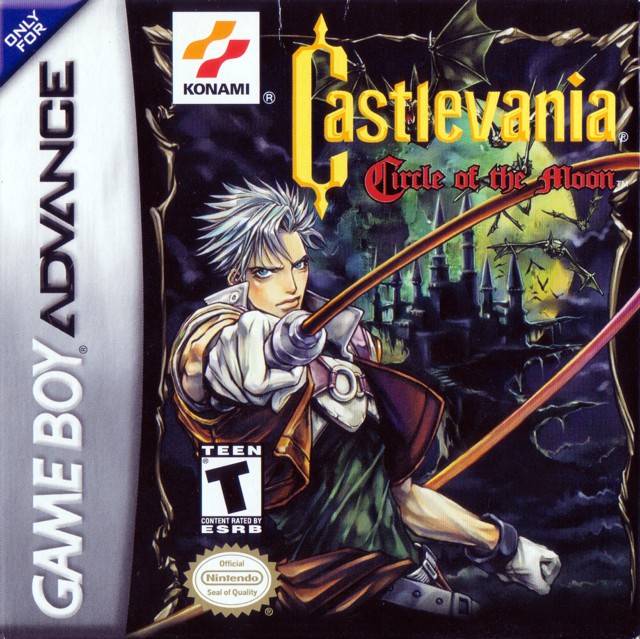
Platform: Game Boy Advance
Publisher: Konami
Developer: Konami Computer Entertainment Kobe
Release Date: June 11, 2001
The resurrection of Dracula isn’t enough to deter feelings of resentment and rivalry in Hugh Baldwin. The young vampire hunter is distraught after his father, Morris Baldwin, gave his treasured Hunter Whip to Nathan Graves, the protagonist of Castlevania: Circle of the Moon. The three arrive too late to the Austrian castle where Dracula is being revived. The dark lord captures Morris and isolates himself from the two young apprentices.
Rather than seek out their mentor together, Hugh sets off on his own wanting to prove himself to his father. Hugh’s sour feelings are brought up multiple times as the player encounters him while exploring the castle, but there’s no depth to this plot. Ultimately, Hugh realizes the darkness in his soul would be his downfall and redeems himself. Lackluster story or not, it’s all supplementary to the player’s exploration of Dracula’s castle.
While newer 2D Castlevania games have progressed in nearly every department, Circle of the Moon is still a game worth playing.
Exploration has been one of the hallmarks of the Castlevania franchise since the beginning and Circle of the Moon retains this element. Dracula’s castle is both expansive and limiting and the same time. The player is limited from outright exploring every area due to obstacles that cannot be overcome until a required item is unlocked. There are many such roadblocks to progression forcing the player to explore the castle sections at a time. Still, the player has much freedom to wander about and discover rooms with stat boosters and tougher enemies. The design methodology seems to encourage players to spend time exploring while preventing them from encountering enemies much too tough for them.
As players traverse Dracula’s castle and defeat enemies, Nathan levels up and becomes stronger and more resilient. Players also have a few options for customization by equipping different pieces of gear or making use of Circle of the Moon’s unique Dual Set-up System. The gameplay draw for this Castlevania game, the DSS, allows users to combine magical cards they’ve come across to enhance their combat proweress. By combining an action card and an attribute card, players can unleash special attacks or increase their stats. I wasn’t impressed with the system for the majority of the game, tending to rely on a combination for many hours without alternating. As Nathan’s quest became more difficult though, I experimented more and by the final battle with Dracula, I was switching between three combinations depending on the circumstances.
The bosses are not to be trifled with. I had to spend a small amount of time grinding levels for some of the later bosses.
Apparently the score is mostly composed of songs from past games in the series, slightly revamped. I’m not intelligible enough in regards to the series to say whether or not these versions are better, but I can say that I sought out a few of the tracks and put them on my iPod I liked them so much. “Awake” was introduced in Circle of the Moon, “The Sinking Old Sanctuary” is from the Genesis game Castlevania: Bloodlines and “Clockwork” is from the NES game Castlevania III: Dracula’s Curse. I would’ve embedded them, but WordPress doesn’t allow mp3s, so I’ll just say search them out.
Castlevania: Circle of the Moon was on the receiving end of some controversy in the late 2000s when Mr. Castlevania himself Koji Igarashi struck the game from the primary timeline. This action is something only the most fervent fans will care about, but it sent a message that Circle of the Moon was not as respected other titles. (Perhaps this was personal though as IGA didn’t have any involvement.) Still, Circle of the Moon is well enough worthy of the Castlevania moniker – it’s a superb action game.
A launch title for the GameCube, this was Luigi’s first game where he received top billing.
After winning a mansion in a contest he didn’t enter, Luigi invites his brother to check out his new digs. After getting lost on his way, Luigi eventually arrives to discover the mansion is packed with ghosts and they’ve captured Mario. The ensuing evening highlights how Luigi’s love for his brother overcomes his lack of confidence. All told though, Luigi’s night is full of mild laughs and humorous encounters rather than deep frights.
There was a bountiful amount of ghosts, one might say the mansion was bountighoul.
To combat the ghosts, Luigi utilizes the Poltergust 3000 – a special vacuum designed by Luigi’s most recent acquaintance, Professor Elvin Gadd. This vacuum sucks in the undead inhabitants and when Luigi returns to the safety of Gadd’s shack outside the mansion, the professor seals the ghosts in portraits. Capturing ghosts was initially a frustrating endeavor but with practice it became easier, but it never felt “just right.” Navigating the mansion was occasionally a laborious affair as well.
The mansion is quite large and it’s full of distinct rooms that are inhabited by similarly distinct ghosts. The mansion was broke up into areas which were capped off with a boss fight against a more menacing foe. Luigi’s Mansion was fairly straightforward, but there were a few times where I wasn’t sure what I needed to do to progress. Also, backtracking was a massive part of the game. Towards the middle of the game, when the number of unexplored rooms was dwindling, I’d usually have to traverse multiple floors in a convoluted fashion to move on.
Luigi’s not so sure about that proposition.
The problems I had with Luigi’s Mansion were minor, but were annoying nonetheless. Its gameplay also wasn’t so fantastic as to redeem these annoyances. I felt like my time with Luigi’s Mansion was worthwhile though. It was a very positive, humorous adventure that has me interested in its upcoming sequel.
Share this:
Twitter
Facebook
Tumblr
Like this:
LikeLoading...
The internet's source for Mansion of Hidden Souls.
![Mars Matrix [Dreamcast] – Review](https://mybrainongames.files.wordpress.com/2020/10/mars-matrix-sega-dreamcast-north-american-box-art.jpg?w=672&h=372&crop=1)
![Mister Mosquito [PlayStation 2] – Review](https://mybrainongames.files.wordpress.com/2020/09/mister-mosquito-playstation-2-north-american-box-art.jpg?w=672&h=372&crop=1)

![Shadow Hearts [PlayStation 2] – Review](https://mybrainongames.files.wordpress.com/2019/05/shadow-hearts-playstation-2-north-american-box-art.jpg?w=672&h=372&crop=1)

![Half-Life [PlayStation 2] – Review](https://mybrainongames.files.wordpress.com/2018/07/half-life-playstation-2-north-american-box-art1.jpg?w=672&h=372&crop=1)

![Metal Gear Solid 2: Sons of Liberty [PlayStation 2] – Review](https://mybrainongames.files.wordpress.com/2015/11/metal-gear-solid-2-sons-of-liberty.jpg?w=672&h=372&crop=1)


![Random Game #40 – Amped: Freestyle Snowboarding [Xbox]](https://mybrainongames.files.wordpress.com/2015/02/amped-freestyle-snowboarding.jpg?w=672&h=372&crop=1)

![Random Game #1 – Final Fantasy Chronicles [PlayStation]](https://mybrainongames.files.wordpress.com/2014/11/final-fantasy-chronicles.jpg?w=672&h=372&crop=1)
 When you have a video game collection like mine, it can be hard to play all of the games. This is especially true when additions are made on an almost weekly basis. Still, I appreciate nearly every game I’ve accumulated for this reason or that. In the hopes of improving my writing through continuous effort and promoting ongoing learning of these games, I’m going to compose brief, descriptive articles.




 My Brain on Games