These past few days, as I’ve been researching the Atari 2600 games I’m writing about, I’ve really gotten into the stories and developers behind them. Information about the stories behind their development are fairly prevalent and this information is helping me to develop a real appreciation for the platform. I’m reaching the point where I almost want to research all of the 2600 games I have.

I don’t know if I’ll follow through on that though because watching the Olympics has been consuming more of my time than I’d anticipated. This is the first Olympics that I’ve actually payed attention to and I’m enjoying it, especially beach volleyball. In other Olympic news, my friend and I are nearing the halfway mark with the NES. We got a couple gameplay sessions in this past week and played a variety of games. Most notable games from last week: Dr. Mario, Dragon Warrior, Duck Hunt, and Final Fantasy.

Sean Rosenthal makes a save with Jacob Gibbs in the background at the Olympics.

No, Baten Kaitos isn’t a jumble of made up words; it’s Arabic for belly of the sea monster and another name for the star Zeta Ceti.

Baten Kaitos: Eternal Wings and the Lost Ocean is a role-playing game released in late 2004 for the GameCube. It was co-developed by Monolith Soft (known for the Xenosaga series and the recently released Xenoblade Chronicles) and tri-Crescendo (Eternal Sonata) and published by Namco. The game is a story of revenge for Kalas, the primary protagonist but it also focuses on his (and his compatriots) quest to save the world. I didn’t find the story or characters interesting, but what’s exceptional about the game is its card-based battle system, which could’ve been its biggest liability.

Baten Kaitos: Eternal Wings and the Lost Ocean takes place in a fantastical world, a world where landmasses float in the sky, oceans are a thing of legend, and the human inhabitants have wings. The young adult Kalas is on a mission of revenge as he searches for the murderer of his brother and grandfather. He believes the person responsible is a soldier in the imperialistic Alfard Empire. The game begins as he awakens, confused but not suffering from amnesia, in a remote village. Soon after this point, he meets Xelha, a kind but mysterious girl who believes the Empire is on the verge of unleashing a great evil. Although Kalas believes he has no need for her, they join together as their goals run a similar course.

At the point I finished (about a dozen hours in), I had met a third party member: a rural fisherman named Gibari. He was beefed up and helpful in the rural town I found him in, but he wasn’t the sharpest tool in the shed. Beyond those three, I can’t comment on anyone else as I didn’t sink enough time into the game to meet anyone else. After joining up with Xelha, I visited another town or two and trekked through a few enemy-riddled areas, but the main focus was the routine run-ins with the Empire, which helped narrow the protagonists’ motives.

There wasn’t a ton of discussion regarding the character’s wings, and they rarely used them.

I don’t really have an opinion on the general story because I only played it for a dozen or so hours, but in that time span I already knew that I didn’t like Kalas. He was off-putting from the get go with his lack of respect for others and rudeness. Of course, naïve characters are the norm for role-playing games of this ilk; I’m sure that over the course of the estimated sixty hours of gameplay, he would mature and grow as a person. A lot of my opinion of him (and others) was based on the poor voice acting and that didn’t help in forming my opinion. It’s not necessarily that characters over or under act, instead my grievance lies with the quality of the audio – it sounds like I’m listening to people in a sound booth, as if whatever audio mixing that would remove this aura wasn’t done.

On the back of the game’s box is a quote from Nintendo Power: “It’s possibly the most beautiful GCN title ever made,” which I’d have to agree with. The game’s locales are like paintings that you walk around in, or like the PlayStation 1 era Final Fantasy games; they feature a fixed camera perspective with no player control of it. The pre-rendered backgrounds of the towns are intricately detailed and will often have animated bits and pieces, but because I wasn’t able to control the camera, navigating these areas was sometimes less than great; for instance when Kalas would walk into the background and shrink to signify distance from the camera. This isn’t a problem with Baten Kaitos, it’s just a style that I don’t prefer.

As the land masses reside in the sky, clouds were occasionally a nuisance.

What makes Baten Kaitos unique compared to other RPGs is its reliance on Magnus (playing cards) for items, attacks, equipment, and just about anything else. Each character had a deck of cards that they used in battles. As they leveled up, the amount of cards they could put into it, as well as their hand size in battles grew.

Battles revolved around each character’s deck of Magnus. A good deck would contain a mixture of offensive, defensive, and healing cards that were suited to take advantage of enemies’ elemental weaknesses. In battles, characters would have a hand of cards and I’d try my best to link them together to create optimal attacks and defensive maneuvers. I found that if I didn’t suit my deck to each area and continually keep it fresh, I wouldn’t advance.

The Magnus weren’t just used in battles though; they were used in place of items too. Special Magnus could capture the essence of an item, say water, and I could then use that Magnus to solve a puzzle, such as putting out a fire. I had to be careful with Magnus however, as the cards would age and their properties would change. For instance, if I had a Magnus with green bananas on it, as time passed, the bananas would ripen and the card’s effect would change. This aspect of the Magnus kept me on my toes and was in some instances, annoying.

An important aspect of battles and deck building was to try and use cards that had similar numbers. For instance using three cards with the same number yielded bonuses.

Card-battling games have a reputation for being obtuse, complicated, and slow-paced. Of course, they’re also known for requiring strategy, skill, and a little luck. What’s great about Baten Kaitos: Eternal Wings and the Lost Ocean is that it takes the best things about card-battling games: strategy in deck building, skillful combinations of cards, and a little luck of the draw, while reducing the negatives by speeding up the battle system and easing players into the extensive number of Magnus. It may not have captured my attention for too long, but damned if I didn’t absolutely enjoy its battle system.

Phantasy Star – Review

March 14, 2012

Looking at the box art, you wouldn't guess that the game is sci-fi.

Originally released for the Sega Master System in 1988, Phantasy Star was Sega’s attempt to duplicate the role-playing game format standardized by Dragon Quest and Final Fantasy. Unlike those games, Phantasy Star is set in the future and in space, although the execution of this setting is poor (treasure chests and fantasy outfits). Still, for those interested in a challenging quest that requires heavy player involvement with little narrative reward, Phantasy Star shouldn’t be overlooked in favor of the previously mentioned titans of the genre.

As Alis watches her brother die, she listens to his final request: kill the evil king Lassic and set things right in the Algol Solar System. Alis’ quest for revenge begins on the forest rich Palma, continues on the arid Motavia, and leads her to the icy Dezoris before finally heading back to Palma and defeating Lassic. Along the way she builds a party of like-minded individuals including the feline Myau, Odin, a warrior turned to stone by Medusa, and the wizard Noah. Getting these adventurers to join Alis’ party was no easy task however.

Gathering leads on these individuals required Alis to chat up everyone she met, and required me to keep a record of what they said. Heck, without the NPCs doling out such vital information, I’d have little reference for towns and dungeons, items, and even where I should be heading. Phantasy Star wasn’t a game I could passively enjoy; if I didn’t keep a record of acquired knowledge or chart out maps on paper, I’d never have beaten Phantasy Star without resorting to a FAQ, which I still did.

Trouble resides in that mansion...

Like every other console RPG from the era, I viewed towns and the overworld from a top-down perspective, granting me a large view of the game at a time. But, when Alis entered dungeons the perspective changed and I saw them from her eyes. Without a large view of dungeons, I had a hard time navigating them without getting lost. Some were small enough that I could get through them without much trouble, yet others were so large and filled with traps that it’d take hours if I persisted with trial and error.

An RPG like Phantasy Star wouldn’t be complete without battles and character progression and it has both! Like its contemporaries, Phantasy Star has a simplistic battle system. Battles occurred randomly as I explored the overworld and caves, and these were also viewed from the first-person perspective. I had few options and the two that really mattered were fight and magic. I had multiple types of magic; what I found most effective was the healing kind although there were helpful spells that exited my party from caves or returned them to towns; on top of powerful damage dealing magic. The order of events seemed fairly random, sometimes I’d attack an enemy first, while other times I’d fight the exact same enemy type and they’d attack first; characters had no speed stat.

I didn’t find the early portion of the game very enjoyable. When I started out, my party consisted solely of Alis and in her early state she could only fight a couple of battles before having to be healed. As I accumulated better equipment and experience enemies began fearing me. Especially once I increased my party size. Grinding for experience and mesetas (money) took up most of my time with the game, and that’s just how these older games are. It’s not a bad thing; in fact once my party could withstand a lot of punishment and equally deal it out I enjoyed returning to caves and building up a small fortune. But doing that over the course of twenty or so hours doesn’t appeal to everyone and in fact I ran out of steam at the end of the game.

Dragons were a handful early on, but my party was able to wipe the floor with them eventually.

I liked exploring the caves from the first-person perspective. It seems like a remarkable technical feat considering when Phantasy Star came out. But, keeping track of where I was, was very difficult, especially when caves began growing in size and they had trap floors dropping me a level. I also enjoyed having to personally piece together what my next step was through NPCs, although the lack of character or plot development wasn’t what enticed me to continue playing, it was strengthening my characters. I battled and battled and battled some more and empowered my party to great strengths and this was pleasurable. Battles were very simple, but I was able to speed through the menus and overpower enemies once my party members were of high levels and equipped with good gear. I did run out of steam in the end however. I tend to do that, probably because I’ve proven my strength in the game and the payoff I’ll get for completing an “ancient” RPG like Phantasy Star won’t be revelatory. Still, Phantasy Star was enjoyable, as long as I had the gumption to get involved.

I just ate some lychees and those suckers are good! Cool box art by the way!

Coming hot off the heels of our completion of The Legend of Zelda: Four Swords Adventure, my girlfriend and I have begun another GameCube game that features Game Boy Advance connectivity: Final Fantasy Crystal Chronicles. Along with Four Swords Adventure, it’s the only other game that I can think of that featured connectivity prominently and was halfway well regarded.

Final Fantasy Crystal Chronicles was developed by The Game Designers Studio (a Square Enix subsidiary) and published by Nintendo in the USA on February 9, 2004. Apparently The Game Designers Studio was set up to work around the exclusivity deal Square Enix had with Sony at the time. Square Enix’s history is very interesting, but not worth going into for this article. What is relevant is the knowledge that the release of this game and a few others around the same time represented a reunion between Square Enix and Nintendo.

So anyways… my girlfriend and I created our characters from a modest selection of classes and options and we were off. The world of Final Fantasy Crystal Chronicles is covered in a poisonous miasma but crystals provide shelter from this miasma therefore they’re essential to surviving. Large crystals protect small villages but they lose their power over time, forcing the residents to set out in caravans each year to search for myrrh. Myrrh replenishes the protective powers of the crystals and it can be found from myrrh trees which unfortunately are located in the deepest parts of monster-filled dungeons.

When we’d enter a dungeon, we’d immediately have to set up our command list. Attack and defend were always included, but we could select from our list of items and spells what else to include, and because we were playing on Game Boy Advances, we did this on them. All we had to do to execute a command was press the A button on the GBA. We could switch our commands by pressing the L and R buttons, which were highlighted on the TV screen near our character’s information.

An early boss and a common enemy in Final Fantasy, the Malboro.

We’d hack and slash our way through dungeons defeating the enemies we’d encounter. Every enemy dropped an item and we found out these were essential. Food restored our health while stones allowed us to perform magic and occasionally we’d come across a stat boosting item. We found healing stones very helpful, such as stone of cure and stone of life.

The dungeons took about twenty minutes to clear, including the bosses. The bosses were many times our character’s sizes and they were very detailed, they were also tough! They had a large amount of health and dealt a lot of damage in single blows which were sometimes hard to avoid; those healing stones came into play during boss battles. During these battles we’d delegate tasks such as healing and attacking but our communication could’ve been better. Regardless, we came out on top every time.

The one aspect of the game I remember receiving the most flak for was the chalice. Because the world is covered in a poisonous miasma, we had to carry around something to protect us at all times and the chalice that collected the myrrh we sought served this purpose. The only downside of this protection was that one of us had to carry it. So every time we ran into an enemy, the person carrying the chalice would drop it, help out fighting, and then pick it back up and we’d be on our way. I could think of other ways to remain protected instead of limiting one player, but that’s what The Game Designers Studio chose to do. This isn’t the case in single player games however as there’s a Moogle companion who carries it for you. My main grievance is it wasn’t fun being the person carrying the chalice, it’s not fun being limited.

Besides the chalice limiting one player, my only other gripe with the game at the moment is the inability of the game to pause when one of us would switch to our GBA screen. Since our GBA contained our menus, changing our command list had to be done through it. This wasn’t a problem with the exception of boss battles, but I guess the workaround is to be totally prepared beforehand.

It's hard to see in this screenshot but you can barely make out the protective aura of the chalice around this character.

My girlfriend and I played for two hours and by the end of our session we had finished the first year. The hack and slash combat was easy to grasp although getting a three-hit combo (the max) was kind of tough to manage. Besides serving as a controller, the GBA basically hosts each player’s menus and at times, shows the brilliance of allowing each player to manage their stuff without hindering everyone else. Final Fantasy Crystal Chronicles still looks really good all these years later and I like the art style; I suppose it’s a reimagining of classic 2D RPGs with modern technology. One of my favorite things about the game so far has been the soundtrack. The composer utilized medieval and Renaissance instruments and it sounds unlike anything I can think of. Truth be told, it made me think of Ireland and The Hobbit. It’s a simple hack and slash game but thanks to the cooperative play and link connectivity, it’s piqued my interest and we’re going to continue playing it.

Links:

Final Fantasy Crystal Chronicles
Nintendo

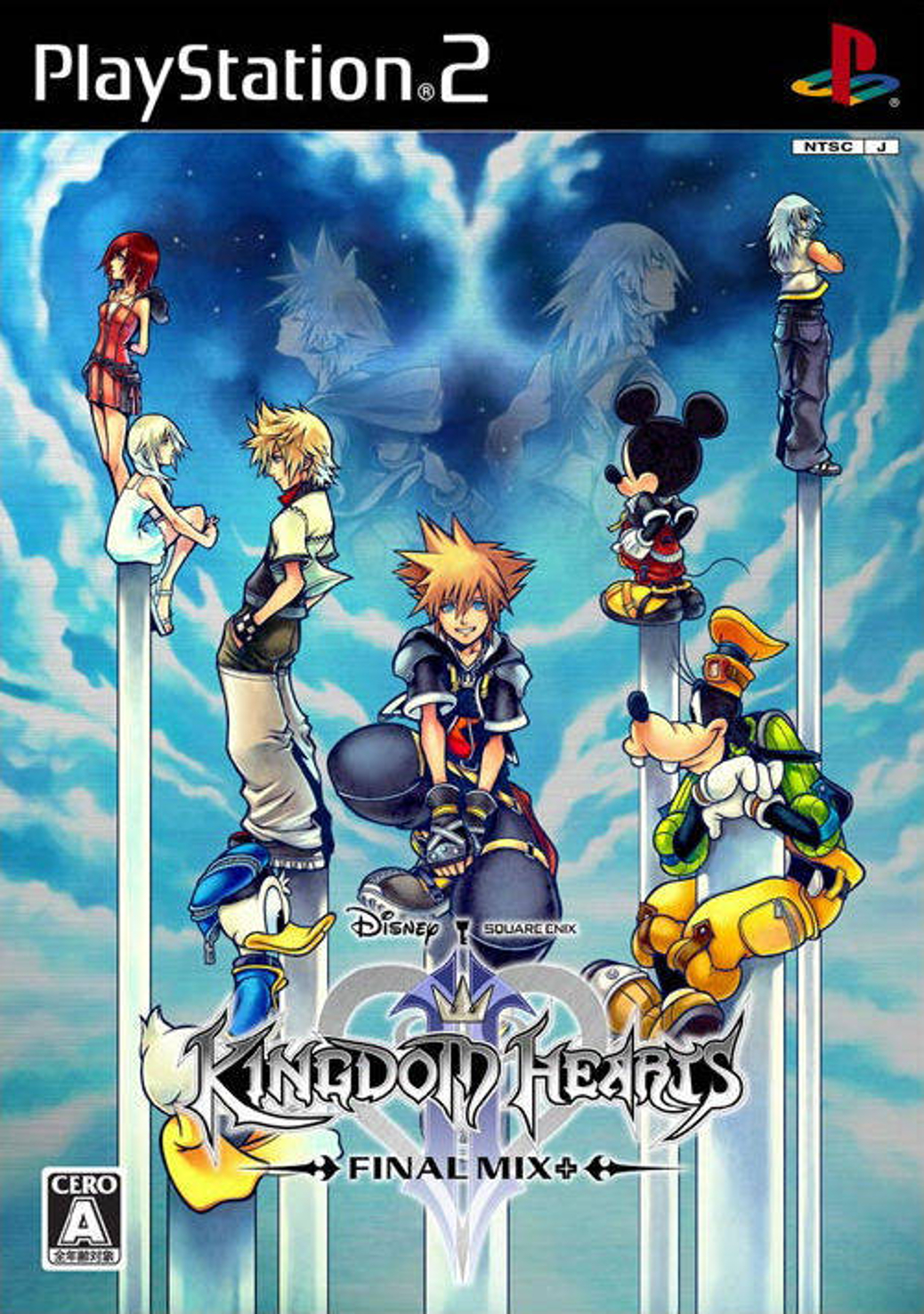
The box art for the collector's edition of Final Fantasy XII.

Besides the standard version of Final Fantasy XII, Square Enix released a collector’s edition of the game, exclusively to GameStop and EB Games in the United States. This version included the game and the same manual, of course, but it also came in a SteelBook package, along with a DVD containing a few special features.

Many games have since been released in these SteelBook packages, but I think Final Fantasy XII has one of the best ones. The front cover is simple, while the art on the inside of the case is intricate and detailed. It looks nice as a display piece on a shelf; otherwise it slips nicely in with the rest of a video game library being the typical DVD size case.

Included on the DVD are developer interviews, a history of Final Fantasy featurette, an art gallery, and trailers for the game.

There are quite a few developer interviews, twelve exactly, and they offer insights into different aspects of the game, from the director and what he was in charge of to what went into the translation. They’re all under five minutes, but there’s actually a lot of content to take in, and I always like hearing about what went into making a game.

The history of Final Fantasy featurette is a great way for people unfamiliar with the mainline Final Fantasy catalogue to get up to speed. The narrator discusses similar concepts with each game, and it would’ve been nice if he delved a little deeper into each game, but at thirty minutes, it’s a great primer to the series.

Viewing an art gallery on a DVD is about the last thing I want to do, but to its credit, there is a bunch of art included and it’s all tucked away in categories to aid in finding something specific. I feel the same way about the trailers. They’re put together very nicely, but I’m not learning anything new from them.

The collector’s edition of Final Fantasy XII is a nice package. The developer interviews were insightful, the history of Final Fantasy featurette was informative, but the art gallery and the trailers didn’t interest me too much. At this point it appears to sell complete for about ten dollars, comparable to the standard edition so if you’re in the market for the game, I’d recommend the collector’s edition.

The party from Final Fantasy XII.

I’ve completed another Final Fantasy, this time a more modern one, Final Fantasy XII. While I am knowledgeable about the series, I haven’t played a ton of them, but this is easily my favorite. I spent a month and a half playing through Final Fantasy XII in bits and pieces when I had the time and I’ve thought a lot about the game in the weeks since I beat it, what I’ve written are the my biggest takeaways from the game. I’ll talk about the world at large in Final Fantasy XII, Ivalice, the characters that form the party, the story very briefly, and the battle system. In general I feel Final Fantasy XII is a staple in the collection of anyone who enjoys role-playing games, and worth a look even for those don’t.

Final Fantasy XII takes place in Ivalice, a familiar environment for the series, home to the Final Fantasy Tactics games, as well as Vagrant Story. Ivalice spans many geographical regions, including many deserts, but it’s also home to snow covered mountains, tropical beaches, thick rainforests and more. Passing through these regions, I enjoyed not only the battles that took place in them, but marveling at the amount of work that went into making each location as detailed as they turned out.

Smack dab in the center of Ivalice is Dalmasca, home to Rabanastre, the city where much of the game takes place. Rabanastre is large, the largest city I’ve ever seen in a role-playing game, or any video game for that matter. Walking through its many areas, I viewed the beautiful architecture that it was composed of, reminiscent of a Europe of ages past. But Rabanastre isn’t the only large city in the game, there are others, but there is diversity in Final Fantasy XII; more common are the small gatherings of people, forming makeshift hubs, or villages in the heart of the wilderness, composed of foreign races.

The party battling a boss. Notice the blue line extending from Penelo, telling her who to attack.

After reading that the developers had visited Turkey and took an interest in European, Middle Eastern, and Asian cultures for the game, it’s easy to see that the influence has found a place in the game, specifically, much of Ivalice is set in a warmer climate, with Rabanastre being surrounded by deserts on all sides.

The vocabulary the characters often spoke with prompted me to look at some words’ meaning more than once and I’m not digging the game for it; I enjoyed hearing seemingly archaic words, broadening my own vocabulary; it’s something that helped reel me into the setting. Even though the game has an antique vibe, technology is everywhere. One of the first cut scenes in the game shows a battle raging with foot soldiers on the ground dressed in armor and swinging swords at each other; one side attempting to defend a castle-like structure with the other side attempting to capture it, meanwhile an aerial dogfight is going on between futuristic flying crafts, zipping about. This blend of swords and soldiers and futuristic sci-fi was an interesting juxtaposition of aesthetics.

Ivalice is a world built on the foundations of magicite; a magical crystal substance that holds power, power that inevitably will end up in the wrong hands. Long ago the Dynast-King Raithwall united all of Ivalice under his rule, with the help of magicite, bestowed to him by the mysterious Occuria, undying, god-like beings. The time of the Dynast-King Raithwall was thousands of years ago and current day Ivalice is on the brink of war.

The battle I mentioned earlier was between the Dalmascans, protecting Nabradia, the border between them and their attackers from the east, the Archadians. Archadia is a large kingdom, perhaps the most powerful at this time in Ivalice and they want Dalmasca. Why? Perhaps they want Dalmasca to allow them easy passage to a third kingdom, Rozarria in the far west. During the final moments of this battle, the king of Dalmasca has agreed to sign a treaty with Archadia, but he is assassinated directly after.

A couple of years after this, we are introduced to Vaan and Penelo, two orphans living in Rabanastre  who both lost their parents in the war, as well as Vaan’s brother, who fought at Nabradia. Vaan has much disdain for the empire, after all the war took his whole family. Vaan doesn’t have much direction in life, he spends his days running errands for a shopkeeper along with other orphans of the war, but much of his time is spent stealing from others. His only real goal is to become a sky pirate and be able to live freely, going wherever he wants. Penelo seems to be the angel on Vaan’s shoulders, leading him out of trouble and attempting to prevent him from getting into any more. While Vaan has his goal of becoming a sky pirate, all it seems Penelo wants is to remain at Vaan’s side, and not lose anyone else.

Rabanastre is soon paid a visit by a member of the Archadian royal family, and the newest overseer of Rabanastre, Vayne Solidor, the son of the Archadian king. He is a charismatic person; as he begins speaking to the crowd of Rabanastrans, it’s apparent they don’t want what he’s selling, but Vayne is able to whip the crowd into frenzy and get behind his rule, at least somewhat, with a charming presence and an intelligent tone; he seems peculiar though. Vayne is tall, with long black hair, and a smile that seems… off, he just looks like an antagonist. After Vayne’s speech, Vaan decides to break into the royal tomb and steal something back from the empire and it’s during this escapade that he meets Balthier and Fran.

Balthier has a cool personality about him, he always appears to be in control of the situation; basically he’s the dashing pirate. His partner Fran is a viera, a woman with rabbit like features, including long ears and hair that practically flows to the ground. Like Balthier she also has a cool personality, never coming off as nervous. She definitely shows her smarts throughout the game, offering practical advice and necessary knowledge of magicite. As the game progresses Balthier comes to view himself as the leading man, and why not, being a sky pirate he has the airship that eventually transports the party, he shows an altruistic side later on and all in all, he’s just a fun character. And from the events that unfold, his past is brought to light and wow!

CG from the cut scene where Vayne Solidor presents himself before Rabanastre.

As they make their way out of the royal tomb, they soon stumble into a rebel group, headed by an unassuming beauty, who is later found out to be the princess of Dalmasca, Ashe. She is a strong-willed fighter who wants nothing more but to restore Dalmasca to the kingdom it was before Archadia took over. As the story progresses she has to find the strength within herself to do what she must; even though she is strong-willed, she has doubts about what she has to do, and whether she can pull off what must be done. At times she seems distant from the rest of the party members, almost focusing solely on what lies ahead for her, but with what lies ahead for her, who wouldn’t be focusing on that, after all, Ivalice’s future is practically on her shoulders.

Last, but not least, there is Basch, a former leader in the Dalmascan army, but now an outcast, as he has been charged with assassinating the king. The party finds him in prison, and while they know what he has done, they know they need him. But Basch does not have the demeanor or the attitude of a royal assassin; it becomes instantly apparent that this cannot be the man who murdered a king. He is a soldier through and through, showing respect for the rest of the party, and pledging allegiance to Ashe in particular.

There was a lot going on in the narrative of Final Fantasy XII, at times I felt overwhelmed, but I managed to sift through the dense amount of information and enjoyed the payoff.  In the last ten or so hours of the game, all these story threads were coming to a close, and I didn’t want to stop playing; I was the most hooked to the game at the very end. I clocked in under 80 hours when I finally beat the game, and I still had plenty to do. I aim to replay Final Fantasy XII at some point, and I left plenty of side quests for that play through but I did an ample amount regardless. Final Fantasy XII is simply a massive game, with a massive amount of content.

I guess the only thing I haven’t talked about is the actual gameplay and the systems Final Fantasy XII employs. With each Final Fantasy, Square Enix implements a new battle system, or tweaks aspects of a previous one and Final Fantasy XII is no different.

The party battling it out.

Many role-playing games have plenty of areas to explore, and they’re usually broken up into towns, a world map that the party traverses, and dungeons. Typical of many RPGs, especially those from Japan are random battles. For instance, as I’m moving my party around the world map or a dungeon I see no enemies, but I’m randomly attacked and whisked off into a battle scene in which I choose the actions I want to take, and once I’ve won, I’m back to the world map or dungeon. Instead of random battles, when I wouldn’t know when I’d be attacked, Final Fantasy XII shows enemies while I’m traversing dangerous areas. This isn’t the biggest change however.

Just as random battles are common in role-playing games from Japan, so are turn-based battles, battles where everyone is allotted a turn, including the enemies. In games like this I would pick an action, my character would do that, and then the enemy would do the same. Instead of being whisked off to a battle scene in Final Fantasy XII, the party members begin attacking enemies whenever they’re in range, never being taken into a separate scene. Direct control was never taken away from me, I could move about and select the actions I wanted and when the battle was done, the party relinquished their weaponry and I continued exploring the area. This “Active Dimension Battle” system as Square Enix calls it requires real-time selection of actions, and as such, I didn’t wait for the enemy to have his turn and then take mine. I’d select an action for a party member to take, and then a bar would fill up and they would do that action, there are still elements of taking turns, but never losing direct control of my team went a long way in making me not feel limited.

Setting up Penelo's gambits.

Rather than entering in actions for each party member, I could assign “gambits” to them. Gambits tell the AI to “do this, if that.” There are hundreds of separate gambits and when paired up, they’ll tell an AI-controlled party member to do something. For instance, I could have Vaan use a potion on a party member when their health falls below a certain percentage, or attack only flying enemies. Each character can have twelve gambits assigned to them maximum, and they’ll follow them according to their priority. I felt as though I could pair gambits up for any occasion, even though I used fairly simple combinations, I knew I could get very creative with them. For the first twenty or so hours I assigned gambits to the two AI-controlled members of my party and chose every action for my main character, but I eventually had everyone using gambits. Instead of being a player on the field, I was more of a referee, changing actions when I thought something would work better or just healing somebody because I hadn’t told an AI member to watch out for a certain adverse affect.

With Final Fantasy XII, Square Enix developed Ivalice into one of the biggest and most detailed game worlds I’ve played through; introduced me to well-developed characters who did not seem like the played out caricatures I’m used to in role-playing games; showcased an interesting story, one that harkened back to the roots of Final Fantasy, with crystal-powered life, all the while, weaving an interesting mature tale of corruption and complex relationships. Lastly, I experienced gameplay systems that brought new elements to a genre I spend so much time with. For these things, and many smaller elements, Final Fantasy XII will be a game I gauge all others by.

Bored. Thought I’d post something, but don’t have anything ready to go up yet, actually that’s not true, I have a review of Universal Studios Theme Park Adventure for the GameCube ready, but whatever. I finished Final Fantasy XII earlier in the week and need to begin writing about that. It’s daunting trying to think where to start, but I know that once I do it’ll just flow out.

Since completing that I began playing Animal Crossing: City Folk for the Wii, just this morning in fact! So far I’m grooving on it, but then again I spent an inordinate amount of time with Animal Crossing and a little less with Animal Crossing: Wild World, needless to say Animal Crossing is one of my favorite games. I’m also playing through The Legend of Zelda on the Nintendo Entertainment System. I’m making a graph paper map of the entire game, so it’ll take much longer than if I just played through it normally. Fairly recently I got the urge to make encyclopedias for the The Legend of Zelda and Metroid series’ containing plot synopses, maps, bestiaries, etc. So yeah.

I also played Gun.Smoke on the NES after completing Final Fantasy XII, but could only get to the third stage. I’d like to play it again and try to complete it, but it is a rather difficult game. And lastly, a friend came over and besides playing You Don’t Know Jack, we played The Typing of the Dead cooperatively on the Dreamcast. We were able to make it the final boss but were unable to beat the game. I really enjoy that game, I find it very funny with its terribly cheesy story and funny word prompts to type, besides the humor though, it’s a genuinely fun title to play.

The familiar design harkens back to the "good old days" of Final Fantasy.

Final Fantasy III is very traditional; then again, it originally came out in 1990. Within the first hour I had all of my party members and knew the ultimate goal I was aiming for. Luneth, the primary protagonist falls in a hole right away and finds out he is one of the chosen four, destined to save the world. His town elder knew this and when you return back to your hometown, they send you off with a few paragraphs. There isn’t the need for excessive exposition here. All you need to know is what the end goal is, what you’re doing in the current dungeon/town, and how to win battles.

It seems that Final Fantasy is renowned for being a series that one can turn to if they want a detailed or captivating story, and in this aspect, Final Fantasy III is very disappointing. The dearth of detail in the story turned me off; it’s a reason I play video games, and specifically, RPGs. The characters were stiff and lacked detailed personalities, the story was eventful, but nothing ever seemed impactful, a good job wasn’t done on making it seem like every action was necessary. Most of my time spent was zoning out and just battling to progress, and that’s the way I ended up playing the majority of it. I’d plug in a podcast, nothing against the soundtrack which I liked, and play it in bed before falling asleep, and I had a lot of fun playing it like this as I usually do with handheld games.

The party getting information on an early event.

The battle system is simple, lacking complexity, which works. Battles are easy to understand and with the ample amount of job classes, there is a variety of strategies available. Final Fantasy III did a good job of requiring me to try out multiple classes. Some dungeons would contain enemies that would resist physical damage, presenting the need to have your party deal nonphysical damage, via magic with mages or summoning, um… summons with, um… summoners. There were quite a lot of situations like this where you had to move out of your comfort zone; whereas I would usually keep my party full of physical attackers and a white mage for healing, I experienced many different jobs, and by the end of the game, I had a diverse party, with at least half of my party being a class I wouldn’t ordinarily pick.

One complaint I did have in regards to battling was the amount of grinding required towards the end. Throughout most of the game, I’d wager I was a level or two above where I needed to be, and it stayed like this up towards the final dungeon. After losing to the final boss a couple of times, I fought enemies within the last section of the game for at least five hours to level; this difficulty spike is not uncommon with games like this, but was nonetheless annoying when I knew the outcome of the game and only wanted to complete it at

The party battling it out against some early enemies.

this point, granted I handled the final boss ably, but still! This aspect also brought up another annoyance, the save system. The ability to save anytime on the world map is practically a requirement, however there is also a quick save option that allows you to save anywhere, but the save will be deleted when you return. Instead of implementing the ability to save anytime and keep that save, the developers have opted to keep the original spirit of the game intact, for instance, let’s say you’ve been grinding for an hour in the final dungeon and stumble upon an enemy that wipes you out, there went that progress. While this is aggravating, it’s also something that makes you adapt and from that point on, I was exceptionally cautious, and in a way, this difficulty is enjoyable and helps in keeping the game feel as it originally did.

There was no emphasis placed on totally remaking the game for today’s audience, which probably would’ve aged it in different ways as it’s been on the market for four years now, it’s the original Final Fantasy III, slightly redid. If you can appreciate a game designed in 1990, check out Final Fantasy III; it provides a lengthy quest that is sparse with detail, but a fun battle system that is easy to watch the time fly by with.

Follow

Get every new post delivered to your Inbox.

Join 170 other followers