After beating Suikoden, the thought of jumping right into Suikoden II left me salivating. That game’s status as the best in the series, and one of the best JRPGs of all time is pretty much universally agreed upon . But, I slowed my roll. Typically, I sandwich a few shorter games in between playthroughs of role-playing games, considering they generally take thirty hours to complete, at a minimum. After all, I’m a grown-ass adult, with grown-ass adult responsibilities, so I don’t have the time to just sit around playing video games all day. Rest assured though, they do occupy way too much of my thoughts.
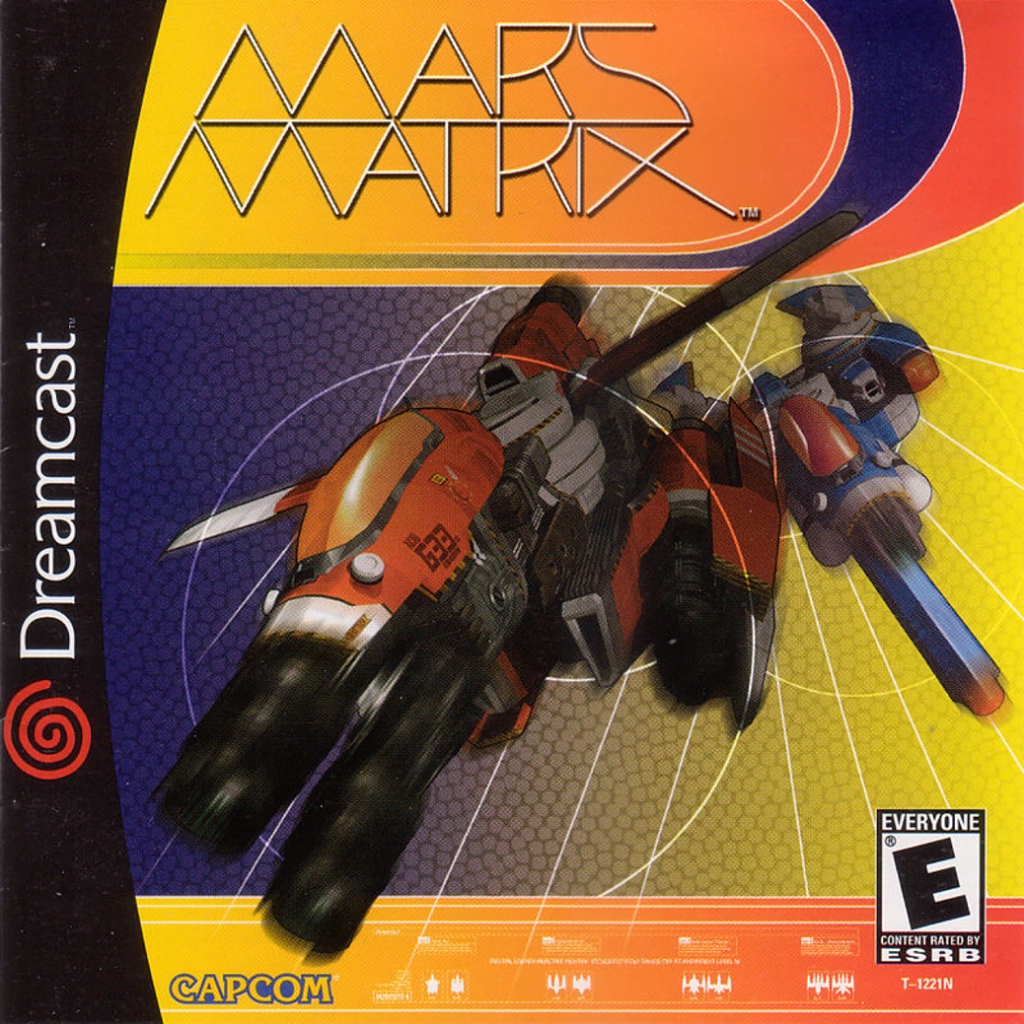
Anyways, collecting myself, I laid out the three games I’d be playing. The futuristic, yet mechanically ancient first-person shooter Codename: Tenka wasn’t a total bust, but after a couple of hours, I couldn’t justify playing it anymore. In contrast, the one-of-a-kind insect simulation Mister Mosquito only took a few hours, and was right up my alley. Finally, there was Mars Matrix. Spurred on by intriguing compliments delivered by Brandon Sheffield on Twitter (that I can’t seem to find now…), and the realization of how much the Dreamcast version sells for in the secondary market, I figured I ought to give it a shot, or a second one, since it turns out I played it back in 2011, an experience I’d all but forgotten about.
While I wouldn’t consider myself a massive fan of the short-lived Evolution series, I have managed to accumulate a respectable collection of related products, perhaps everything released in North America, as a matter of fact. Continue reading Collecting the Evolution Series→
Having completed Jet Grind Radio for the first time, nearly twenty years after its original release and in spite of my awareness of its cult popularity, I’m nonetheless impressed by how fresh it remains. The team at Smilebit encapsulated a period of pop culture history so well: tonally, stylistically, and with such zest, that the game has eluded a potential fate of mere time capsule and is instead, timeless. It’s not without fault, however. In contrast to the vivacity of its aesthetics, the act of playing was oftentimes tormenting. An inadequate method of camera control compounded grievances I had with skaters’ rigid movement, momentum, and their flippant adverseness to grinding. With adaptation, I was able to compensate for these shortcomings and enjoy the otherwise exciting combination of skating and graffiti tagging gameplay. Continue reading Jet Grind Radio [Dreamcast] – Review→
When you have a video game collection like mine, it can be hard to play all of the games. This is especially true when additions are made on an almost weekly basis. Still, I appreciate nearly every game I’ve accumulated for this reason or that. In the hopes of improving my writing through continuous effort and promoting ongoing learning of these games, I’m going to compose brief, descriptive articles.
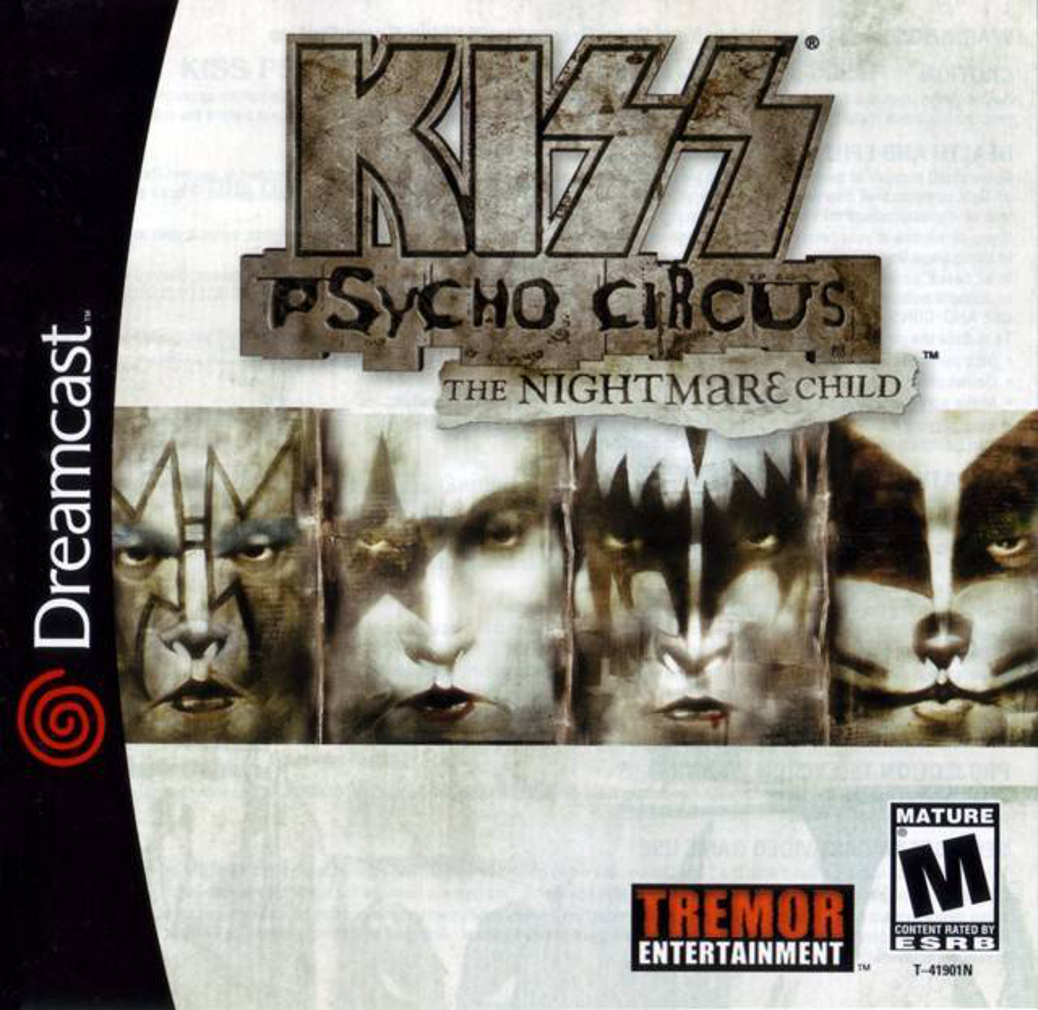
It doesn’t matter who you are, you have an opinion on KISS. Or more realistically, you have an opinion on Gene Simmons. The group and the man are undoubtedly rock legends, but both can come off as cheesy and/or abrasive. I’m not a big fan, but I can appreciate the work they’ve done. With the exception of KISS: Psycho Circus. From what little I’ve played, it’s a gothic first-person shooter with bad controls and little narrative direction. It’s based on the comic book series Todd McFarlane concocted with Gene Simmons. Beyond the requisite amount of time I played to check it out, I haven’t touched it. I’d like to give it a fair shake sometime down the road, but then again, maybe not.
KISS: Psycho Circus was originally developed by Third Law Interactive – a team of former Ion Storm employees – and released on the PC in North America on July 18, 2000. The Dreamcast port was handled by Tremor Entertainment and it was published on October 29, 2000 by Take-Two Interactive. Both developers seemed to flounder within a few years, neither putting out anything truly notable.
Shenmue definitely has a reputation that precedes it. At the time and for many years afterwards, it was reportedly the most expensive video game ever produced. With respectable sales that weren’t near the expected numbers, it assisted in ending Sega’s home console development. Nonetheless, the game received high praise critically and is routinely cited as an influential video game. Shenmue has always been on a personal bucket list of mine and I’m finally able to check it off.
Before being consumed by Virtua Fighter, Yu Suzuki was a titan at Sega. He was the major figure behind a plethora of the company’s marquee arcade titles in late 1980s. Space Harrier, Hang-On, OutRun, After Burner – this guy had a knack for designing video games. I’m not intending to short shrift Virtua Fighter either. It’s one of the most respected fighting game series and has a dedicated fan base. Shenmue is Yu Suzuki’s magnum opus however, and it oozes his passion. In the manual, in the credits, in the way he describes the game – the fictional world and gameplay elements that comprise the game were undoubtedly personal muses for the man.
Shenmue takes place in Yokosuka, Japan during the winter of 1986. The game is a tale of revenge, following Ryo Hazuki as he tracks down the mysterious man who murdered his father. Ryo’s father, Iwao, was a master martial artist whose dojo was in a remote suburb of Yokosuka. Iwao’s murderer, Lan Di, is a mysterious Chinese martial artist who had an unknown grudge against Ryo’s father. Not only that, but Lan Di’s ties to a Chinese criminal syndicate further complicate the affair as Ryo investigates the mysterious Chinese man.
Watching Shenmue was an engrossing experience thanks to the dynamic camera angles.
Exploration and puzzle solving are the primary focuses of Shenmue’s gameplay, although there is a minor emphasis placed on brawling. Knowing practically nothing of Lan Di, Ryo takes to the neighborhoods and shops of Yokosuka to find and follow up on any leads he can. Interacting with dozens of townsfolk, it was easy for me to get immersed in the day to day heartbeat of the city. Ryo’s leads introduced him to friends and foes from practically all of the storefronts, and since the game had a strong adherence to portraying a realistic setting, I’d have to make sure to check in with individuals at the corresponding hour of the day, or night.
I was dead set on making a physical map of the shopping district and outlying neighborhoods, but by the time I sketched it out, I was familiar enough with the areas to abandon the prospect. The neighborhoods contained little to experience but the shopping district was densely packed with unique individuals and storefronts. To an outsider, such as myself, it was a joy to experience what this slice of Japan might’ve been like in the late 1980s – minus Ryo’s Sega Saturn.
The arcade was a fun diversion and I’d be remiss to not mention the gashapon machines.
The puzzle solving aspect of the gameplay revolved mostly around locating the proper individual to speak with. Then, utilizing the information they provided with Ryo. Be it an area to check or another individual to speak with. I didn’t find monotony in constantly seeking someone out, only to be pointed elsewhere. It didn’t seem like it was filler content. For the most part, every lead advanced the plot, if only slightly.
One related point is what I interpret as shoddy localization. The game is fully voice-acted and everyone will respond to Ryo if he prompts them. However, a lot of the dialog doesn’t sound natural. It’s as if the script was translated directly from the Japanese original with no localization. Translating the game is one part of the localization process, but another would be making it so the characters speak realistically. Some lines of dialogue didn’t make functional sense to me. Then again, the game contained a friendly Jamaican hot dog vendor named Tom, and he doesn’t make a lot of sense either.
Tom, the Jamaican hot dog vendor.
The third pillar of the gameplay is the action sequences. I’d break these down into two categories: brawling and quick-timer events (QTEs). Both were infrequent, but an important aspect nonetheless. Brawling was reminiscent of the fighting system from Virtua Fighter – deep and very precise. Ryo had a wealth of moves at his disposal, but I was able to meander on by button mashing. This was helped by the fact that there were about twelve fights across the entire game. QTEs are now commonplace in video games and we have Shenmue to thank for that! They were pioneered in the game and allowed the player to experience a handful of exciting action sequences and actually feel some involvement. They were also infrequent.
After a dozen or so hours, I had brought Ryo to the end of his quest in Yokosuka. Shenmue ended with a slew of events, beginning with Ryo getting a job at the Yokosuka docks. This entailed me operating a forklift for about a week of in-game time which translated to a few hours. It was a decidedly dull climax to the game, but it was far from over. At the docks Ryo got a better understanding of the criminal syndicate Lan Di was aligned with.
Eventually, Ryo was too late to confront Lan Di who was already heading back to China. Ryo’s story was just beginning, but I wasn’t left unfulfilled. Shenmue capped off with an exciting motorcycle ride through the nighttime Yokosuka highway system. The goal was to reach the docks which lead to an epic brawl against 70+ gang members. Ryo intent on pursuing Lan Di to China and many of the interactions with Ryo’s friends and family were heartfelt.
Forklift racing at the dock was a fun beginning to each workday.
With Shenmue off my bucket list, I’m anxious to begin Shenmue II on the Xbox. The series was originally proposed as a trilogy so my journey with Ryo will end with an unfulfilled cliffhanger upon completion of the second game. Heck, I’ll probably convert into one of those crazies trying to get a grassroots effort started to develop Shenmue III. It wouldn’t be a surprise. The game came out nearly a decade-and-a-half ago and it still feels modern. Its combination of storytelling, setting, and gameplay meld together to form one of the most realized and worthwhile video games out there.
Charge 'N Blast is a pretty obscure game considering it was developed by Sega, I mean it doesn't even have a Wikipedia page!
After playing a little bit of Mars Matrix my friend and I moved onto another arcade port for the Dreamcast, Charge ‘N Blast. Originally developed by Sega, it was published for the Dreamcast in 2001 by Xicat Interactive. We played through a few stages of the game and grew tired of it fast.
We viewed our characters from behind their backs at all times, always having tunnel vision. But then again, all the action was directly in front of us too. Enemies advanced towards our characters, which were locked onto a horizontal plane. The only movement we could muster out of them was a strafe, shifting them to the left or right, which we had to do often to dodge enemies.
Notice the green track, highlighting the area of movement for the character.
There were three characters we could pick from, each with different weaponry. Each character had three weapons that were attributed to different buttons (X, Y, and B). As the title suggests, we had to charge our weapons to blast the enemies. Using the analog stick we moved our cursors around the screen targeting enemies. And to fire our weapons we pressed one of the three buttons (selecting a weapon) and once it was charged pressed the A button to release, hopefully nailing the enemy. This was confusing at first, but even after getting used to it, still cumbersome.
Charge ‘N Blast grew stale quick. Lacking much of a setup, there was nothing but the quality of the gameplay to keep us interested, and we didn’t find the mechanics all that fun. However, I will return to the game and complete it as it seemed easy, and probably short.
Formed by members of the highly influential shoot 'em up company Toaplan, Mars Matrix has a solid pedigree.
Ever since I was young, I’ve been a fan of shoot ‘em ups. Perhaps it’s because my dentist has had a Galaga arcade cabinet forever, and I’ve played on it since I was young. I was anticipating playing Mars Matrix for the Dreamcast, but after a friend and I played it for a little bit, I’m cool on it.
Ever since the days of Galaga, shoot ‘em ups have become a little more complicated. Mars Matrix falls into the subgenre of the bullet hell shoot ‘em up. These games are typified by the insane amount of enemy bullets on-screen, literally hundreds to thousands, making it seem impossible. But it’s really not. With Mars Matrixit seemed my friend and I had to focus on dodging more than aiming at specific targets.
While this may seem daunting, it gets a lot worse in Mars Matrix.
After a bit of setup, we picked our ship, determining our standard weapon. Each ship’s standard weapon was different and we had the choice of mashing the fire button, or holding down an auto-fire button. This option was nice as it allowed us to focus on dodging. We also had a strong laser that had the same options. Lastly we could hold our fire button to create a barrier that would absorb enemy bullets and then fire them back, which proved useful when bullets covered the screen.
Even though bullets covered the screen the majority of the time, I still thought the game looked rather poor. I’m not a technical wizard or anything, but Mars Matrix looked awfully blurry and I assume the game has a low resolution, causing this.
There were a few different modes to select from; some multiplayer, some not, but what might bring me back is the shop. As my friend and I played we built up a cache of money that we could spend to unlock features in the shop. These honestly didn’t seem that great; unlocking Score Challenge stages or the ability to play with more lives, but it’s something else to do besides simply playing the game.
My friend and I were only able to reach the second stage (out of six) and we really didn’t have a great time with the game. I will give the game a second chance and hopefully beat it, but I really don’t think I (or we) will have the drive to see it through the next time we play it. Mars Matrix was developed by Takumi Corporation and originally published by Capcom as an arcade game in 2000. My friend and I played the Dreamcast version which was published by Capcom in 2001.
Ryudo Upfront with the Supporting Cast in the Background.
With Grandia II, Game Arts took the formula they implemented in Grandia, simply iterated upon it, which works with me, I loved Grandia and it creates another fantastic Japanese role-playing game with a fun battle system and compelling story. Grandia II, as with Grandia, is set in a, mostly, bright and colorful world.
If I were to condense the themes presented in Grandia, I’d say it focused on adventure and discovery, of exploring unknown territories and learning about new cultures. Grandia II on the other hand focuses more on our spiritual relationships and the role and impact of religion in the world. Grandia II is the story of Ryudo, a gun-for-hire and Elena, a songstress in the Church of Granas. Ryudo is hired to be her bodyguard, but things go awry early on and they soon learn that Valmar (the evil god and Granas’ opposite) could reawaken and bring destruction to their world, what’s more, Elena is possessed by a piece of Valmar, which manifests itself occasionally, and transforms Elena into Millenia. This shape shifting element is interesting and provides for a character that is the polar opposite of Elena, like Granas to Valmar. Throughout the game they meet new party members who give a taste of the different regions in the game and are generally likeable. This wasn’t the case with Ryudo; at first he was a prick and very ignorant of others; the way he responded to peoples questions and concerns was off-putting, but as the game progressed, he became more comfortable with the people around him and as the on-going situations evolved, he revealed more about himself and became a more likeable character. Like, Grandia, Grandia II is light-hearted for the most part, with plenty of humor and fun gameplay, although the progression appears very formulaic, town, dungeon, town dungeon, etc.
Throughout the game, the story unraveled more and more, finally reaching a crescendo of understanding and going pass that crescendo into a surprising twist in lore. Grandia II is a more succinct adventure than Grandia with the game lacking in extra content. There isn’t any reason to go back and play more when done , there isn’t a new game plus mode, and the way the game ends it’s sort of hard to anyways, which is a shame because as with Grandia, I would still go back and battle more If I could.
The battle system, originating in Grandia takes turn-based battles, and added an element of real-time choice to it, creating a satisfying blend of action, which hit a spot in my psyche that loves being in control. The battle system has changed very little from Grandia. There are only a few things off the top of my head that I can think of that changed from Grandia to Grandia II. Instead of leveling up magic and special skills through use, you now attribute points to the individual moves. I thought it very clever in Grandia that special moves and magic leveled up and became stronger through use, thus, I used stat boosting/reducing spells more than I normally would in another JRPG. Also, instead of learning new magic spells by reaching certain requirements with certain elements of magic, in Grandia II you receive eggs which contain 18 preselected spells. There are more eggs than party members so there is always ample choice.
Noriyuki Iwadare returns as the composer and I enjoy his soundtracks a great deal. They are lighthearted and fun, which matches the general tone of Grandia II. Although there are, darker sections of the game, his compositions match the feeling, often, if not always. Familiar tonal themes are repeated throughout the game, with the actual compositions changing up slightly. I can see many people listening to the soundtrack and thinking it is quite cheesy with his ample use of electrical guitar, but I find it befitting the action and look of the game. The appearance, like in Grandia, is very appealing to me; the game is very bright, set in a, mostly, colorful world, with anime-like character designs–this is from Japan after all. The voice acting is fine, although what bugs me is that it isn’t totally voice-acted, barely any is, and this inconsistency always bothers me. The CG is also infrequent, and in most cases, very poor. The CG for cutscenes is almost laughably bad and strangely grainy, but when it is implemented into the higher level magic and special moves, the blend of normal graphics and CG or animation provides a unique clash that, at first seemed off putting, but quickly grew on me.
Grandia II was initially released on the Dreamcast in 2000, and then later ported to the PlayStation 2 and PC in 2002. I completed the Dreamcast version, played a bit of the PS2 version, and didn’t play the PC version. The Dreamcast version comes with a soundtrack CD that has twelve tracks of Grandia II related music, and I say related only because there are two remixes not present in the game. I enjoyed the selections and thought they provided a good cross section of Noriyuki Iwadare’s work here. The PS2 version included new CG cutscenes which take advantage of the hardware better, but still have the aspect of clashing with other aspects of the game. I played the PS2 version on a PlayStation 3 and due to this the game looked much crisper; this would probably be the way to play it. The PS2 version didn’t come with anything extra although the manual is very detailed. One of the main complaints against the PS2 version at its release was a poor port job, with the game hitching at times, I didn’t play very much of it, but did notice the game slowed down at points, but never when it mattered.
GrandiaII is one of the finest games on the Dreamcast, and a fine Japanese role-playing game. With a well paced story and an incredible battle system, it’s worth seeking out if you’re a fan of JRPGs.
Well I think I’m done with Record of Lodoss War. I’ve been playing it off and on for about two weeks now and I’ve had it. It’s a frustrating game where death is frequent; I must’ve saved every three minutes in the seven hours I’ve logged, and you know what I’ve just realized? There isn’t a good enough sense of payoff for me to continue playing, so I’ll stop.
Record of Lodoss War is an action RPG, developed by Neverland and released on the Dreamcast in early 2001 here in the US. The game is based off of a Japanese anime/manga and having no previous experience I’m unaware how, if at all, this relates to the source material. Judging from the setup though, it seems that the game is meant as a side or alternate story. You control The Hero, who has been brought back from the dead. A bad dude has been doing some bad stuff, like deciding to revive an ancient beast that will do his bidding and destroy, destroy, destroy. This is why The Hero has been resurrected, you see, in his past life he was a great warrior and a wise wizard believes he’ll be able to stop this evil. This wizard, Wart, initially sets you up to take over a goblin settlement which then becomes home base, a safe spot to return and do some blacksmithing. The Hero’s quest is ultimately to stop all the bad guys and as far as I proceeded on his quest, I met a few allies and visited a couple of towns and plenty of dungeons. The story seemed dense with detail and it would appear that knowing more about the source material would lighten the load but regardless, the story didn’t capture my interest.
Talking about the gameplay, Record of Lodoss War shares a lot with Diablo. You control The Hero in real time, explore dungeons, do some blacksmithing, etc. Battling enemies usually ended up a frustrating experience. I’d line up next to an enemy and start wailing away on the attack button, watching my health bar and if it got too low, I’d drink a potion. In the event that I ran out of potions, which happened all the time, I’d use the Recall spell to warp back to home base, refill, and warp back to then rinse and repeat. In the event that I was overwhelmed with enemies, which also happened all the time, the game slows down to a crawl and at this point it becomes easy to get trapped in a corner and die. This process led to many deaths and loss of progress, as I thought I’d be okay and go awhile without saving only to run into a strong enemy or get overwhelmed; this process was frustrating, but necessary to advancing.
The Hero battling some skeleton archers.
Equipment and loot is a big part of dungeon crawlers and Record of Lodoss War disappoints. In my time with the game, I rarely happened upon loot dropped by enemies and the loot that I found in dungeons, I generally passed on. At the home base is a blacksmith to whom you can take your equipment and add ancient inscriptions which add stat boosts and special attacks. Adding these effects seemed helpful, if only incrementally and overall the blacksmith wasn’t much assistance, nor was there much depth to blacksmithing. Without this sense of continually upgrading my character, I’ve lost the will to continue playing the game and whenever I’d battle enemies and have it take forever to defeat them, I felt weak, as if I’d been cheated on the equipment available to me. Exploration wasn’t fulfilling either, the few dungeons I’d been in seem very gray, in fact the game as a whole feels very gray. The game has gotten to be more frustrating than fun and even if I had some connection with the source material, I can’t imagine I’d want to continue playing based solely on the story Record of Lodoss War presents.
At this point the price for Record of Lodoss War is relatively expensive; a quick search of Amazon and eBay says you’ll have to pay around twenty-five dollars for a used copy. The manual contains great information, but there isn’t anything outstanding about the overall package. Others might have more patience with Record of Lodoss War, but if you’re searching for an RPG for the Dreamcast, or just an older RPG to check out, there are many better options.
Share this:
Twitter
Facebook
Tumblr
LikeLoading...
The internet's source for Mansion of Hidden Souls.
![Mars Matrix [Dreamcast] – Review](https://mybrainongames.files.wordpress.com/2020/10/mars-matrix-sega-dreamcast-north-american-box-art.jpg?w=672&h=372&crop=1)


![Jet Grind Radio [Dreamcast] – Review](https://mybrainongames.files.wordpress.com/2018/04/jet-grind-radio-dreamcast-north-american-box-art.jpg?w=672&h=372&crop=1)

![Random Game #14 – KISS: Psycho Circus [Dreamcast]](https://mybrainongames.files.wordpress.com/2014/12/kiss-psycho-circus.jpg?w=672&h=372&crop=1)
 When you have a video game collection like mine, it can be hard to play all of the games. This is especially true when additions are made on an almost weekly basis. Still, I appreciate nearly every game I’ve accumulated for this reason or that. In the hopes of improving my writing through continuous effort and promoting ongoing learning of these games, I’m going to compose brief, descriptive articles.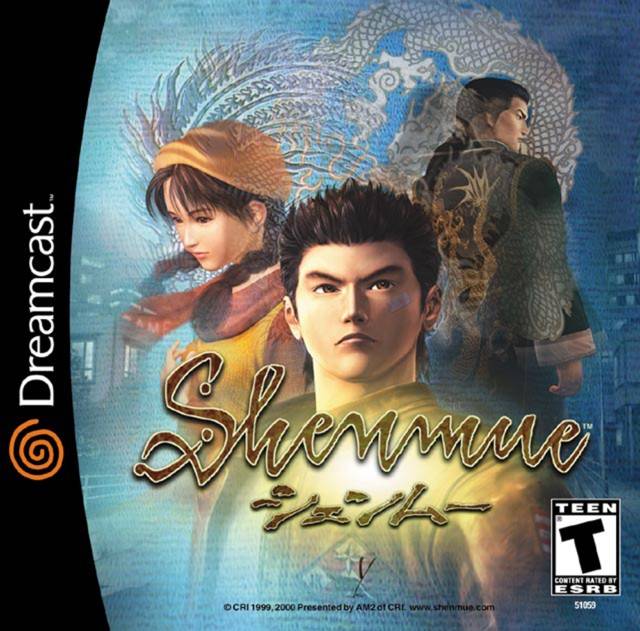


 My Brain on Games