As a fan of Japanese RPGs, Project Octopath Traveler was one of the most intriguing games shown during Nintendo’s Switch reveal in January. Even though it was a brief trailer, we learned that Square Enix was supporting the platform with a previously unannounced RPG, a gorgeous looking one at that. Details have been scant since that January event but after last week’s Nintendo Direct, a demo was released. Now that I’ve had hands-on time with the game, I’m more confident it’s right up my alley. Continue reading Project Octopath Traveler [Switch] – Demo Impressions→
Just as the Sega Master System’s version of After Burner was disappointing, so too was its port of Thunder Blade, Sega’s 1987 arcade shoot ‘em up. Having not played any version of Thunder Blade beforehand, I lack a reference point for the game although I feel confident in asserting this was an underwhelming port. Its portrayal of two separate styles of gameplay was competent but bland. After encountering early difficulties, I decided against devoting too much time towards the game’s completion.
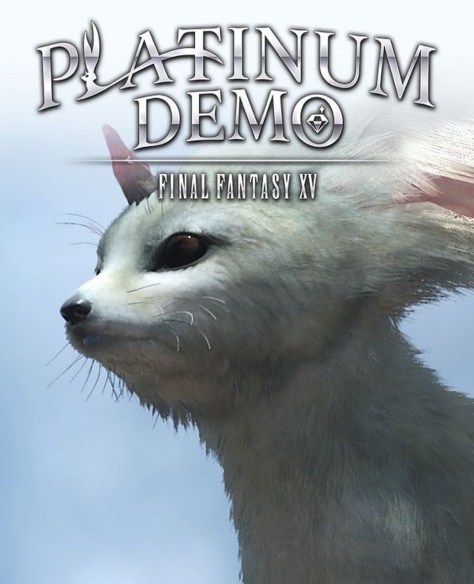
This past Thursday, Square Enix hosted a one-off fan event to “uncover” information regarding Final Fantasy XV, the developmentally challenged flagship title of the company’s premier series. Previously announced as Final Fantasy Versus XIII at E3 2006, fans have long pinned their hopes for the series on this title since Final Fantasy XIII so thoroughly disappointed them. Uncovered: Final Fantasy XV, the event held in Los Angeles on Thursday, was a bombastic opportunity for the company to generate press coverage and curry goodwill with fans. One of the cooler modern trends coming from events like this is the immediate release of playable content, in this case Platinum Demo: Final Fantasy XV.
Freshly-Picked Tingle’s Rosy Rupeeland is a wondrously weird game. The character that first appeared in The Legend of Zelda: Majora’s Mask has been divisive since his introduction. He was designed to be weird for weirdness sake and I’ve always been on the side of Zelda fandom that enjoyed his company. Tingle’s Rosy Rupeeland never made it to American shores, but it was released in Europe, which means playing it isn’t hard. This version is in English and the DS is region-free so there’s no additional work needed outside of purchasing a copy.
The game begins when Uncle Rupee, a magical character in the shape of the universe’s currency appears before Tingle, a single, 35 year old man with little direction in life. Uncle Rupee promises Tingle entrance to a world unlike his own, a theme park of sorts, if Tingle can scrounge up the necessary money. And so Tingle dons his familiar green onesie and sets out to quench his thirst for excitement.
I want to believe the game’s humor is in service of ribbing the 18-34 year old male demographic.
One thing I really like about this game is how it adheres to the concept of money. Everything requires coinage. Tingle’s stack of Rupees represents his health so if they ever deplete, its game over. Reason enough to always have a good amount handy. The characters that occupy Tingle’s world, all want dough too. If you visit a vendor, you have to pay them before they’ll open shop. Even having a conversation with them requires Tingle to cough up Rupees.
I found this annoying at first because nobody told you how much they wanted; you had to make an offer and hope you didn’t overspend. Once I got accustomed to this mechanic and the going-rate for things in the world though, I began to “know” how much something would cost. Lowballing characters could result in lost Rupees if they rejected my offer but still took my money. However, when I successfully came in under a suggested amount, I felt like a wheeler and/or a dealer.
The guy who built bridges was, special, to say the least.
This concept of cash rules everything around me was also a large hang-up of mine because of its correlation to the combat. It seemed to me the major source of income early on was fighting enemies to harvest the recipe ingredients they’d drop, make soups, and sell the end product. Enemies weren’t too prevalent and I spent a lot of time entering areas, fighting and harvesting ingredients, exiting to allow the enemies to respawn and repeating over and over. I didn’t find this gameplay loop enjoyable, especially when the combat was nonexistent.
Brushing up against an enemy created a cartoonish dust cloud fight which lasted until one of us croaked. I could tap to speed up the process, but I honestly didn’t notice much impact. Wrangling multiple enemies into the fight multiplied the amount and quality of items that would drop so I always tried to fight groups rather than individual enemies. Finding groups was hard though; I typically found a close-knit group of enemies and returned to them over and over again when harvesting ingredients. Mercenaries could be bought for extra oomph in combat, but many times, they ruined my attempts at gathering enemies together. They’d either trigger battles when I was trying to set something larger up, or wipe out an enemy before I could get another into the fight.
Yes, money, give me as much as you can.
Freshly-Picked Tingle’s Rosy Rupeeland was a humorous game, but in my opinion its primary gameplay mechanic was both its reason for being and its Achilles heel. The game’s devotion to the concept cash is king was distinguishing, but I didn’t enjoy the repetitive gameplay loop I had to go through early on to get ahead. The art design was fantastic and the characterization was top-notch so there are solid reasons to import the game. Heck, being able to say I own/played a game from another country is cool in itself.
The most notable aspect of Batman: Rise of Sin Tzu is that it marked a first for the Batman franchise: the first time a major character was debuted in a video game. It has been nine years since the game’s release though, and I’m not aware of the villain Sin Tzu gaining much traction; I mean, I’ve only ever heard of him in the context of this video game, albeit, I’m not especially well versed in the Batman universe. Debuting in a mediocre beat ‘em up probably didn’t help his chances at stardom though.
Batman: Rise of Sin Tzu is an Ubisoft Montreal developed, Ubisoft published beat ‘em up from 2003. It was released for the PlayStation 2, Xbox, GameCube, and Game Boy Advance, and while I only played the GameCube version, I’m sure the PS2 and Xbox versions are identical. My friend and I played through what I believe constitutes the first quarter of the game, and I speak for both us when I say Rise of Sin Tzu was underwhelming.
The game revolves around on the eponymous hero defending Gotham City from the eponymous villain. Sin Tzu has formed an alliance with Scarecrow, Clayface, and Bane and they’re wreaking havoc. With the assistance of Robin, Batgirl, and Nightwing, Batman sets out to defend Gotham City from these baddies. Although there are four heroes, the game only supports co-operative play for two, a glaring omission. On the bright side, those two extra players won’t be subjected to the tepid gameplay.
This screenshot is cognizant of the game’s quality.
Each hero had slightly different stats and had a wealth of combos to execute, yet I was content to just mash the punch or kick button. The combos were differentiated by timed button presses, although they weren’t starkly different. Special moves could be unlocked using earned points which could also be spent on bonus features like toys or comic book covers. My friend and I played through the first quarter of the game, toppling Scarecrow, and besides the lame combat, the bland level design and poor camera left us unfulfilled.
Stages lasted about ten minutes and tasked us with fighting through groups of Scarecrow’s henchmen. Opposition was light early on but they eventually began using Scarecrow’s gas on us. It affected the camera, making it very wavy, but not problematic like the occasional event of the camera getting hung up on a corner. Still the biggest detriment to our enjoyment was the bland level design. We’d plod down unchanging Gotham City streets, encountering groups of henchmen, but no real excitement. This was compounded by the weak combat and the drab graphics.
Challenges attempted to keep gameplay fresh, although they weren’t too varied and the gameplay was lackluster in the first place.
Batman: Rise of Sin Tzu is a mediocre beat ‘em up that will likely only be remembered for debuting a character into the franchise.
Watching Phantasy Star Online Episode I & II’s attract mode and listening to its main theme is haunting as it reminds me just how much of an impact the game has had on me. When I began playing the GameCube rerelease of the classic Dreamcast game, I was just developing a burgeoning appreciation for video games. It was a form of escapism – it transported me into a spectacular science-fiction setting where I’d spend hours searching for better gear, rare loot, and just taking in the sights. Its action-based combat and role-playing foundations were not only appealing to me, but what I still consider to be one of the pinnacle’s of video game design. I’ll routinely return to it and I can easily get sucked back in for hours. PSO’s story was light, but I felt as though I truly was a pioneer uncovering the mysteries of a brave new world.
Sega has made plenty of sequels to PSO since its original Japanese release of late 2000, but none of them properly advanced, or even recaptured what made PSO so great. The most notable among them, 2006’s Phantasy Star Universe introduced an honest-to-goodness attempt at a narrative which, in my eyes, fell flat thanks to my low tolerance for the adolescent anime that inspired it. Yet the most incriminating blow against PSU was its decreased emphasis on dungeon-crawling and looting. However, it seems Sega’s losing streak is about to end with the release of Phantasy Star Online 2.
After entering open beta on June 21, 2012, I jumped at the chance to check out PSO2 for myself. Unfortunately for me, the beta is hard to understand because it’s completely in Japanese. Luckily, there are plenty of English-speakers who are rallying together to translate the beta and enjoy it. I have to give massive thanks to bumped.org for assembling many great guides ranging from how to download the beta to complex menu navigation.
A party taking on a big baddie.
Although my time with PSO2 has been brief and I’m usually in a state of confusion, I’ve been able to gleam many things about it thanks to my experience with PSO. Firstly, the game looks amazing. Character designs retain the non-flamboyant sci-fi anime style from PSO while, unfortunately, still housing some over-the-top designs in the vein of those from PSU. The first playable stage, the forest environment (the only I’ve played in) harkens back to PSO’s first stages while marking massive technologic advances since 2000. PSO2 looks phenomenal and it seems like it scales well, accommodating laptops up to high-end gaming PCs.
Combat is still based around rhythmically forming combos. Attacks are sequenced together by timing button presses, generally up to three times. Previously, animation preferences made combat less than fluid, although now it seems sets of three-hit combos can be started much quicker after one ends giving combat a better flow. Enemies can be locked onto ensuring accuracy with specific weapons like guns, but a new camera angle presents the game more like a third-person shooter which may be more appealing to some folks. Also brand new is a jump button which can be used to navigate environments better and reach weak spots on enemies. Loot is indeed present but I can’t provide any detail thanks to the language barrier.
The third-person shooter mode actually makes sense in this series.
Players still pick from one of three classes; a decision revolving mostly around swords, guns, or magic. However, characters are no longer locked to a class, they can be changed whenever but the character has three levels – one for each class. Character customization is accounted for and it’s as deep as it has ever been.
Spaceships representing servers are the characters’ residences and here humankind thrives. Other players wander about as though they were in a virtual mall, which they are – shops are abound. Of course communication is a major aspect and plenty of players have mastered the art of picture chat. Alone or with a posse, missions can be tackled that, with an understanding of the language, would unravel the mysteries of the game, but as is just provide another obstacle to enjoying the game.
Phantasy Star Online 2 seems very promising to me. As someone who loved PSO, but not much else past that game, I appreciate that the developer’s have that game in their mind. I hope PSO2 is as eminently replayable as PSO was – complete with multiple difficulties, loads of loot, weapon grinding, and character progression. As of now, I can’t fully experience the open beta and understand all of the changes, but the fact that they aren’t straying too far from the original formula is satisfying enough to me. After all, I spent three hundred plus hours with PSO without ever going online.
The PSP/XBLA game Half-Minute Hero seems like a spot-on comparison.
While perusing the internet, I stumbled upon the website of Pixel Licker Games. Under this name, Thomas Screiber releases the games he makes in his spare time. He is an artist who started off in the industry working for Capcom in 2000. Since then, he’s worked for various companies and on a half-dozen video games including the Maximo series and My Sims, among others. He has a fondness for pixel art and this fondness is readily apparent in the three games he has made available on the website.
The only one I’ve played thus far is Slayin’. It’s a simple 2D game that tasks players with walking their knight, mage, or knave to the left or right, running into enemies to kill them. Characters can level up, spend their found money, and build a combo to get a high score. It isn’t complicated, but it does require skill, luckily it controls fantastically and is fun to play. The most awe-inspiring aspect of Slayin’ is its art though. Screiber’s talent is on display in this game that looks like it came out the 16-bit era. Scratch that, it looks better than most games of that era! You’d think that pixel art is a limiting medium, yet he’s fit a ton of personality into this, and from the looks of it, his other games. Of course, it’s with this and other types of restraints that were present in earlier video game development that forced developers to craft songs that were instantly catchy or design characters that were definitive, despite being made of pixels.
Hopefully more people will discover Thomas Screiber’s works, because he has a ton of talent.
Stallone’s outfit seems a little bare for the Rockies.
When the failed heist of a treasury plane leaves John Lithgow and his group of robbers abandoned in the Rocky Mountains, they force rescuer/mountain climber Sylvester Stallone to locate the lost suitcases of money and get them out alive. This introduction is what one gleams after watching the ten or so minutes of low-quality, grainy footage that sets the stage for the first level of the Sega CD video game based off of the 1993 film, Cliffhanger. Developed by Malibu Interactive and published by Sony Imagesoft, Cliffhanger features awful beat ‘em gameplay interspersed with fast-paced 3D snowboarding and dire video clips.
Fighting the dozens of enemies was unpleasant thanks to Stallone’s slow movement, limited selection of attacks, and poor hit detection, among other deterrents.
After locating one of the lost suitcases, Stallone is on his own as he proceeds to traverse and scale peaks that contain way more enemies than one was lead to believe was with Lithgow. The beat ‘em up gameplay that ensues is awful. The stages are full of banal action that manages to be infuriatingly cheap. Stallone moves like a child with a dozer load in his diaper and after every hit he takes, he collapses onto his batch of brownies. This Stallone is not the Rocky who can take the hits, and deal them out with more determination and intensity than his foes. Thankfully, the enemies also can’t take a beating and are out cold after two or three hits. But when it comes to scaling cliffs, don’t even bother. Resting on perches are snipers who can’t be touched, so don’t worry, Stallone’s just going to have to man up and take a few bullets. The lives will be lost and continues will be used – thankfully the game doles out a combined twenty-one chances to outwit Lithgow, but you’re gonna blow through them on the snowboarding sections.
When he’s not killing thugs with his bare hands (or wussing out by using a knife or gun), he’s hitting the slopes and getting his daredevil thrills by outrunning avalanches. How Stallone can go from falling on his ass to outrunning avalanches is a weird disparity in pacing. These stages of the game are quasi-3D with Stallone shredding into the screen while dodging boulders and bushes. Speaking of infuriatingly cheap, it was one of these stages that I rage quit and decided I could spend my time better. Still, the fast-paced gameplay of the snowboarding sections was the complete opposite of the worthless beat ‘em sections and for that, I almost enjoyed it.
This game was released for other systems back in the day (Genesis, SNES, Game Boy, and Game Gear) but this was the only version to feature snowboarding sections.
Cliffhanger’s beat ‘em up gameplay pales in comparison to the titans of the genre and its snowboarding sections are a thrill, but too long for their own good. The soundtrack was ridiculously clear, but I don’t care. The best part of Cliffhanger was the twenty minutes of malodorous video, and that’s saying something.
Rocket Science Games, the developer, was founded by a prolific entrepreneur and a workaholic game designer in 1993 and later received a $12M investment, in part from Sega.
At first glance, Cadillacs and Dinosaurs: The Second Cataclysm is very interesting. This Sega CD/PC video game is based off of the Xenozoic Tales comic books/TV show and it features graphics and cutscenes that stay true to this heritage. Another way the game sticks to its foundation is through the inclusion of the zany post-apocalyptic story. I perceive the developer’s as having a passion for translating this intellectual property into a video game, and yet, my first impressions of The Second Cataclysm are negative. Repeatedly playing the first level of the on-rails shooter deflated my morale until I eventually threw in the towel.
Through a brief comic book in the manual and an introductory cutscene, I was enlightened on the setting and plot points of The Second Cataclysm. Many hundreds of years in the future, Earth was ravaged by unnatural disasters and the remaining humans survived and thrived underground. When they returned to the surface, the planet was overrun with the remains of their civilizations and confusingly, dinosaurs. They’ve learned to follow the “machinatio vitae” which calls for a balance between nature and machinery and when a race of highly developed ground dwellers sense an upset in this balance, they seek out all around good guy Jack Tenrec to prevent another cataclysm like the one that devastated Earth hundreds of years before.
The game looked good (considering the terrible grainy picture), but the gameplay was bland and difficult.
With his trusty accomplice Hannah Dundee and his 1953 Cadillac, Jack sets out to stop Wilhelmina Scharnhorst’s megalomaniacal ambitions. His road to success is littered with obstacles however, first and foremost that there isn’t one!
As I cruised through the jungle in Jack’s hot ride, I’d try my best to avoid rocks, logs, and dinosaurs and if I couldn’t, I’d have Hannah blast them with her gun. I had to keep an eye on the path ahead though because the road to success wasn’t straight. I’d have to make split-second decisions when I came to forks in the road and I’m not quite sure if this holds true in the earlier stages, but the manual leads me to believe that I could go in circles. Keeping the “machinatio vitae” in mind, I’d try my best not to blast dinosaurs because when I did, my time limit to reach Scharnhorst decreased.
Hannah was shocked to hear that the game’s cutscenes involved little to no animation.
Looking back, I probably was going in circles. Still, I would stick it out for as long as I could until the Cadillac was too beat up from obstacles or I ran into a dinosaur preventing me from completing the first stage. I’m not all that interested in trying to best myself and complete the first stage to, reportedly, do the same thing in the same environment six more times until the game alters its stage design before capping off Jack and Hannah’s journey. An ambitious game with tepid gameplay – Cadillacs and Dinosaurs: The Second Cataclysm is a game that can remain extinct.
I’m guessing the battlecorps and the peace corps are diametrically opposed.
In my years of collecting video games, I’ve made an observation. When developers were making their first forays into first-person and polygonal video games, the first-person mech genre was a popular choice to test the waters. Battlecorps for the Sega CD falls into this category. Developed by Core Design and published by Time Warner Interactive, Battlecorps features colorful graphics, but poorly executed gameplay.
As one of three characters, I began missions by listening to a briefing from the Comedian-inspired Lieutenant Calgary. With my objectives known, I’d pilot a bipedal attack machine (BAM) through enemy-riddled levels and destroy the infrastructure of rival corporations.
Are those giant boulders or scrunched up moai faces?
Controlling the BAM was doable but aiming was a hassle. With only three buttons and a directional pad, Core Design was limited in their choices for sure, but they still chose to overuse the controller. They opted to give players the ability to aim up, down, and around, but doing so required players to shift the functionality of the d-pad depending on what they wanted it to do: pilot their BAM or aim. Enemies won’t wait for you to aim at them so taking damage is an unfortunate necessity. This is a design choice that hampered the game and could’ve been avoided by eliminating the need to aim at all.
The confounding controls ire me and the gameplay revolving around walking slowly and shooting deserves only this single mention, but I do like the graphical style. The environments are colorful and the game is a hot pixilated mess. It’s 3D much in the way that Doom was 3D; objects are made of pixels and as camera moves, so too do they. What’s not cool is the limited field of vision. The game replicates the insides of the BAMs as though I was actually in one, and because of radar and various screens, my view of the world is limited.
Like a ticker on the bottom of a TV news channel, the ticker in the topmost portion of the BAM warns against enemies and mines.
Battlecorps’ tepid gameplay and complicated controls left me not wanting to return to its battlefield again.
Share this:
Twitter
Facebook
Tumblr
Like this:
LikeLoading...
The internet's source for Mansion of Hidden Souls.
![Project Octopath Traveler [Switch] – Demo Impressions](https://mybrainongames.files.wordpress.com/2017/09/project-octopath-traveler.gif?w=672&h=372&crop=1)

![Thunder Blade [Sega Master System] – First Impressions and Let’s Play](https://mybrainongames.files.wordpress.com/2016/09/thunder-blade.jpg?w=672&h=372&crop=1)




 My Brain on Games