That first year I owned an Xbox 360, I probably downloaded every game trailer and demo that was posted to the Xbox Live Marketplace. I purchased the Xbox 360 just before Halloween 2006, after saving a couple weeks worth of earnings from my first job, and I found myself buying into the prerelease marketing for just about every high profile release. Among them, was Tom Clancy’s Rainbow Six: Vegas.
Last week was pretty great, and not just because I played through a different Metal Slug game each day. No, it was pretty great because I spent the week with my three month old son. My wife’s FMLA was scheduled to end and accordingly, we had planned for me to use up some accrued vacation time to prolong daycare one more week, and you know, get some quality time with our little tree frog. I had taken off the week when he was born, and of course we had plenty of bonding time in the evenings and on weekends when my wife would get a break, but nonetheless, spending so much unbroken time with him was immensely fulfilling. At this stage in his development, he seemed to make noticeable improvements with his motor skills daily; and I may be a little biased, but everything he does is so fascinating!
Craving another Wii game following the completion of Kirby’s Epic Yarn, I turned to Red Steel, for some reason. Up until recently I’d never even tried it, but as one of the most publicized games in the lead up to the launch of the Wii, I’ve long been familiar with it. The trailers from that era, with gratuitously animated actors showcasing the capabilities of the system’s unique controller, are hilarious, and Red Steel’s are some of the best. There are a handful of these pre-release trailers floating around, and while they showcased how you interact with the game pretty accurately, they’re just so over the top. When the actors mimic their avatar taking cover by jumping behind furniture themselves, or pause to eat sushi while strolling through a sushi restaurant in game, I mean, c’mon.
This one, apparently from E3 2006, is especially novel now that I’ve completed the game, as it seems like it may be an original proof of concept trailer. First off, the visual fidelity is much too good; richly detailed environments and impressive character animation give off the aura of a pre-rendered trailer rather than actual gameplay. Then there’s the fact the actor is using what appears to prototypes of the Wii Remote and Nunchuk. And, of the scenes portrayed, I believe only one appears in the final product. The three other trailers I’m familiar with were clearly produced closer to the game’s launch, and one of them even serves as the game’s attract mode. They retain the exaggerations of the first trailer, with interstitial gameplay sequences lifted directly from the released game. Continue reading Red Steel [Wii] – Review→
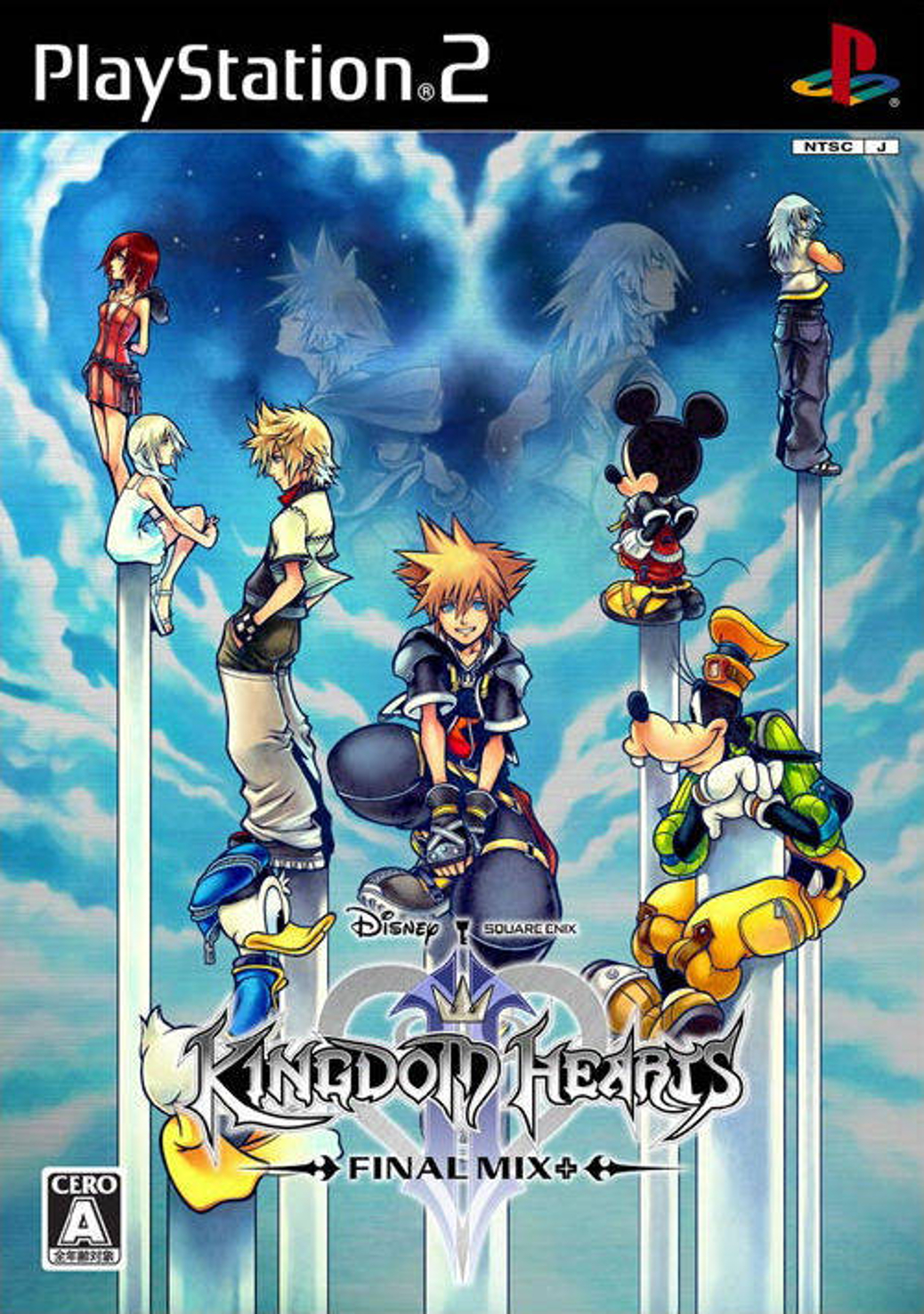
After experiencing the three titles that make up the Kingdom Hearts HD 1.5 Remix compilation in quick succession last year, I needed a break. It was a desire to join in on the zeitgeist surrounding the release of Kingdom Hearts III that prompted me to finally jump into the series, though truth be told I’d always been interested. I started itching to get back into the series while playing the F.E.A.R. games last year, if anything to experience something a little more uplifting. First up: Kingdom Hearts II Final Mix. Continue reading Kingdom Hearts II Final Mix [PlayStation 3] – Review→
As I mentioned in my review of Rain, one of the reasons I decided to play that game was my thinking it may tie into the Halloween season. My preconceived notions were that it dealt with ghosts, but that wasn’t the case. It did turn out to be a little spooky, but the other game that made my shortlist was a lot spooky. F.E.A.R. First Encounter Assault Recon was that game. Continue reading F.E.A.R. First Encounter Assault Recon [Xbox 360] – Review→
Although Sudoku had existed in one form or another since the late 19th century, it didn’t gain in popularity in the United States until the mid 2000s, when it became a feature of practically every newspaper. I was in high school then and devoted crucial time to solving these addictive new logic puzzles instead of paying attention in class, perhaps explaining why I excel at Sudoku but couldn’t tell you much about chemistry… The Nintendo DS was beginning to catch fire around this time as well, after Nintendo realized it could capitalize on an untapped market: the non-gamer. Releases like Brain Age appealed to many demographics and showcased the platform’s unique abilities in handling games such as Sudoku. A wave of software followed and while my experience with Sudoku on the platform is limited I’m nonetheless impressed with Sudoku Gridmaster. Continue reading Sudoku Gridmaster [Nintendo DS] – Review→
When I talked about Fallout Shelter last week, I began by considering it in a vacuum. Without partners playing too, it grew to resemble a chore more than an enjoyable escape. I feel like taking the same approach with Castlevania: Portrait of Ruin but for a different reason. In a vacuum, this game is practically the pinnacle of the 2D action-adventure genre. The addictive blend of action, exploration, and role-playing elements that the series is known for, still make up the core experience of this game and pair well with new additions. Level design remains fresh throughout, in part due to the top-notch audio/visual qualities and varied surroundings. The reasons to continue playing after completion are immense as well, but, this is like the fifth Castlevania of this style I’ve played, and while they’re individually superb, they elicit less exhilaration after each completion.
Per usual, the animation was top-notch.
When it was released for the Nintendo DS in late 2006, Portrait of Ruin was joining an already extensive collection of similar Castlevania titles that had released relatively recently. Koji Igarashi and his crew at Konami differentiated this game in a few ways, most notably, by focusing on two characters instead of one. The plot centers on Jonathan Morris’ quest to quell Dracula’s uprising amidst a war-torn Europe circa 1944 with his partner Charlotte Audin. He resembles the typical Castlevania protagonist in many ways while she is a spell caster with a growing repertoire of spells, another series staple.
I could freely switch between the two at all times and this allowed me to dabble with both combat styles – weapons with him and magic with her. These two styles were vastly different in execution and perhaps because of my familiarity with previous entries, I stuck with Jonathan. When not actively controlled, the partner was still useful. They would automatically attack on-screen enemies, albeit with little intelligence. This was beneficial in dealing with enemies but it proved most worthwhile in drawing enemy aggression towards the partner, allowing me to attack from behind. Outside of combat, the duo was put to use in progressing past a few (generally half-assed) puzzles. The most memorable of these had both characters riding motorcycles and tasked me with switching between them in order to make sure neither was knocked off by various obstacles. It was a fast-paced puzzle that made me stop and think of a viable solution, unlike most others.
The game had a limited number of NPCs, but each was integral to the plot.
Additionally, the game was distinguished by the variety of locales Jonathan and Charlotte traversed. Now, the primary setting was Dracula’s Castle (naturally) but much of the duo’s time was spent exploring the paintings strewn about, a la Super Mario 64. In keeping with the series, these maintained a gothic design. They transported the pair to the streets of a bombed-out European city, a nightmarish circus, and many more unique backdrops that would’ve seemed out of place as disparate areas of the abominable abode. The series has always attempted to segregate Dracula’s Castle with diverse milieus but this is the best example I’ve seen.
Although Jonathan’s quest was to banish Dracula’s Castle, that vile vampire wasn’t an issue until late in the game. While the castle had arisen because of the agony and hatred within humanity during this period, another vampire took advantage of the castle’s powers for his own agenda and prevented Dracula from reviving. That vampire, Brauner, ultimately worked towards the same end goal of humanity’s destruction, but did so out of the hatred he felt for losing his daughters during the First World War. Brauner was able to harness the power of Dracula’s Castle through his paintings. With assistance from newfound friends and through the evolution of a subplot or two, Jonathan and Charlotte were successful in cleansing the castle of Brauner’s influence and ultimately dealing with Dracula and his ilk.
Some sections of Dracula’s Castle may look familiar to veterans of the series.
There were plenty of reasons to keep going once the story was finished too. Exploration and the mapping of Dracula’s Castle has been a core component of the series since Symphony of the Night, and this game doesn’t disappoint with its 1,000% MAP COMPLETION RATE! That number is perhaps artificially high because of the multitude of paintings, but there is a lot to explore nonetheless. Moreover, there were many collections to complete such as obtaining all items or filling out the bestiary and mastering each sub-weapon, powering them up in the process. These are customary features for the series but also available were sidequests from one of the duo’s associates. I believe this was a first for the series and I had completed maybe 15% at game’s end after passively trying, so there’s much to do on that front.
Two more sets of playable characters could also be unlocked and both changed gameplay dramatically. The environment remained the same with both but the equipment and magic customization was backpedaled completely and a story was basically nonexistent. One pair of characters was a throwback to the classic days of the series with a focus on sub-weapons and the legendary whip, Vampire Killer. This duo was overpowered and playing with them felt like I was in “God mode.” The other duo utilized the touch-screen exclusively. The touch-screen was integrated into the game elsewhere but I literally never used it. The execution with these two was actually very intriguing and their individual means of attacking required different touch-based actions. A Boss Rush mode was also available after completion as well as a co-operative mode (multi-card only).
The duo had access to super-powerful co-op attacks that drained their MP.
Castlevania: Portrait of Ruin has all the staples I’ve come to expect from the series as well as a few differentiating features. The core of these, a focus on two characters, helped to freshen the formula but it was probably the variety of settings that kept me most entertained. Not to mention the accoutrement found in the various collections to complete, sidequests to beat, and unlockables to try out after the plot had wrapped up. The more modern backdrop and the twist on the classic premise were appreciated as well. I think this is probably the most complete Castlevania I’ve played of this style, but I don’t think it tops Aria of Sorrow for me. That was my first foray into the series and each one I’ve played since has been chasing that experience. They’ve all been outstanding, but like the saying goes, I’ll never forget my first, and I’ll forever be comparing successive entries to it.
When you have a video game collection like mine, it can be hard to play all of the games. This is especially true when additions are made on an almost weekly basis. Still, I appreciate nearly every game I’ve accumulated for this reason or that. In the hopes of improving my writing through continuous effort and promoting ongoing learning of these games, I’m going to compose brief, descriptive articles.
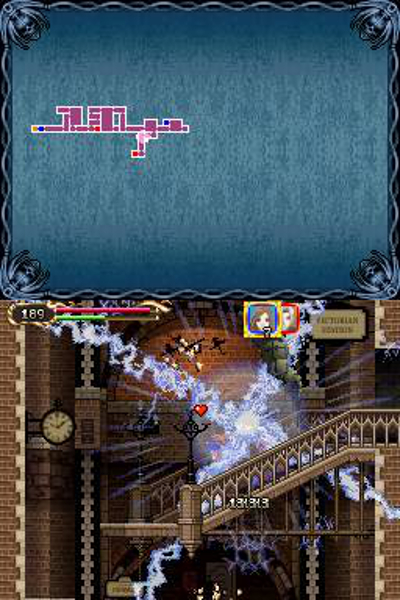
This is a fairly recent addition to my collection. During one of the more recent buy 2, get 1 free promotions at Vintage Stock, I acquired this game. I have yet to play it, and I’m doubtful that I’ll complete it once I check it out. It’s an old-school first-person dungeon crawling RPG which I can dig, but I’m unsure of the game’s quality. The game is sitting at 55% on GameRankings, and even taking into account that RPGs generally don’t fare too well with western critics, that’s low. However, Ii do enjoy making graph paper maps and this game may bring out that need and other minor OCD tendencies.
Deep Labyrinth was developed by Interactive Brains and originally released as a mobile game in Japan on December 1, 2004. They ported it to the Nintendo DS and it was published by Atlus in North America on August 15, 2006. It has some revered individuals behind it according to Wikipedia; namely, the script writer behind many Square classics Masato Kato and the prolific composer Yasunori Mitsuda.
When you have a video game collection like mine, it can be hard to play all of the games. This is especially true when additions are made on an almost weekly basis. Still, I appreciate nearly every game I’ve accumulated for this reason or that. In the hopes of improving my writing through continuous effort and promoting ongoing learning of these games, I’m going to compose brief, descriptive articles.
Before this came out, I thought it looked very interesting. I wasn’t super into Sonic at this point, but I had been previously, notably after the launch of Sonic Adventure 2: Battle. I wound up forgoing this game, but a friend purchased it and we played a fair amount of it. I remember the controls being super sensitive, although imprecise. This didn’t make for an enjoyable experience, especially with a shrunken screen during multiplayer. More realistically, I just wasn’t as good as he was because he had the opportunity to play it more. My poor performance colored my impressions of the game, although I’d like to return to it and examine the single player component. I still think the game has cool look to it; in my mind, it’s very evocative of the time period it was released.
Sonic Riders was developed by Sonic Team, with assistance from NOW Production. It was released for the PlayStation 2, Xbox, and GameCube in North America on February 21, 2006 and published by Sega. A PC version was released later that year: November 17, 2006.
When you have a video game collection like mine, it can be hard to play all of the games. This is especially true when additions are made on an almost weekly basis. Still, I appreciate nearly every game I’ve accumulated for this reason or that. In the hopes of improving my writing through continuous effort and promoting ongoing learning of these games, I’m going to compose brief, descriptive articles.
Here’s another recent acquisition – as in purchased this year. I remember picking it up at a Goodwill earlier this year and haven’t played it yet. It’s precursor though, my friends and I played that a great deal. While not a big fan of the property, I’ve always thought the Clash of Ninja series punched above its belt in terms of licensed anime fighting games. The games are lacking in a lot of the same ways most fighting games are: no in-depth single player mode or story and little extras to keep playing outside of multiplayer. The combat has always felt really good though – very fast-paced, partial to button-mashing, but great fun locally.
Naruto: Clash of Ninja 2 was developed by Eighting and published by D3 Publisher in North America on September 26, 2006. However, it was originally released in Japan on December 4, 2003 – nearly three full years earlier.
Share this:
Twitter
Facebook
Tumblr
Like this:
LikeLoading...
The internet's source for Mansion of Hidden Souls.
![Tom Clancy’s Rainbow Six: Vegas [Xbox 360] – Review](https://mybrainongames.files.wordpress.com/2022/02/tom-clancys-rainbow-six-vegas-xbox-360-north-american-box-art.jpg?w=672&h=372&crop=1)

![Metal Slug Anthology [PlayStation 4] – Review](https://mybrainongames.files.wordpress.com/2021/03/metal-slug-anthology-wallpaper.png?w=672&h=372&crop=1)

![Red Steel [Wii] – Review](https://mybrainongames.files.wordpress.com/2020/08/red-steel-wii-north-american-box-art.jpg?w=672&h=372&crop=1)

![Kingdom Hearts II Final Mix [PlayStation 3] – Review](https://mybrainongames.files.wordpress.com/2020/03/kingdom-hearts-ii-final-mix-playstation-2-japanese-box-art.jpg?w=672&h=372&crop=1)
![F.E.A.R. First Encounter Assault Recon [Xbox 360] – Review](https://mybrainongames.files.wordpress.com/2019/10/f.e.a.r.-xbox-360-north-american-box-art.jpg?w=672&h=372&crop=1)

![Sudoku Gridmaster [Nintendo DS] – Review](https://mybrainongames.files.wordpress.com/2018/01/sudoku-gridmaster-nintendo-ds-north-american-cover.jpg?w=672&h=372&crop=1)

![Castlevania: Portrait of Ruin [Nintendo DS] – Review](https://mybrainongames.files.wordpress.com/2015/09/castlevania-portrait-of-ruin.jpg?w=672&h=372&crop=1)


![Random Game #29 – Deep Labyrinth [Nintendo DS]](https://mybrainongames.files.wordpress.com/2014/12/deep-labyrinth.jpg?w=672&h=372&crop=1)

![Random Game #24 – Sonic Riders [GameCube]](https://mybrainongames.files.wordpress.com/2014/12/sonic-riders.jpg?w=672&h=372&crop=1)

![Random Game #17 – Naruto: Clash of Ninja 1 [GameCube]](https://mybrainongames.files.wordpress.com/2014/12/naruto-clash-of-ninja-2.jpg?w=672&h=372&crop=1)

 My Brain on Games