If anything has stuck with me from my high school driver’s ed class, it was a tip from one of the two teachers. While out on a drive, the football coach teacher (as opposed to the softball coach teacher) stated that people tend to focus so closely on the rear of the car in front of them, that they lose consciousness regarding their surroundings. Well, my stupid ass tends to do that with enemy bullets in shoot ‘em ups. I pay such close attention to them – in order to avoid them – that I inevitably and unintentionally lose track of where I am in relation, and wind up right in their path!
Stylistically, I’m not as smitten with Deathsmiles as I am with Akai Katana. What can I say, I’m just not into sexualized preteens and teenage girls! Honestly though, across the dozen or so unique half-hour playthroughs, there were only one or two skeezy scenes, but hey, one is too many, right?
Last week was pretty great, and not just because I played through a different Metal Slug game each day. No, it was pretty great because I spent the week with my three month old son. My wife’s FMLA was scheduled to end and accordingly, we had planned for me to use up some accrued vacation time to prolong daycare one more week, and you know, get some quality time with our little tree frog. I had taken off the week when he was born, and of course we had plenty of bonding time in the evenings and on weekends when my wife would get a break, but nonetheless, spending so much unbroken time with him was immensely fulfilling. At this stage in his development, he seemed to make noticeable improvements with his motor skills daily; and I may be a little biased, but everything he does is so fascinating!
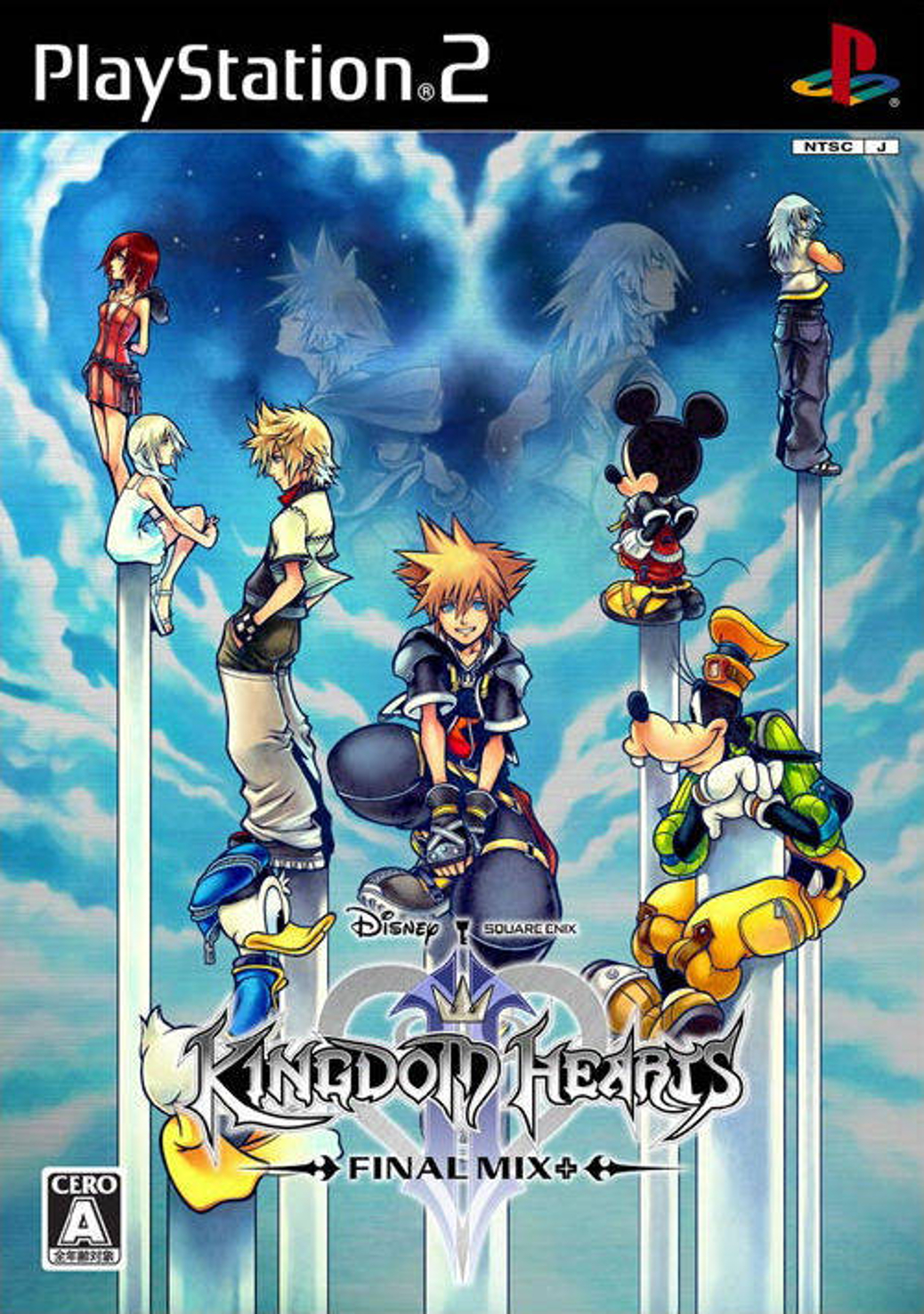
After experiencing the three titles that make up the Kingdom Hearts HD 1.5 Remix compilation in quick succession last year, I needed a break. It was a desire to join in on the zeitgeist surrounding the release of Kingdom Hearts III that prompted me to finally jump into the series, though truth be told I’d always been interested. I started itching to get back into the series while playing the F.E.A.R. games last year, if anything to experience something a little more uplifting. First up: Kingdom Hearts II Final Mix. Continue reading Kingdom Hearts II Final Mix [PlayStation 3] – Review→
Exclusive to the Xbox 360, F.E.A.R. Files is a compilation of Extraction Point and Perseus Mandate, the two expansion packs for the horror-themed first-person shooter F.E.A.R. First Encounter Assault Recon. Unlike the original game, which was developed by Monolith Productions, these expansions were handled by the now defunct TimeGate Studios, based out of Sugarland, Texas. Extraction Point debuted on PCs in October 2006, a year after the base game. It picked up immediately after the end of F.E.A.R., directly continuing the story of the Point Man, that game’s protagonist. Perseus Mandate followed in November 2007, releasing simultaneously on PCs and the Xbox 360. The exploits of a separate F.E.A.R. team, acting concurrently with the Point Man’s, were detailed in this expansion. As was the case with the base game, it was ported to the Xbox 360 by Day 1 Studios and published by Sierra Entertainment.
Exactly one year ago, I struck while the iron was hot. Browsing GameStop with a friend, I spotted a pristine copy of Fire Emblem: Radiant Dawn that I couldn’t pass up. We’d see copies every so often but they’d be missing their manual or in poor shape otherwise not meriting the hefty asking price. Little did I know that this acquisition would solidify the schedule of our weekly get-togethers for the next year and that we’d eventually clock more than eighty hours in order to complete one of the hardest entries in the tactical RPG series. Continue reading Fire Emblem: Radiant Dawn [Wii] – Review→
Something clicked. With the release of Uncharted 4: A Thief’s End this May, purportedly the final entry in Naughty Dog and Sony’s acclaimed action-adventure series, I knew it was time I checked it out. The first game that is, Uncharted: Drake’s Fortune. Yes, after nearly ten years of opportunities, I finally got around to playing the Uncharted series in typical fashion, by starting at the beginning. Released on November 19, 2007 for the PlayStation 3, a couple days past its one-year anniversary on the market, Drake’s Fortune was arguably the high-water mark of the platform to that point. Continue reading Uncharted: Drake’s Fortune [PlayStation 3] – Review→
I’m a little late to the party on this one but I finally beat Portal. It’s an ingenious puzzle game that doesn’t overstay its welcome. In fact, I was befuddled that it was over as quickly as it was. Since I’d heard so much revelry and acclaim for it and witnessed the cultural impact it’d had in the gaming space I just figured there’d be more of it. What was there engrossed me though. The increasingly complex puzzles were mentally stimulating and the enigmatic GlaDOS’ darkly humorous speech had me chuckling well into the few hour experience.
Portal was a puzzle game with an ingenious mechanic.
The game is built around the portal gun which allows users to shoot portals on flat surfaces. The portals are connected and can be easily referenced as an entry and exit. At its most basic use, I could place a portal on ground level, shoot the other portal on a wall above a higher level and use the portal to reach higher ground without using a ladder. Through the game’s nineteen test chambers, the quandaries were rarely this simplistic. The way I had to manipulate the portals was fascinating and thought-provoking. Dropping into one and utilizing the momentum to fling myself across the room was always amazing.
As I mentioned the game has nineteen test chambers that lock progression behind increasingly difficult puzzles. There are no other lifeforms present although observation windows and empty chairs indicate there were at some point. Guiding the player through these chambers is GlaDOS, a disembodied mechanical female voice. Her statements are delivered with a sense of dry, deadpan seriousness that are made clear when her motivations are discovered. Things are not what they seem and while there is no narrative, there’s an abundance of environmental storytelling that allows the player to fill in the gaps themselves. It all culminates in an appropriate ending sequence that was riddled with GlaDOS’ hilarious interruptions.
Infinite portal loops were easy to do and fun to witness.
For most I’ve probably revealed nothing new about this game. Portal sent shockwaves through the gaming culture when it arrived in 2007 as a part of The Orange Box and is still highly regarded and oft-discussed. I’m glad to have finally experienced it and would recommend it to those who have yet to do so. The game was brief but left me both fulfilled and wanting, in a good way. I can only imagine the impact the modding community had on this title and I’m excited to see the crazy stuff they came up with.
Project Gotham Racing 4 was ostensibly the final game in the series. For the sake of this article, I’m going to pretend Ferrari Edition for the Zune HD doesn’t exist. I have past experience with the series, having sunk a material amount of time into the third entry early on in my Xbox 360 ownership. My memories of that playthrough are gone now, but I’ve always associated quality and differentiation with the series. My recent playthrough of this title backs that claim up further and highlighted a game that has held up, and I presume, will hold up for many years to come.
Developed by Bizarre Creations and published by Microsoft, the series was their answer for an exclusive Xbox racing series before Forza Motorsport. Debuting as a launch title for the original Xbox in 2001, PGR was an extension of Bizarre Creations’ Metropolis Street Racer, released a year prior on the Dreamcast. After Forza’s debut in 2005, the two coexisted for a few years before Bizarre Creations was acquired by Activision. While Turn 10 Studios was chasing realism with the Forza series, Bizarre Creations was always melding the realism of supercars with the sensibilities of a more approachable racing game.
I spent most of my time racing like I do driving, looking out through the interior of my ride.
In my eyes, one of the most prominent differentiating features of the series are the settings. Rather than rely on established racetracks like most racing games, the developers instead use well-known cities for backdrops. Courses take place throughout city streets and as a result, variations are bountiful. After my dozen or so hours with this title, I had remembered the routes I’d driven throughout the cities, and could piece together the components that different variations shared. When one variation might take a left, another one might go straight, for instance. This practice was an efficient use of the cities, as I was able to race on many variations, with different objectives, and in different weather, making each event feel unique.
The cities themselves were rendered with impressive detail too. It wasn’t immediately apparent to me, but after a season in the Gotham Career mode, my eyes began to take in the scenery as I’d become more familiar with the courses. The skyscrapers and landmarks that lined the courses weren’t two-dimensional, like the set of a classic western. No, you could look down the intersecting roads and alleys and see well into the distance. The many logos and name brand storefronts that lined the more populous areas made me wonder what went into the licensing process.
Speaking of a headache-inducing licensing process, this game features the largest roster of automobiles in the series, including the addition of motorcycles. Altogether, there are more than 130 available in the game with more added through DLC. Unfortunately, after the studios closure at the hands of Activision in 2011, all DLC was removed from the Xbox Live Marketplace, at least, that’s probably why. Another association I make with the series is a reliance on supercars and this release has them in spades. However, it also fills its roster with a more varied lineup of automobiles that highlight notable examples of many “scenes” with the exception of Japanese tuners.
The cities truly were rendered with a fantastic level of detail. I haven’t been to Shanghai, but I know for a fact they have KFC there.
Returning to differentiating features, one of the aspects of this title that kept me hooked were the varied race types. Whereas typical races may comprise the majority of other racing games, they’re only a single event here. Other genre staples are present such as passing checkpoints to keep the clock alive, but I had the most fun with cone-based events, where I was tasked with slaloming through arranged cones. These and many other modes kept my quest for the top rank in the Gotham Career mode fresh, even when that effort got long in the tooth. With that complete, a whole other single player mode was available and went mostly untouched by me.
The game’s arcade mode featured heaps of one-off events where success was graded on a bronze, silver, gold, or platinum basis. These played up the driving with style aspect the series is known for more than the Gotham Career mode did. This aspect being the ability to earn Kudos points for performing stunts on bikes, drafting and drifting, and in general driving balls to the wall. In other words, there’s a lot to keep someone occupied here. And as best as I can tell, the multiplayer component is still available, at least as of a 2013 TrueAchievements forum thread. So the popular Cat and Mouse game type would be available via that method, although finding players may prove difficult, even on boosting forums.
Apparently, John Cena has a side career as an enthusiast motorcycle racer and no, you still can’t see him.
I started playing Project Gotham Racing 4 as a change of pace while I sunk seventy odd hours into Lost Odyssey (I still haven’t written a write-up of that!?). It was able to hold my interest enough to branch off into a full-fledged playthrough afterwards, and was enjoyable enough that I’m considering diving into another racing game sooner rather than later. I can walk away from my time with PGR4 impressed with the efforts exerted from Bizarre Creations. It’s still a sharp-looking game today with fantastic backdrops and beautiful interior and exterior car models. Gameplay was fast and crisp, especially from the first-person perspective and I encountered visual hiccups maybe once. Most importantly though the game itself was a joy and there was no shortage of things for me to do.
![Raiden IV [Xbox 360] – Review](https://mybrainongames.files.wordpress.com/2021/12/raiden-iv-xbox-360-north-american-box-art.jpg?w=672&h=372&crop=1)

![Deathsmiles [Xbox 360] – Review](https://mybrainongames.files.wordpress.com/2021/10/deathsmiles-xbox-360-north-american-box-art.jpg?w=672&h=372&crop=1)

![Metal Slug Anthology [PlayStation 4] – Review](https://mybrainongames.files.wordpress.com/2021/03/metal-slug-anthology-wallpaper.png?w=672&h=372&crop=1)

![Kingdom Hearts II Final Mix [PlayStation 3] – Review](https://mybrainongames.files.wordpress.com/2020/03/kingdom-hearts-ii-final-mix-playstation-2-japanese-box-art.jpg?w=672&h=372&crop=1)
![F.E.A.R. Files [Xbox 360] – Review](https://mybrainongames.files.wordpress.com/2019/11/f.e.a.r.-files-xbox-360-north-american-box-art.jpg?w=672&h=372&crop=1)

![Fire Emblem: Radiant Dawn [Wii] – Review](https://mybrainongames.files.wordpress.com/2018/03/fire-emblem-radiant-dawn-wii-north-american-box-art.jpg?w=672&h=372&crop=1)

![Uncharted: Drake’s Fortune [PlayStation 3] – Review](https://mybrainongames.files.wordpress.com/2016/06/uncharted-drakes-fortune.jpg?w=672&h=372&crop=1)

![Portal [PC] – Review](https://mybrainongames.files.wordpress.com/2015/07/portal.jpg?w=672&h=372&crop=1)


![Project Gotham Racing 4 [Xbox 360] – Review](https://mybrainongames.files.wordpress.com/2015/04/pgr4.jpg?w=672&h=372&crop=1)


 My Brain on Games