Last week was pretty great, and not just because I played through a different Metal Slug game each day. No, it was pretty great because I spent the week with my three month old son. My wife’s FMLA was scheduled to end and accordingly, we had planned for me to use up some accrued vacation time to prolong daycare one more week, and you know, get some quality time with our little tree frog. I had taken off the week when he was born, and of course we had plenty of bonding time in the evenings and on weekends when my wife would get a break, but nonetheless, spending so much unbroken time with him was immensely fulfilling. At this stage in his development, he seemed to make noticeable improvements with his motor skills daily; and I may be a little biased, but everything he does is so fascinating!
After beating Suikoden, the thought of jumping right into Suikoden II left me salivating. That game’s status as the best in the series, and one of the best JRPGs of all time is pretty much universally agreed upon . But, I slowed my roll. Typically, I sandwich a few shorter games in between playthroughs of role-playing games, considering they generally take thirty hours to complete, at a minimum. After all, I’m a grown-ass adult, with grown-ass adult responsibilities, so I don’t have the time to just sit around playing video games all day. Rest assured though, they do occupy way too much of my thoughts.
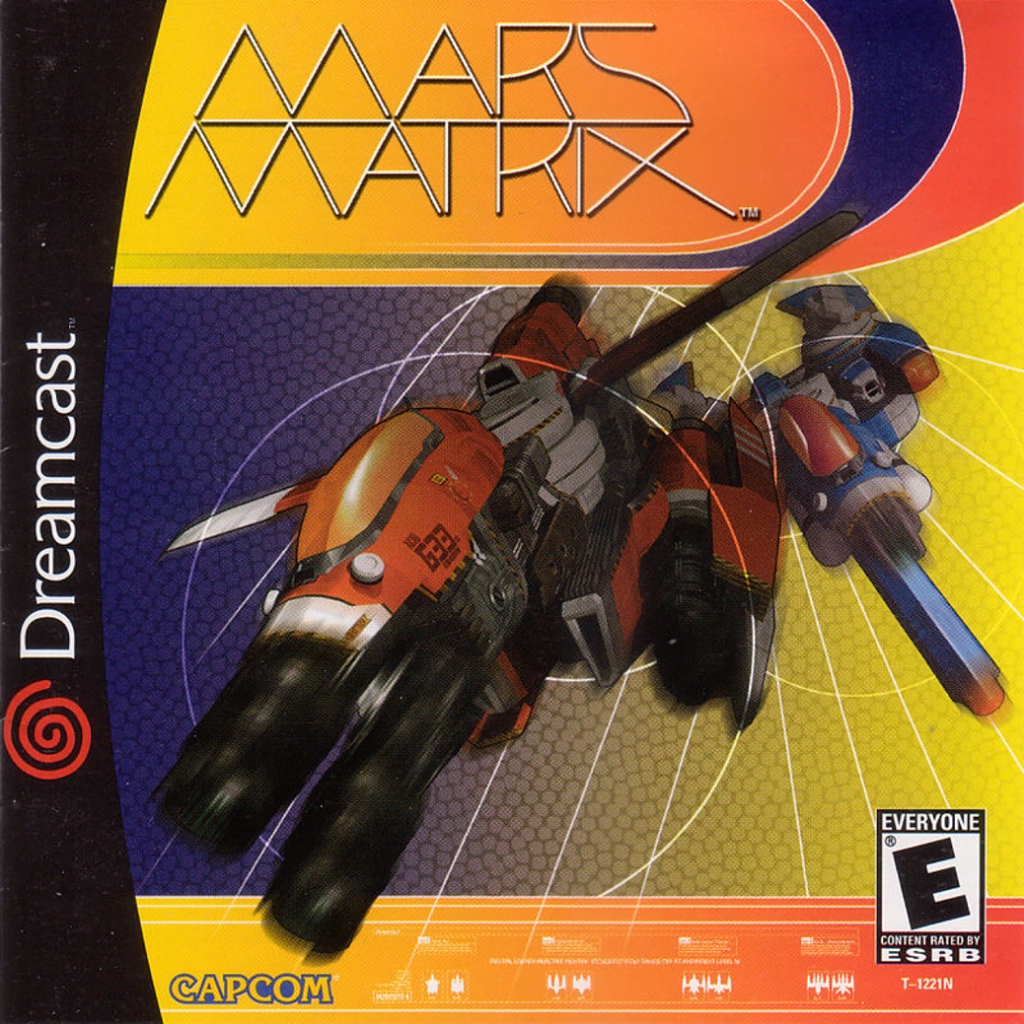
Anyways, collecting myself, I laid out the three games I’d be playing. The futuristic, yet mechanically ancient first-person shooter Codename: Tenka wasn’t a total bust, but after a couple of hours, I couldn’t justify playing it anymore. In contrast, the one-of-a-kind insect simulation Mister Mosquito only took a few hours, and was right up my alley. Finally, there was Mars Matrix. Spurred on by intriguing compliments delivered by Brandon Sheffield on Twitter (that I can’t seem to find now…), and the realization of how much the Dreamcast version sells for in the secondary market, I figured I ought to give it a shot, or a second one, since it turns out I played it back in 2011, an experience I’d all but forgotten about.
I had a pretty memorable Independence Day this year. Among other reasons, I finally sat down and played through Incredible Crisis. It’s a quirky game that has been on my backlog for a while now, and on my radar for even longer; I probably first learned of it surfing the net in the mid 2000s. For me, it’s remained a stalwart example of the scores of zany Japanese games that somehow saw release in the west during the late 1990s and the mid 2000s. Maybe off-the-wall games like it had been, and perhaps remain, prevalent in Japan, but at least in the west, it seemed like they came and went during these years. Continue reading Incredible Crisis [PlayStation] – Review→
While I wouldn’t consider myself a massive fan of the short-lived Evolution series, I have managed to accumulate a respectable collection of related products, perhaps everything released in North America, as a matter of fact. Continue reading Collecting the Evolution Series→
Having completed Jet Grind Radio for the first time, nearly twenty years after its original release and in spite of my awareness of its cult popularity, I’m nonetheless impressed by how fresh it remains. The team at Smilebit encapsulated a period of pop culture history so well: tonally, stylistically, and with such zest, that the game has eluded a potential fate of mere time capsule and is instead, timeless. It’s not without fault, however. In contrast to the vivacity of its aesthetics, the act of playing was oftentimes tormenting. An inadequate method of camera control compounded grievances I had with skaters’ rigid movement, momentum, and their flippant adverseness to grinding. With adaptation, I was able to compensate for these shortcomings and enjoy the otherwise exciting combination of skating and graffiti tagging gameplay. Continue reading Jet Grind Radio [Dreamcast] – Review→
When you have a video game collection like mine, it can be hard to play all of the games. This is especially true when additions are made on an almost weekly basis. Still, I appreciate nearly every game I’ve accumulated for this reason or that. In the hopes of improving my writing through continuous effort and promoting ongoing learning of these games, I’m going to compose brief, descriptive articles.
There was a time when it wasn’t a PlayStation launch without a Ridge Racer game. The series’ peak was arguably confined to the era of the first PlayStation, but this game is also very well regarded. The only games in the series I’ve spent a great deal of time with are this game’s predecessor and successor. I have played this game maybe once. I’m interested to play it more but I don’t believe there’s a ton to do. This was a launch title for the PlayStation 2 and I would bet the development was constrained due to the impending launch of the system. I still get a kick out of reading OPM and PSM during this game’s preview cycle and reading the writers’ praise for the graphics though.
Ridge Racer V was developed and published by Namco. It was available for the PlayStation 2’s launch in all three major video game markets, which means it was available in North America on October 26, 2000. One cool unlockable is the ability to play as Pac-Man and his ghost enemies.
When you have a video game collection like mine, it can be hard to play all of the games. This is especially true when additions are made on an almost weekly basis. Still, I appreciate nearly every game I’ve accumulated for this reason or that. In the hopes of improving my writing through continuous effort and promoting ongoing learning of these games, I’m going to compose brief, descriptive articles.
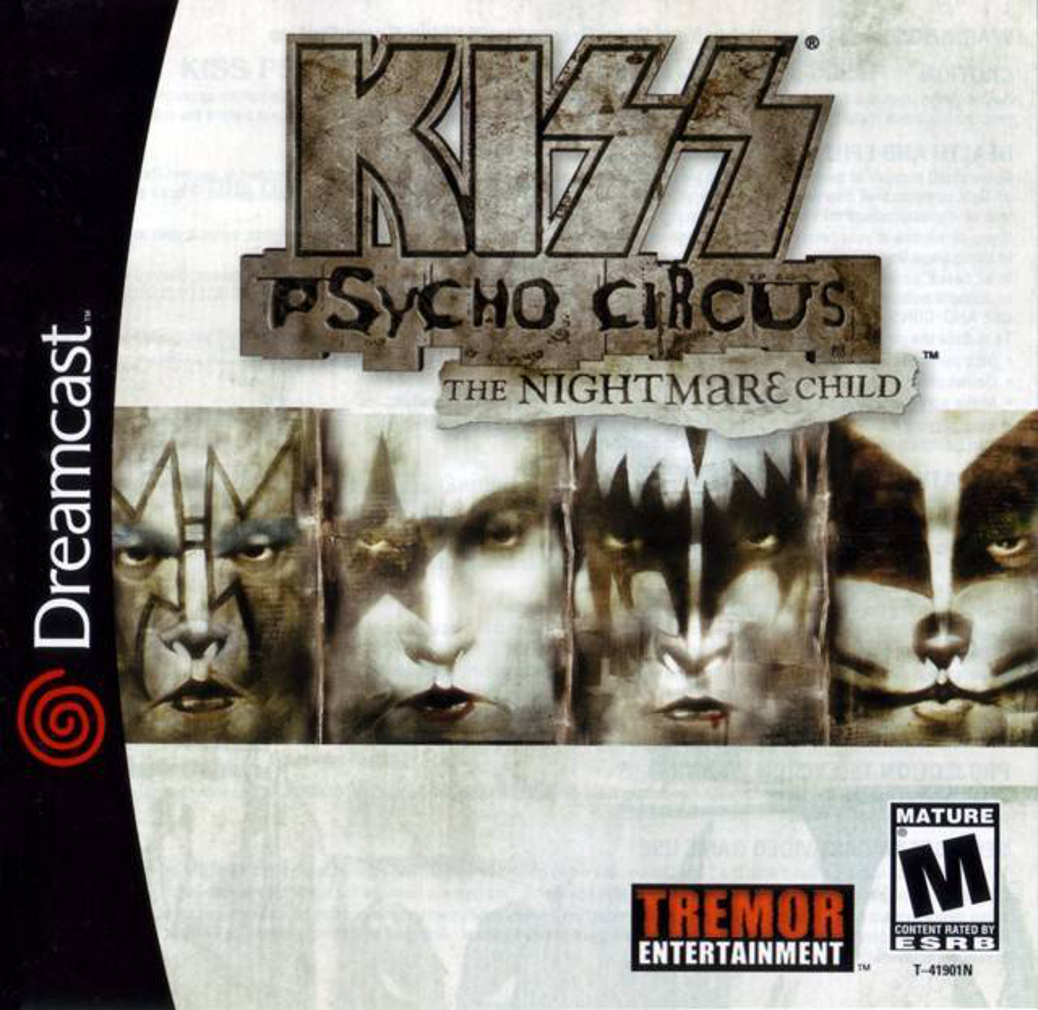
It doesn’t matter who you are, you have an opinion on KISS. Or more realistically, you have an opinion on Gene Simmons. The group and the man are undoubtedly rock legends, but both can come off as cheesy and/or abrasive. I’m not a big fan, but I can appreciate the work they’ve done. With the exception of KISS: Psycho Circus. From what little I’ve played, it’s a gothic first-person shooter with bad controls and little narrative direction. It’s based on the comic book series Todd McFarlane concocted with Gene Simmons. Beyond the requisite amount of time I played to check it out, I haven’t touched it. I’d like to give it a fair shake sometime down the road, but then again, maybe not.
KISS: Psycho Circus was originally developed by Third Law Interactive – a team of former Ion Storm employees – and released on the PC in North America on July 18, 2000. The Dreamcast port was handled by Tremor Entertainment and it was published on October 29, 2000 by Take-Two Interactive. Both developers seemed to flounder within a few years, neither putting out anything truly notable.
Watch the splendor of Street Racer for the PlayStation and Super Bust-a-Move for the Playstation 2 in low-fidelity splendor! Played by none other than JohnTheGamer and Tridrakious, courtesy of just1morelevel.com!
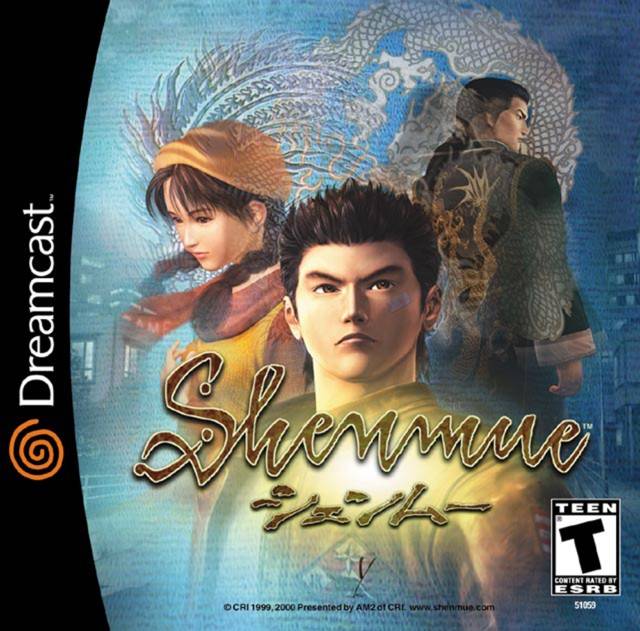
Shenmue definitely has a reputation that precedes it. At the time and for many years afterwards, it was reportedly the most expensive video game ever produced. With respectable sales that weren’t near the expected numbers, it assisted in ending Sega’s home console development. Nonetheless, the game received high praise critically and is routinely cited as an influential video game. Shenmue has always been on a personal bucket list of mine and I’m finally able to check it off.
Before being consumed by Virtua Fighter, Yu Suzuki was a titan at Sega. He was the major figure behind a plethora of the company’s marquee arcade titles in late 1980s. Space Harrier, Hang-On, OutRun, After Burner – this guy had a knack for designing video games. I’m not intending to short shrift Virtua Fighter either. It’s one of the most respected fighting game series and has a dedicated fan base. Shenmue is Yu Suzuki’s magnum opus however, and it oozes his passion. In the manual, in the credits, in the way he describes the game – the fictional world and gameplay elements that comprise the game were undoubtedly personal muses for the man.
Shenmue takes place in Yokosuka, Japan during the winter of 1986. The game is a tale of revenge, following Ryo Hazuki as he tracks down the mysterious man who murdered his father. Ryo’s father, Iwao, was a master martial artist whose dojo was in a remote suburb of Yokosuka. Iwao’s murderer, Lan Di, is a mysterious Chinese martial artist who had an unknown grudge against Ryo’s father. Not only that, but Lan Di’s ties to a Chinese criminal syndicate further complicate the affair as Ryo investigates the mysterious Chinese man.
Watching Shenmue was an engrossing experience thanks to the dynamic camera angles.
Exploration and puzzle solving are the primary focuses of Shenmue’s gameplay, although there is a minor emphasis placed on brawling. Knowing practically nothing of Lan Di, Ryo takes to the neighborhoods and shops of Yokosuka to find and follow up on any leads he can. Interacting with dozens of townsfolk, it was easy for me to get immersed in the day to day heartbeat of the city. Ryo’s leads introduced him to friends and foes from practically all of the storefronts, and since the game had a strong adherence to portraying a realistic setting, I’d have to make sure to check in with individuals at the corresponding hour of the day, or night.
I was dead set on making a physical map of the shopping district and outlying neighborhoods, but by the time I sketched it out, I was familiar enough with the areas to abandon the prospect. The neighborhoods contained little to experience but the shopping district was densely packed with unique individuals and storefronts. To an outsider, such as myself, it was a joy to experience what this slice of Japan might’ve been like in the late 1980s – minus Ryo’s Sega Saturn.
The arcade was a fun diversion and I’d be remiss to not mention the gashapon machines.
The puzzle solving aspect of the gameplay revolved mostly around locating the proper individual to speak with. Then, utilizing the information they provided with Ryo. Be it an area to check or another individual to speak with. I didn’t find monotony in constantly seeking someone out, only to be pointed elsewhere. It didn’t seem like it was filler content. For the most part, every lead advanced the plot, if only slightly.
One related point is what I interpret as shoddy localization. The game is fully voice-acted and everyone will respond to Ryo if he prompts them. However, a lot of the dialog doesn’t sound natural. It’s as if the script was translated directly from the Japanese original with no localization. Translating the game is one part of the localization process, but another would be making it so the characters speak realistically. Some lines of dialogue didn’t make functional sense to me. Then again, the game contained a friendly Jamaican hot dog vendor named Tom, and he doesn’t make a lot of sense either.
Tom, the Jamaican hot dog vendor.
The third pillar of the gameplay is the action sequences. I’d break these down into two categories: brawling and quick-timer events (QTEs). Both were infrequent, but an important aspect nonetheless. Brawling was reminiscent of the fighting system from Virtua Fighter – deep and very precise. Ryo had a wealth of moves at his disposal, but I was able to meander on by button mashing. This was helped by the fact that there were about twelve fights across the entire game. QTEs are now commonplace in video games and we have Shenmue to thank for that! They were pioneered in the game and allowed the player to experience a handful of exciting action sequences and actually feel some involvement. They were also infrequent.
After a dozen or so hours, I had brought Ryo to the end of his quest in Yokosuka. Shenmue ended with a slew of events, beginning with Ryo getting a job at the Yokosuka docks. This entailed me operating a forklift for about a week of in-game time which translated to a few hours. It was a decidedly dull climax to the game, but it was far from over. At the docks Ryo got a better understanding of the criminal syndicate Lan Di was aligned with.
Eventually, Ryo was too late to confront Lan Di who was already heading back to China. Ryo’s story was just beginning, but I wasn’t left unfulfilled. Shenmue capped off with an exciting motorcycle ride through the nighttime Yokosuka highway system. The goal was to reach the docks which lead to an epic brawl against 70+ gang members. Ryo intent on pursuing Lan Di to China and many of the interactions with Ryo’s friends and family were heartfelt.
Forklift racing at the dock was a fun beginning to each workday.
With Shenmue off my bucket list, I’m anxious to begin Shenmue II on the Xbox. The series was originally proposed as a trilogy so my journey with Ryo will end with an unfulfilled cliffhanger upon completion of the second game. Heck, I’ll probably convert into one of those crazies trying to get a grassroots effort started to develop Shenmue III. It wouldn’t be a surprise. The game came out nearly a decade-and-a-half ago and it still feels modern. Its combination of storytelling, setting, and gameplay meld together to form one of the most realized and worthwhile video games out there.
A lengthy adventure awaits for anyone who comes across a copy of this "rare" game, then again it is on the Wii's Virtual Console.
Ogre Battle 64: Person of Lordly Caliber is a peculiar game. Developed by Quest and published by Atlus for the Nintendo 64, it was released in North America in late 2000, and is notable for being one of the only RPG’s on the system. I initially thought it to be a tactical role-playing game similar to Final Fantasy Tactics, but it’s not. There are role-playing aspects such as customization and battle scenes, but the control I had over a small army reminded of the real-time strategy genre.
The game begins with the main character, Magnus Gallant, graduating from a military academy. In this sequence, I was asked questions and my answers decided the type of class Magnus would be. Upon graduation Magnus is sent to the southern reaches of Palatinus to put down an uprising by the lower class. Magnus wields his sword protecting the status quo of the monarchy and early on realizes the unjust nature of the class system he is fighting to protect.
Before each mission, Magnus is briefed on the strategy he should employ and what to expect.
The game offers the player choices at main intersections in the story, the first guiding Magnus along the path he is currently on, or allowing him to join the revolutionary army and fight for equality against the upper class. Each mission usually undertakes similar related concepts, in a much smaller scope, but each one evolves Magnus’ perspective on the world around him. Of the few choices I had to make, few of them had an obvious good and bad element. I had to sit and think about the route I would take and how it would affect the cause that Magnus fought for.
Before missions, Magnus would be briefed on the battlefield, the enemies, and the situation in general. Each mission took place in a fairly small geographical region, but they usually had a handful of towns. The objective was always to reach the opposite end of the map, capturing the enemy headquarters. Once I’d been given control, I would begin dispatching battalions and giving those battalions destinations. Both dispatching and issuing destinations was a redundant task. Lacking the ability to choose a group of battalions, I had to issue destinations and dispatch battalions one at a time.
If a battalion of mine ran into an enemy battalion, a battle would ensue. Once a battle between battalions started, everything happened automatically, dictated by the battle strategy I chose for that battalion. Rather than picking each action for each character, all I did was pick a battle strategy such as attack leader, and my characters would act accordingly. Not being able to choose individual targets was frustrating in some situations. Even when I told a battalion to attack the weakest enemy, sometimes they would attack a target with full hit points instead of an opponent with a low amount of hit points. The path to victories however was customization.
Once on the battlefield, Magnus issued commands to individual battalions, represented by their leaders.
Battalions are a nine by nine grid that could be composed of up to five characters. The placement of the characters was vital for battles. If a soldier was placed on the front lines he would be able to attack twice, anywhere else, he would attack only once. Similarly, if I placed an Amazon (archer) on the back row instead of the front row, she would attack twice rather than once.
Besides the placement of characters, it was important to make sure that battalions were balanced class-wise. Early on, I was losing more characters than I wanted, so I added clerics to each battalion; because of this, battalions could participate in more battles and fewer of my characters died. With customization of individual characters being a vital component of the game, I wish the process of equipping characters and buying goods was easier.
In between missions I’d do all of my customization. I’d view my entire army and select individual battalions and then, individual characters. I’d change their equipment, alter their formation, change characters between battalions, there was a lot I could do!
But I gave up on Ogre Battle 64. There were many missions that required trial and error, perhaps because I became too cocky and decided to forego strategy and tactics after a few easy wins. But I attempted the fifteenth mission half a dozen times before I realized the characters I was fighting were a decent amount of levels ahead of my characters. To continue I would have to spend an hour or two grinding my character’s levels, and after all the times I went through the set up of the mission, which takes five to ten minutes, I was done.
When a battalion of mine encountered an enemy battalion, a battle would ensue.
I fear that I was playing the game “wrong” by leveling up my battalions equally instead of focusing on a few. It’s the same way I feel whenever I play tactical role-playing games. At some point it feels like there is one correct way of completing each mission, and the trial and error it takes for me to reach that correct way is frustrating and drives me to stop playing altogether.
I would like to return to Ogre Battle 64: Person of Lordly Caliber and potentially complete it at some point, but not for a while, I just need some time away from it. Ogre Battle 64 had a serious story that contained mature topics and having a choice in my actions was thrilling. And the gameplay was exciting; it was something I’ve never experienced. Instead of finding a tactical role-playing game as I thought I would, I found an interesting game that combined the customization and leveling aspects of a role-playing game with the strategy and direct control over multiple units of a real-time strategy game. I spent thirty hours playing Ogre Battle 64 and there’s easily another thirty hours in it, but because it frustrated me too much, I’m moving on for now.
Share this:
Twitter
Facebook
Tumblr
Like this:
LikeLoading...
The internet's source for Mansion of Hidden Souls.
![Metal Slug Anthology [PlayStation 4] – Review](https://mybrainongames.files.wordpress.com/2021/03/metal-slug-anthology-wallpaper.png?w=672&h=372&crop=1)

![Mars Matrix [Dreamcast] – Review](https://mybrainongames.files.wordpress.com/2020/10/mars-matrix-sega-dreamcast-north-american-box-art.jpg?w=672&h=372&crop=1)
![Incredible Crisis [PlayStation] – Review](https://mybrainongames.files.wordpress.com/2020/07/incredible-crisis-playstation-north-american-box-art.jpg?w=672&h=372&crop=1)


![Jet Grind Radio [Dreamcast] – Review](https://mybrainongames.files.wordpress.com/2018/04/jet-grind-radio-dreamcast-north-american-box-art.jpg?w=672&h=372&crop=1)

![Random Game #30 – Ridge Racer V [PlayStation 2]](https://mybrainongames.files.wordpress.com/2014/12/ridge-racer-v.jpg?w=672&h=372&crop=1)

![Random Game #14 – KISS: Psycho Circus [Dreamcast]](https://mybrainongames.files.wordpress.com/2014/12/kiss-psycho-circus.jpg?w=672&h=372&crop=1)
 When you have a video game collection like mine, it can be hard to play all of the games. This is especially true when additions are made on an almost weekly basis. Still, I appreciate nearly every game I’ve accumulated for this reason or that. In the hopes of improving my writing through continuous effort and promoting ongoing learning of these games, I’m going to compose brief, descriptive articles.



 My Brain on Games