A little more than nine years later, I’m finally making good on the parting words from my review of Blue Toad Murder Files’ first episode. That is, a review of the game in full. In actuality, my friend and I did see the game through to the end back then, but I failed to follow up. And I suppose it’s because there really wasn’t much to add. Rereading that review all these years later, I’m surprised above all else that I didn’t cringe. There are some things I would change were I to write it now, but I honestly think it summarized the game pretty succinctly.
To recap, the multiplayer orientated, puzzle solving whodunit was rich with British charm and a variety of brain teasing puzzles. Each episode followed the same formula, and in replaying them all for trophy cleanup last week, the experience wore thin. This is definitely a game best experienced with others, and with a day or week break in between each hour-long episode.
Even now I don’t have much to add to my original thoughts, but one point I didn’t touch on back then, and this is the accountant in me speaking, is how efficient the developers at Relentless Software were. At the time of this game’s release, they were making a go at independence after a number of years developing the Buzz! games for Sony. The concept for this game allowed for a single setting, a small number of environments that didn’t need to be overly detailed, characters that didn’t require much animation (including no visuals below the waist), and relatively simple interaction for the puzzle gameplay. And still, it was an enjoyable experience all the same. Brilliant!
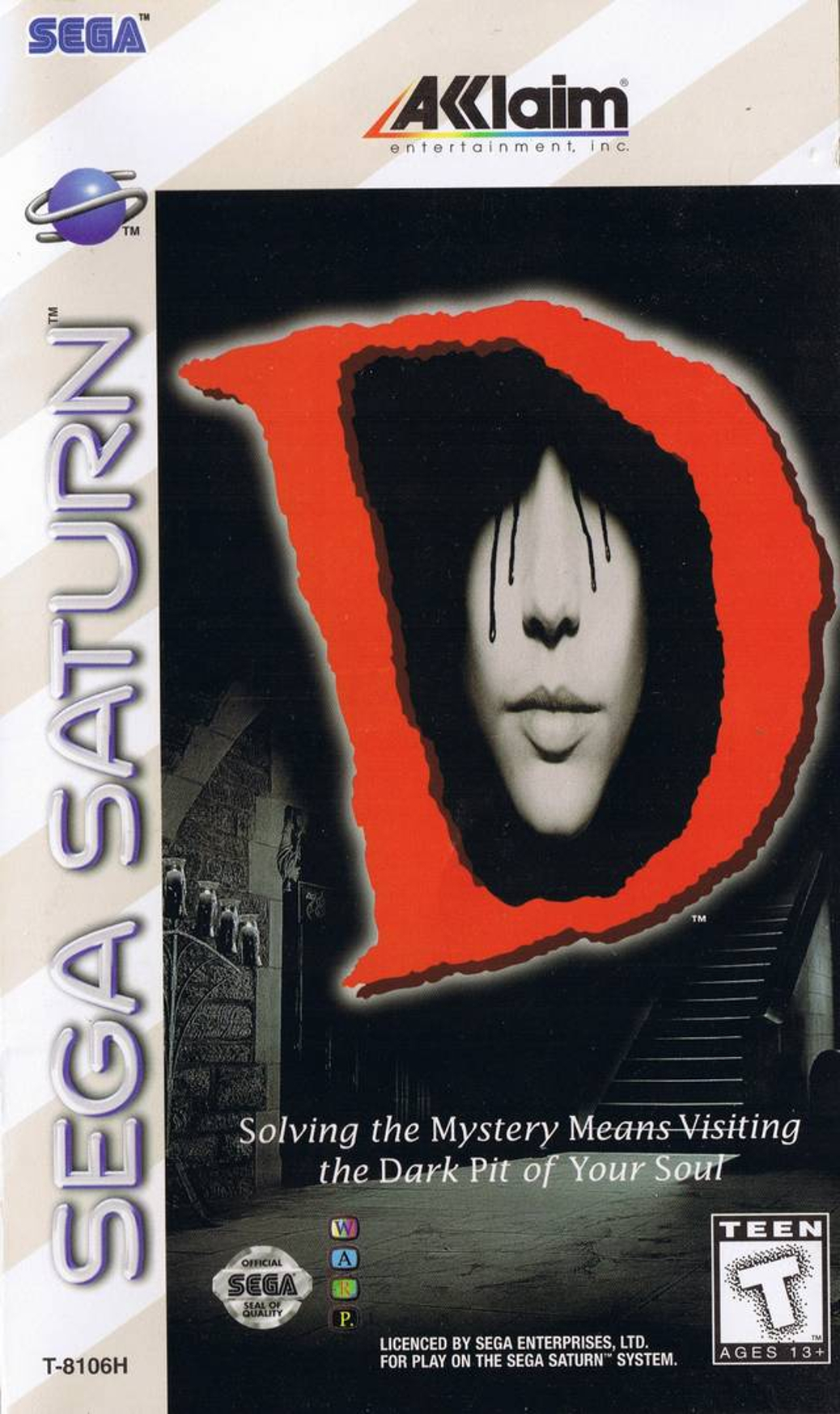
Nearly ten years ago, a friend and I decided to play Mansion of Hidden Souls on the Sega CD. We didn’t know anything about it, and at that point neither of us had much experience with similar first-person adventure games like Myst. The plodding movement and crude 3D pre-rendered visuals did little to entice us, but we enjoyed the emphasis on puzzle solving. If anything, it was informative to play through a style of game that was no longer in vogue, and one that showcased an early example of full-motion video. We followed it up with playthroughs of a couple similar games and have dabbled with the genre since then, albeit infrequently. One game in particular has been at the top of our to-do list for years, yet we always passed over it for one reason or another. Well the stars aligned last week, and we finally played D. Continue reading D [Sega Saturn] – Review→
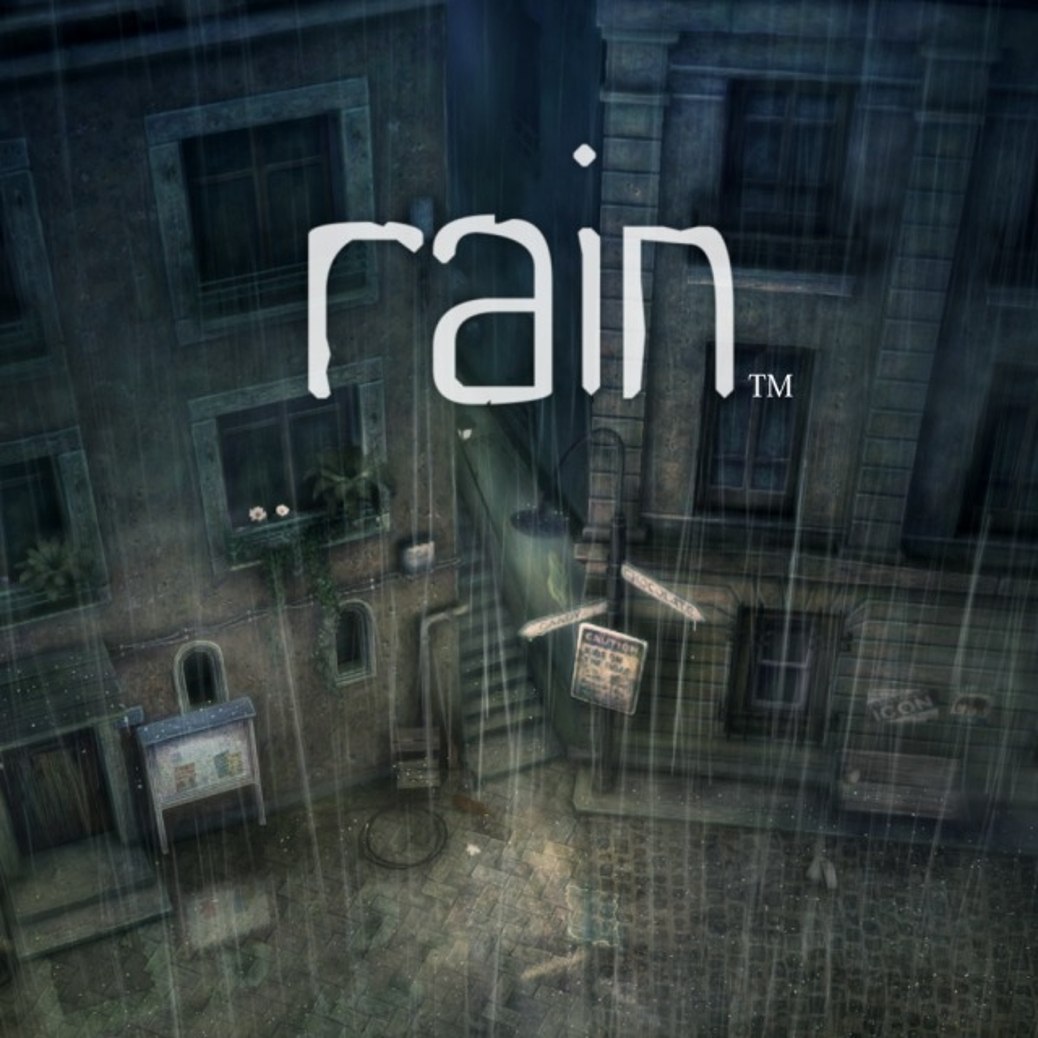
Spearheaded by Sony’s Japan Studio and developed by Acquire, Rain is a somber adventure game available for the PlayStation 3. Released worldwide at the beginning of October 2013, Rain’s debut was no doubt overshadowed by the impending launch of the PlayStation 4. In fact, looking back on how I came to own the game, I didn’t even buy it; I received it through the settlement for the 2011 PlayStation Network outage. Unlike my ownership of the game, my decision to give it a go was intentional. Wanting to play through a batch of shorter games in the wake of Fire Emblem: Three Houses, and thinking it might tie into the Halloween season, it topped the short list of games I had put together. Continue reading Rain [PlayStation 3] – Review→
Unsure of what to play next after completing Fire Emblem: Radiant Dawn, my friend and I knew one thing: we didn’t want to play another eighty hour video game! Scanning the shelves of games in front of us, mulling our options, he pointed out The 25th Ward: The Silver Case. I had recently bought that game’s limited edition, despite the fact that its predecessor, The Silver Case, had been in my collection for more than a year, still unopened. I purchased both in part because they were inexpensive, but primarily due to my appreciation for their idiosyncratic writer/director, Goichi Suda, aka Suda51. Following research affirming the game’s length, and brief discussion on playing a visual novel, a genre neither of us had much history with, from a creator my friend had little experience with, we decided to start The Silver Case. Continue reading The Silver Case [PlayStation 4] – Review→
It’s no surprise that my playthrough of Her Story was unique. After all, it’s the type of game that walks the tightrope between video games and more generally, an interactive experience. In my case, it was a cooperative playthrough with a friend. We had returned from a local independent theatre after watching Why Don’t You Play in Hell?, a riotous Japanese language film. (Wowzidukes! This article is going to earn me so much hipster cred!) I rarely play PC games so this was somewhat unusual but I’d heard much of it through social media word of mouth and gaming sites last week, plus it was only five bucks. It was a good plunge to take too, as the game provided a fun cooperative experience.
The presentation of the game was top-notch. Notice the light glare on the CRT monitor!
Her Story revolves around a series of interviews that the police conducted with a British woman whose husband was found dead in 1994. These were filmed at the time but for whatever reason, are no longer able to view in their entirety. Instead the player can interact with a police computer and search a database that retrieves clips based on search terms or phrases. The corresponding video clips seemed to average about thirty seconds in length. It’s unclear what ever became of the woman and the police’s investigation, but it’s implied that’s what the player’s character is after and serves as motivation for the player.
The way the game is presented is nostalgic. The police computer that the player interacts with appears to be running a dated version of Windows on an equally ancient CRT monitor. When a search is conducted, it takes a second for the computer to produce the results and the work it performs is audible. The player isn’t locked to a single program however as there are a few .txt documents and a “rubbish bin” with a minigame on the desktop. Crucially, all of the video footage is rendered as full-motion video. FMV tends to be a divisive issue in terms of video games, but the execution of it here is perhaps the best example I’ve seen, even beating out the Mad Dog McCree trilogy!
The police computer in question, with the woman in question.
I’ll save any sort of plot spoilers or ruminations for another article. The way everything played out led to a lot of discussion between my friend and I. After our initial playthrough, there were two obvious ways everything could’ve happened, but I think we’re still undecided on the truth. I’m looking forward to replaying it with him so we can take detailed notes and reach a verdict. That in itself is hardy praise for Her Story. I feel confident enough with my theory on what happened that I’d be satisfied enough to move on, but I want to fire it up again, and definitely will this weekend. It’s well worth a look.
Originally released in the fall of 1996, Broken Sword: The Shadow of the Templars still holds up as a fantastic point-and-click adventure game. I came to it last month with virgin eyes when I was craving a game to play on my Google Nexus 7. The director’s cut of the game was released onto Google Play in 2012, although it has appeared on many platforms since 2009. The narrative and characters were impressively crafted and the puzzle-solving gameplay was well-paced. My only complaint was the hodgepodge nature of the audiovisual qualities of the director’s cut.
I found the user interface to be easy to use and understand.
Vacationing in Europe, American tourist George Stobbart witnesses the murder of a French citizen and takes it upon himself to research the tragedy. George is a self-confident, joke-cracking Californian and his conversations usually put a smile on my face. He quickly bumps into Nicole Collard, a French journalist, also interested in the murder. They cooperate and unravel a plot to revive the Knights Templar. George’s involvement came about due to happenstance and self-motivation. For Nicole, the events were personal.
The director’s cut of the game apparently includes a lot of new content. Among the additions is a lengthy introduction that stars Nicole. This segment filled in Nicole’s motivations beyond simply being a journalist. As she prepares to conduct an interview, the French diplomat who personally requested her is murdered by a costumed killer. Investigating his premises before the police arrive, she discovers that the diplomat had mysterious ties to her beloved father. More research leads her to another individual who would soon be murdered and bring about a chance encounter with George.
George’s introduction, shortly after a bomb blows up the cafe he was at.
The ten or so hours of gameplay saw the duo explore Paris and a few nearby countries. Most of it was spent having conversations. These conversations were lengthy and necessary to digging up clues and leads. As I mentioned, the conversations George conducted with others were often humorous; if not because of his line of thought, because of people he spoke with. The other major time sink was the puzzle-solving. This entailed exploring each scene for objects to interact with and figuring out how to utilize the small inventory of items George had. Occasionally there were one-off puzzles that required translating a passage or completing a sliding puzzle as well.
George and Nicole’s journeys across Paris and the few neighboring countries they visited were conveyed solely through hand-drawn backgrounds and animations. Overall, it was an impressive-looking game. However, there were a few bits of animation that sequenced different scenes together and these were quite poor. The style calls to mind Don Bluth with shoddy animation. I feel the same about the voice-acting. In general, it’s great. Yet there are bits and pieces where the quality is noticeably worse. New to the director’s cut are hand-drawn character portraits during conversations. These were drawn by Dave Gibbons of Watchmen fame but hey, they’re just character portraits.
No, George isn’t exploring the Amazon. This is an estate in Spain.
Now that I’ve completed Broken Sword: The Shadow of the Templars, I’m sad I won’t get to experience anymore of it for the first time. I honestly found the narrative and characters enthralling. The lengthy exchanges George had with others only started to wear on me when I was in the homestretch, but they were always entertaining. I found this to be a perfect tablet game and the user interface for exploring and puzzle-solving was implemented wonderfully. Some of the illustrations and animation looked poor, but in a way, those were blemishes that endeared me to the game’s age. Fantastic game!
thatgamecompany co-founder Jenova Chen wants his medium to mature and he believes that can be achieved by producing video games that satisfy a wide range of emotions.
Lauded by many as a purveyor of the intellectual evolution of video games, thatgamecompany has received high praises in recent years for developing minimalistic video games that leave an emotional impact. Released just a few weeks ago for the PlayStation 3 via the PlayStation Network, Journey continues this trend.
Journey, is about just that, a journey. The journeyer in question travels through harsh environments on an unspecified quest. Lacking dialogue and an overt narrative, Journey is open to interpretation, which is what the bulk of this review will encompass – my interpretation of Journey. Before that, I’d like to briefly discuss the game.
Controlling the journeyer I navigated deserts, ruins, and mountains, all the while figuring out how to get around the occasional impediment, usually by jumping. When connected to the internet, people would randomly join my game and we’d attempt working together. Groups never exceeded two players, although I met three or four throughout the length of the game. These few players were never a hindrance but cooperation was tough due to the inability to directly communicate with each other, more on that in my interpretation. Speaking of which, let’s dive into it.
One ruin in particular was fascinating. It appeared to be underwater.
Set in the far-flung future, the journeyer I controlled was on a mission of enlightenment. The world he lives in might at one point have been described as the pinnacle of civilization. But the people eventually turned against each other and nearly destroyed the world in a process of unending war. Now, remaining humanity is in search of a reason; a reason for the past, a reason for the future, a reason to continue living in a harsh, unforgiving world.
Believing the enlightened one residing high atop a mountain at the peak of the world would have an answer to his questions, the journeyer set out. He didn’t get to skip down a yellow brick road either; his quest led him through an unforgiving desert that never seemed to end. Blanketed throughout this near-infinite desert were the ruins of the long destroyed ancient civilization. Their murals contained descriptions of similar journeys from ages ago. The wall paintings mirrored the journeyer’s travels with uncanny precision, and helped lead him to his destination while reminding him that he was no different from those who lived generations before him.
Along the way, the journeyer occasionally met contemporaries who also sought enlightenment. Lacking a common language but sharing a common destination, the journeyer aided the fellow travelers he met and developed an emotional bond with them. Even though communication was difficult because of the absence of a shared language, the journeyers were able to cooperate by studying body movement and using simplistic noises. The journey was tough and those he met did not always make it. The journeyer missed their presence, but knew he had to continue.
Obstacles in the journeyer’s way became ever more prevalent as he continued. Getting past them required thinking through straightforward puzzles, executing tricky jumps, and navigating around enormous enemies.
These giant pillars at one point formed a bridge, one that needs to be reconstructed.
It wasn’t long until the journeyer reached the foot of the mountain. It was there that the red-orange of the desert ended and the white of the mountain began. Snow pelted the journeyer as he made his ascent. Fortunately he was not alone in this stretch of his journey. A fellow journeyer also reached the foot of the mountain and they inched forward, body against body, fighting with all their might to push forward against the howling snow. At points the winds were so strong that all they could do was brace onto windbreakers sticking out of the ground to not get blown off the mountain, no doubt placed there by journeyers before them. This part of the journey was tougher than anything previously encountered, but the journeyer prevailed, albeit alone.
When he crossed into the summit, the journeyer met with the figure that he’d seen scrawled onto the ruins, the figure that he’d been seeking, the enlightened one. Though he made noises that the journeyer was unfamiliar with, he could somehow understand the enlightened one. He said little, but what he said left a major impact on the journeyer.
“The civilizations before your time destroyed each other because they focused on their differences rather than their similarities. You may think you and the journeyers you met on your way here are far different, but you share more than you think. Without cooperation, you never would have reached me.”
“I can’t tell you what the future holds, you decide that. You pushed forward, now reflect on all that you’ve done. You sought enlightenment and you achieved it. It wasn’t the destination that you needed, it was the journey. Now shut up about Mass Effect 3’s ending.”
So that’s one way I interpret Journey. Pretty bleak huh? Civilization, reaches a pinnacle and then freefalls into a rapid decline through never-ending war culminating in the near destruction of EVERYTHING. So, does this interpretation reflect my inner lack of faith in humanity? Personally, I’d say yes and no. I’m an optimistic person, but I can foresee a future where humanity eventually destroys everything (although I imagine everyone can picture that). I’d also say my interpretation of Journey is derived from similar stories in entertainment. The story I envisioned is in no way a new idea and I know I’ve encountered it in multiple formats, such as books, movies, and other video games.
Although my interpretation also has positive messages too, namely that we can overcome any differences we perceive in each other. Cooperation eased the journeyer’s travels, even though he worked with journeyers far different than he, they couldn’t even speak the same language! Yet, the journeyers found a way to understand each other and overcame many obstacles.
With their destination seeming nearer, these two journeyers must've breathed a sigh of relief at this point, but their journey wasn't over.
The minimalistic nature of Journey has left me ruminating on it more so than any other game I’ve played. It was a brief, however enjoyable experience that is very open to interpretation. I’d recommend Journey, especially if you’re able to experience it with someone else.
If anyone else has played Journey, what’s your interpretation?
Blue Toad Murder Files in its entirety consists of six episodic downloads wherein one to four players assumes the role of a detective and solves crimes. The first episode, Little Riddle’s Deadly Dilemma is available for free on the PlayStation Network and my friend and I recently played through it.
Developed and published by UK based Relentless Software, Blue Toad Murder Files is a departure from what they’re known for: the Buzz! series. At the same time, they’ve used their experience and crafted a game that is fun with friends, cooperatively or competitively.
Set in a picturesque British village with banal villagers who talk in a nearly foreign tongue, to me (an American) Blue Toad Murder Files seems as British as it gets. But that’s part of the game’s charm. When it comes to detectives, Sherlock Holmes and the work of Agatha Christie are forefront in my mind, never mind that Hercule Poirot is Belgian…
Anyways, my friend and I soon witnessed the mayor of Little Riddle get shot and we began questioning the villagers attempting to find the culprit. Nearly every time we talked with someone they had a puzzle for us. We were supposed to solve these ourselves but we worked cooperatively. The puzzles reminded me of the ones I saw in Professor Layton and the Curious Village. Puzzles didn’t fall into one category and for all twelve of them we were asked to do something different. The difficulty was well paced and we had fun attempting to get the gold medal on each one.
The old lady provides a memorable recurring event.
Blue Toad Murder Files: Little Riddle’s Deadly Dilemma couldn’t be tackled in a free fashion; it was a guided adventure that gave us all the information it had and then tasked us with putting it all together and coming to a conclusion. I loved the setting and the character’s and dug the variety of the puzzles. It took us about an hour to play through and I suspect we might play through the rest. If that’s the case, expect another write-up over the game in full.
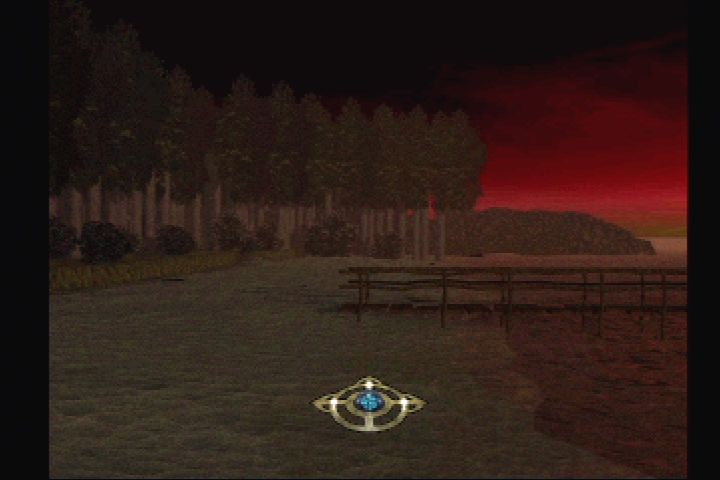
Juggernaut earned its mature rating alright, this game is very dark and features a good amount of violence.
Q: What is Juggernaut?
A: Juggernaut is a first-person adventure game where the primary mechanic is solving puzzles. A great shorthand reference would be the popular game Myst, a less ideal one would be either Mansion of Hidden Souls or The Mansion of Hidden Souls, two similar games that I wrote about earlier in the year. Juggernaut was released on the Playstation in 1999, many years after any of these games.
Q: What is Juggernaut about?
A: The protagonist’s girlfriend has become possessed by an evil spirit (presumably the devil) and a priest has notified the protagonist that the exorcism he performed was ineffective. Telling the protagonist that his love for her is the greatest chance of removing the evil, he sends him into her body to rid her of the evil.
Q: Wait, what!?
A: Yes, that’s only the beginning to the surreal adventure that plays out in Juggernaut. Inside the girlfriend’s body my friend and I did not find organs and blood but instead a mansion; perhaps a nod to the Mansion games?
Q: Okay, but why a mansion?
A: Well I suppose it could be a metaphor for something. Maybe it symbolizes her soul with the rooms inside representing specific chapters of her life, maybe not though. Functionally it provides a great backdrop for a single environment that requires a lot of exploration and houses many puzzles.
The environments (and graphics for that matter) were generally basic, and really grainy!
Q: You’ve mentioned puzzles, but what’s gameplay like besides them, what do you do?
A: My friend and I controlled the protagonist and explored the mansion and other environments. We’d explore until we couldn’t progress any farther, usually because of puzzles, although I use that term lightly. Most puzzles seemed to revolve around finding an item and making the connection as to what it’s used for. There were puzzles that required my friend and me to get scratch paper out and think something through, but for the most part making connections was the name of the game.
Q: So it’s a puzzle game and the puzzles aren’t that great, why should I even care about Juggernaut?
A: That’s a great point actually. My friend and I felt the same way until we encountered an evil microcosm, what we were attempting to rid the girlfriend’s body of. The evil microcosms were one-off stories that featured unique plots, characters, and environments. The stories and dialogue in the microcosms were absurd! Definitely some of the weirdest stuff I’ve encountered in a video game.
There were eight microcosms in all. Two of them took place in the future, entirely on the internet via virtual reality. Two of them took place in an isolated prison. One of these featured a spy who yelled out karate moves before he attacked people, like “karate correspondence manual page 12, flying kangaroo”. It ended in a goofy/creepy five minute conversation with another character that had my friend and me laughing, and confused. Two took place on tropical islands and they also resulted in confusion. The last two took place in woods and they dealt with a ghost shaman from Africa and a killer who slashed out eyes. I’m only scratching the surface of what makes these storylines strange by the way, just know the plots develop strangely and the dialogue is detailed
Q: After everything you did was the ending satisfying?
A: Yes, actually. What was more satisfying was the epilogue though. It added another puzzle and a lot of exposition from the girlfriend’s perspective, plus, a twist.
Q: Who made Juggernaut?
A: I’m unclear on that. There are two Japanese companies attached to Juggernaut, Will and TonkinHouse. From what I’ve gathered Will developed it and Tonkin House published it in Japan. Jaleco published it in America. Remember, it came out on the PlayStation in 1999.
Vague questions foreshadowed a general sense of unknowing.
Q: So should I play it?
A: Nah. The gameplay was slow and it takes a long place to get somewhere. There was an interesting mechanic in the mansion of having to switch bodies to access specific rooms but this was time consuming. Juggernaut is a pretty ugly game even considering how old it is but I liked the soundtrack, it wasn’t overbearing, it was moody, and set the tone well. It was fun solving puzzles and experiencing the oddities with a friend and the microcosms were surreal, but you can probably YouTube that stuff.
The puzzles revolved around objects. Moving them around and searching for clues was vital.
What is it about realism and video games? For some games that portray a realistic world it can be easy to suspend belief about how things should operate and play along because a mechanic is fun, like with Driver: San Francisco. What about when games portray a partially realistic world but contain elements that make it hard to go along with? Well that’s my issue with Red Johnson’s Chronicles, an otherwise stellar adventure game.
Red Johnson’s Chronicles is a downloadable game released this past week for the PlayStation Network, developed and published by French studio Lexis Numerique. It’s a puzzle-based adventure game following private investigator Red Johnson. I controlled him and was introduced to a few additional characters pretty quickly.
Besides the puzzles, I encountered a few quick time events in the demo.
As Red was sitting in his office, a rotund police officer entered. The two obviously have a past together and Red helps out by investigating a murder. I was swept off to a shady area of town and soon I was moving my cursor around the screen looking for objects I could interact with. There were no witnesses of this murder but a security camera surely caught the perpetrator. After a few puzzles I was finally able to access the camera.
The camera however didn’t have power, which is odd because to reach the camera I had to find a power grid to operate a ladder right next to the camera. It turns out the circuits inside the camera are not in order, forcing me to arrange them correctly. This begs the question, if the camera was on when the murder was committed, who climbed up to the camera, took it apart, rearranged the insides, put it back together, and left it? If it was the murderer, why wouldn’t he just destroy the camera or take the videotape?
So that’s my major complaint with Red Johnson’s Chronicles. The game looks really nice, I mean considering most of it consists of still screens, but it had an interesting art style blending realism and cartoons. Going along with the art style, the game’s characters seemed straight out of a cartoon with their overdramatic acting. I couldn’t get past that one unlikely puzzle however so I’ll probably miss out on an otherwise stellar adventure game.
Share this:
Twitter
Facebook
Tumblr
Like this:
LikeLoading...
The internet's source for Mansion of Hidden Souls.
![Blue Toad Murder Files [PlayStation 3] – Review](https://mybrainongames.files.wordpress.com/2011/12/blue-toad-murder-files.jpg?w=640&h=372&crop=1)

![D [Sega Saturn] – Review](https://mybrainongames.files.wordpress.com/2020/04/d-sega-saturn-north-american-box-art.jpg?w=672&h=372&crop=1)
![Rain [PlayStation 3] – Review](https://mybrainongames.files.wordpress.com/2019/10/rain-playstation-3-cover-art.jpg?w=672&h=372&crop=1)
![The Silver Case [PlayStation 4] – Review](https://mybrainongames.files.wordpress.com/2018/07/the-silver-case-playstation-4-north-american-box-art.jpg?w=672&h=372&crop=1)

![Her Story [PC] – Review](https://mybrainongames.files.wordpress.com/2015/07/her-story.jpg?w=672&h=372&crop=1)






 My Brain on Games